

What Holds the Bridge
Andrew Shaughnessy
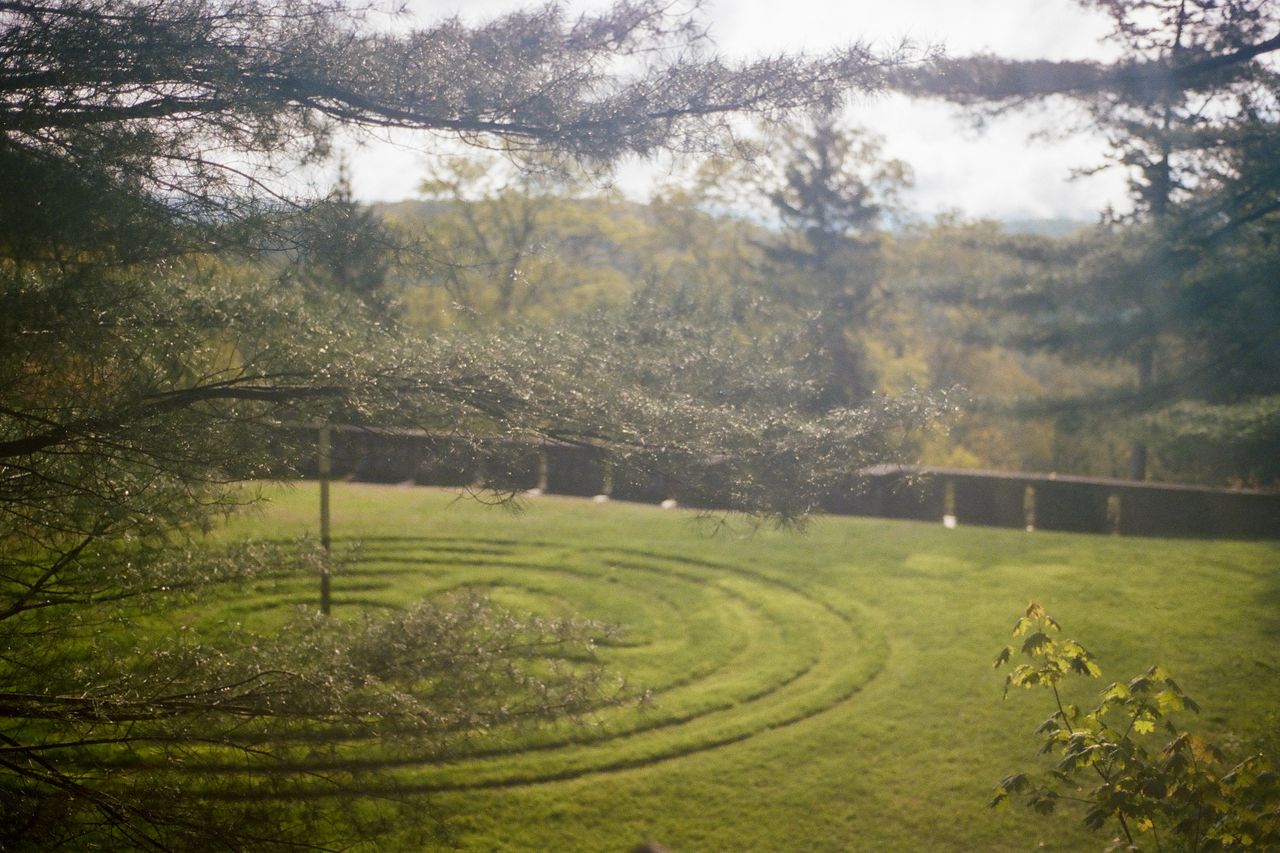
Last year, I embarked on a pilgrimage in New York City. While I realize this might conjure images of long walks to sacred sights, this pilgrimage didn't require me to leave my creature comforts. In the midst of the loud, chaotic, affluent energy that comprises New York, I endeavored to move intentionally towards silence, stillness, and simplicity in the context of intentional community. This time of interruption to my daily life without removing me from it entirely unveiled new facets of my relationship to pilgrimage.
To be a pilgrim is a tacit agreement to go out, to depart from life as you know it. This practice is to acquiesce to the possibility of transformation, nay, the likelihood of it. But to be a pilgrim is also to return. To come back to rhythms and places you call home.
The whole of our lives is a series of departures and arrivals. While pilgrimage is an incarnate practice evident in each of the major world religions, Christianity views the whole of a believer’s life to be a pilgrimage of a sort. We come from God, our time on this planet is an excursion searching for glimpses of the place for which we were ultimately created.
What we are all doing as we shuffle, spring, and at times, trudge forward in this life is walking one another closer to a home that is restored, whole, and deeply good. To walk this path is to accept that it isn’t linear, nor is it consistent. Each of our walks meander around bends and at times double back where we feel we have already been. A grace of this journey are those stretches where our paths coincide with others; those bright moments where we find ourselves jumping over the same stones, dipping to avoid low-hanging branches seemingly in unison. The ruts we’ve been given that can feel too small for us, at times, expand to accommodate more sets of feet. To walk this path is also to accept that while you might occasionally double back, the journey goes in one direction. Just as the days fold into weeks and the months into years, our lives do not stop, no matter how content we might find ourselves in the arms of one particular season.
Last year, I embarked on a pilgrimage in New York City. While I realize this might conjure images of long walks to sacred sights, this pilgrimage didn't require me to leave my creature comforts. In the midst of the loud, chaotic, affluent energy that comprises New York, I endeavored to move intentionally towards silence, stillness, and simplicity in the context of intentional community. This time of interruption to my daily life without removing me from it entirely unveiled new facets of my relationship to pilgrimage.
To be a pilgrim is a tacit agreement to go out, to depart from life as you know it. This practice is to acquiesce to the possibility of transformation, nay, the likelihood of it. But to be a pilgrim is also to return. To come back to rhythms and places you call home.
The whole of our lives is a series of departures and arrivals. While pilgrimage is an incarnate practice evident in each of the major world religions, Christianity views the whole of a believer’s life to be a pilgrimage of a sort. We come from God, our time on this planet is an excursion searching for glimpses of the place for which we were ultimately created.
What we are all doing as we shuffle, spring, and at times, trudge forward in this life is walking one another closer to a home that is restored, whole, and deeply good. To walk this path is to accept that it isn’t linear, nor is it consistent. Each of our walks meander around bends and at times double back where we feel we have already been. A grace of this journey are those stretches where our paths coincide with others; those bright moments where we find ourselves jumping over the same stones, dipping to avoid low-hanging branches seemingly in unison. The ruts we’ve been given that can feel too small for us, at times, expand to accommodate more sets of feet. To walk this path is also to accept that while you might occasionally double back, the journey goes in one direction. Just as the days fold into weeks and the months into years, our lives do not stop, no matter how content we might find ourselves in the arms of one particular season.
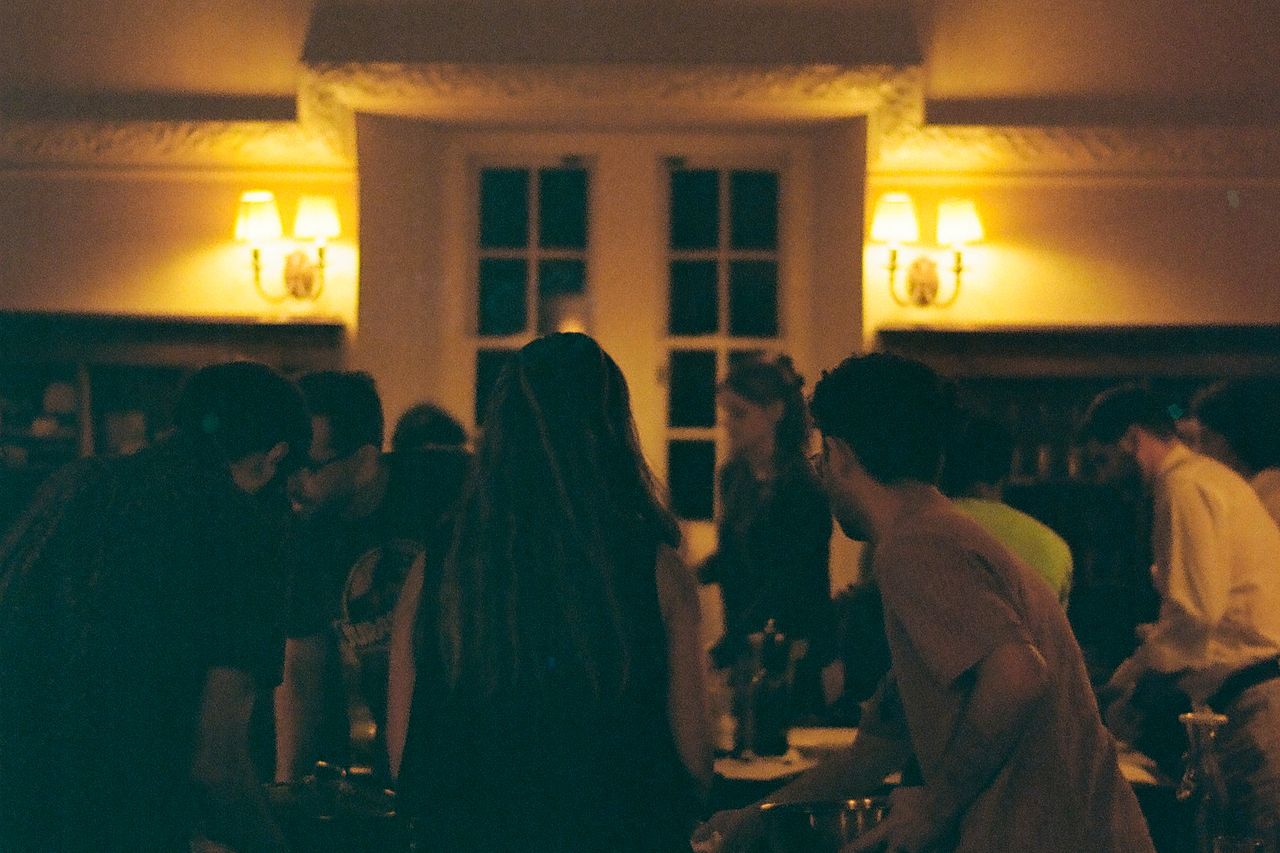
I walked one such coalesced path with 12 other co-pilgrims in a year of ecumenical christian community. For nine months, we journeyed together by way of weekly shared meals, Psalms sung antiphonally, Carthusian walks, various church services both within and outside of our personal traditions, and a week-long silent retreat, among other things. We committed to a shared rule of life rooted in discipleship, pillars and rhythms, and joy and conversion in community life.
Being interrupted by God isn’t a surgical operation, we do not get to pick and choose where we are impacted. Each day held a mark of purpose on it, simply because it sat within this consecrated time frame. What I found was that each menial task or ordinary responsibility was transfigured into a pathway to prayer. Whether I was with my community or not, I was enveloped in an endeavor that reimagined my relationship to my life without leaving my city of residence. We each knew that this season was special, and for better or worse, it was temporary.
As the second half of the program approached, my delight in its preciousness morphed into a fear, a resentment over its temporality. That which was causing my heart to swell suddenly turned to dread. For this was always designed to end, and here I sat, desperately wanting to hit pause. How could something so reflective of God’s unending kingdom be given only to be taken back? How is it that the Lord has led me into a beauty so singular that for the rest of my life I will hold a small ache for this time that was?
I found myself resistant to an end I agreed to meet. As I felt justified in my rage at the coming sadness, I was met with another inevitable end. The death of a loved one cascaded new grief onto this dread of future grief. After years of fighting a pervasive cancer, my cousin died just before her 56th birthday. I will never again feel her kind embrace paired with her kinder words. Her time here has ended, and those who love her remain, holding an ache we will carry with us for the rest of our lives.
Amidst these griefs, I found myself wondering, Why must we love what ends?
The architecture of the planet we inhabit relies on endings. Days must give way to Nights. Autumn ends so Winter may encroach, which melts so that Spring can bloom and usher in Summer. We have catalogued the story of our planet becoming inhabitable to us by ages and periods. We also instinctually know that we are but guests here, and our own time will come to an end… by design. How then is it that the conclusion of good seasons—the death of loved ones, even the last bite of a favorite meal—instill in us such resistance? It would stand to reason that if we were created to live within this architecture, we could stomach its side effects more readily. But there may be a deeper beauty in the remaining ache. Endings may be intrinsic to this world, but not to the God who created us. He instilled within us His own desires, traits, and ways of being. He has embedded eternity into our hearts.
Holding onto this resistance stands to morph worthy grief into an indignant selfishness, something ugly I saw within myself firsthand towards the conclusion of the program. Things had been so good for me in this season, I wanted to hold everyone sharing the path with me hostage for a little while longer, until I alone was ready to move on.
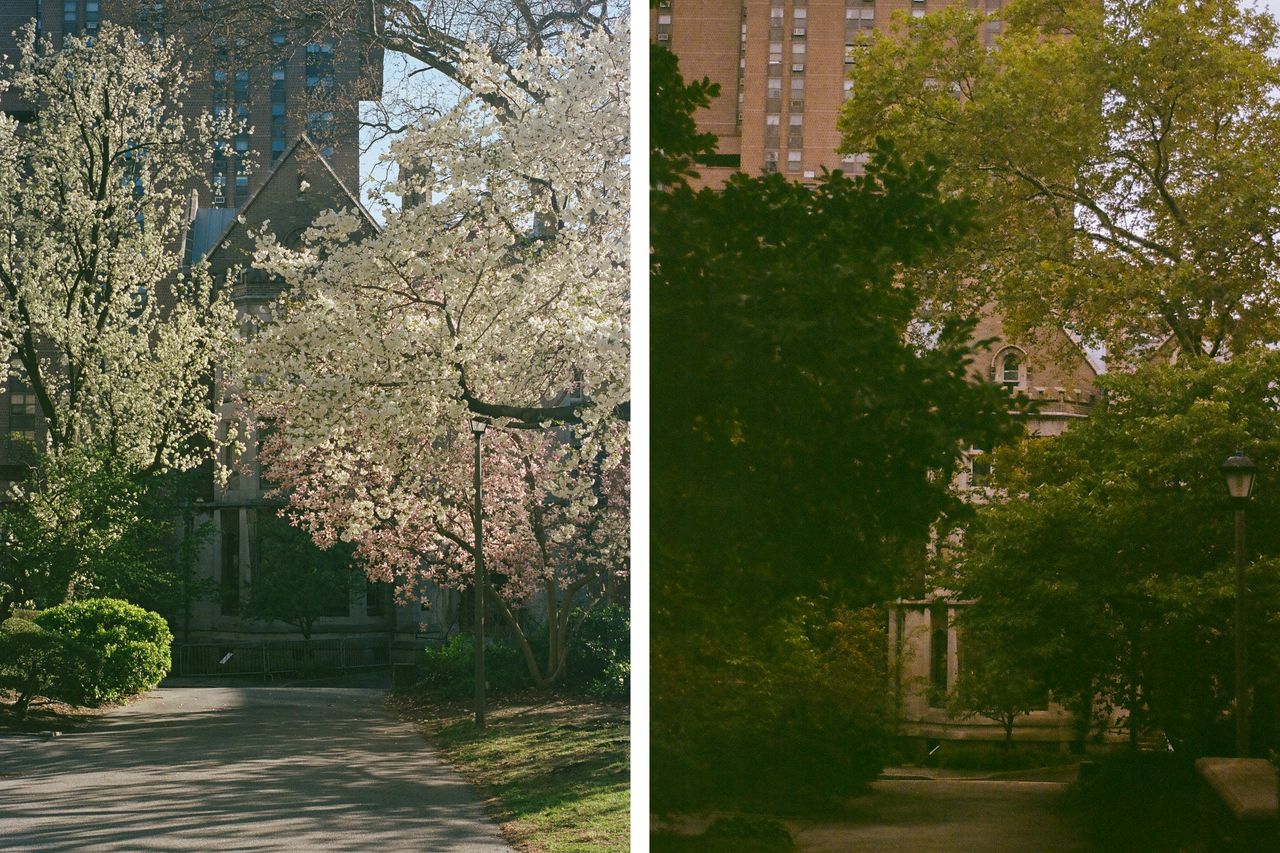
On our final day together, there was a time of sharing what would be next for us. Friends who had been searching for work all year announced job offers, one member shared that they would be assisting in the blossoming of an intentional community in their home state, another shared that they would be discerning ordination after years of denominational homelessness, and there was even a pregnancy announcement. I sat in this embrace of answered prayers and I could feel the joy of that greater plan superseding my myopic sadness over the ending of our shared shelter. These paths that have now split off are going in directions that are so much better than the stagnancy I craved out of fear.
There is a trust inherent to accepting endings as good. Our good seasons are essential for survival in our bad seasons, and they are integral to the good and even better things that we walk towards, no matter how grieved we are that they were shorter than our liking. Whatever I go on to do from here could not happen without this time in community with these people. I would not be the woman I am without the life and witness of my cousin. It is a difficult thing to proclaim that she is in a better place, or that it is ultimately better that she is not here. I do not endorse this idea to assuage my grief. Instead, I am attempting daily the humility that comes with accepting these great mysteries of life and death. I will miss her forever, and I will remember her fondly, hoping and trusting that our reunion will come when my own earthly pilgrimage draws to a close.
These aches we accrue are not only their pains, they are intrinsically linked with the joy they mourn.
Within the sorrow of an ending is embedded the joy of living out such a season. I cannot claim to understand why the world works in the way it does, and as these seasons ended, my tears fell just the same. But I can say that I am choosing to trust that all that has been brought low will be raised up. All that we see along our respective pilgrimages that causes us to slow our steps are not one-off anomalies; they are foretastes for what we are walking towards. We can trust that what is promised—all that is true and weighty and deeply good—will be at that finish line. May our hope in this promise spur us on to that new beginning with eyes ready to see the glimpses of glory here and now, gleaming with gratitude that we have been given the grace to see it.
There is a trust inherent to accepting endings as good. Our good seasons are essential for survival in our bad seasons, and they are integral to the good and even better things that we walk towards, no matter how grieved we are that they were shorter than our liking. Whatever I go on to do from here could not happen without this time in community with these people. I would not be the woman I am without the life and witness of my cousin. It is a difficult thing to proclaim that she is in a better place, or that it is ultimately better that she is not here. I do not endorse this idea to assuage my grief. Instead, I am attempting daily the humility that comes with accepting these great mysteries of life and death. I will miss her forever, and I will remember her fondly, hoping and trusting that our reunion will come when my own earthly pilgrimage draws to a close.
These aches we accrue are not only their pains, they are intrinsically linked with the joy they mourn.
Within the sorrow of an ending is embedded the joy of living out such a season. I cannot claim to understand why the world works in the way it does, and as these seasons ended, my tears fell just the same. But I can say that I am choosing to trust that all that has been brought low will be raised up. All that we see along our respective pilgrimages that causes us to slow our steps are not one-off anomalies; they are foretastes for what we are walking towards. We can trust that what is promised—all that is true and weighty and deeply good—will be at that finish line. May our hope in this promise spur us on to that new beginning with eyes ready to see the glimpses of glory here and now, gleaming with gratitude that we have been given the grace to see it.