טקסט נכנס לכאן...
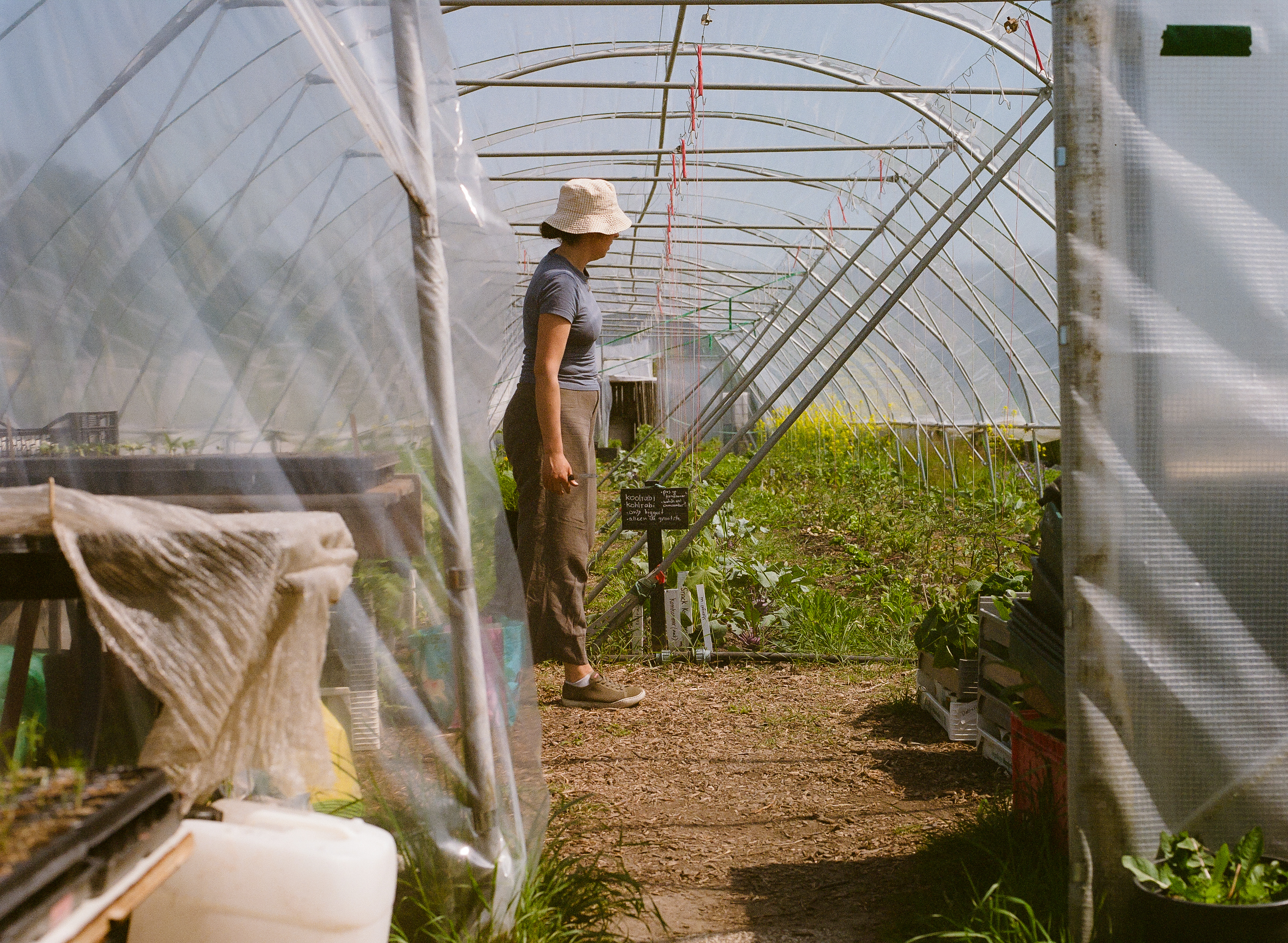
Theirs is the practice of care through cultivation. They do so in many ways, most notably by facilitating educational courses that connect interested participants to the knowledge needed to make the most of any space they have access to: community supported agriculture (CSAs), rooftops, restaurants, a plot in a community garden. Outside of Amsterdam they maintain outposts in Barcelona, Sweden, and Berlin.
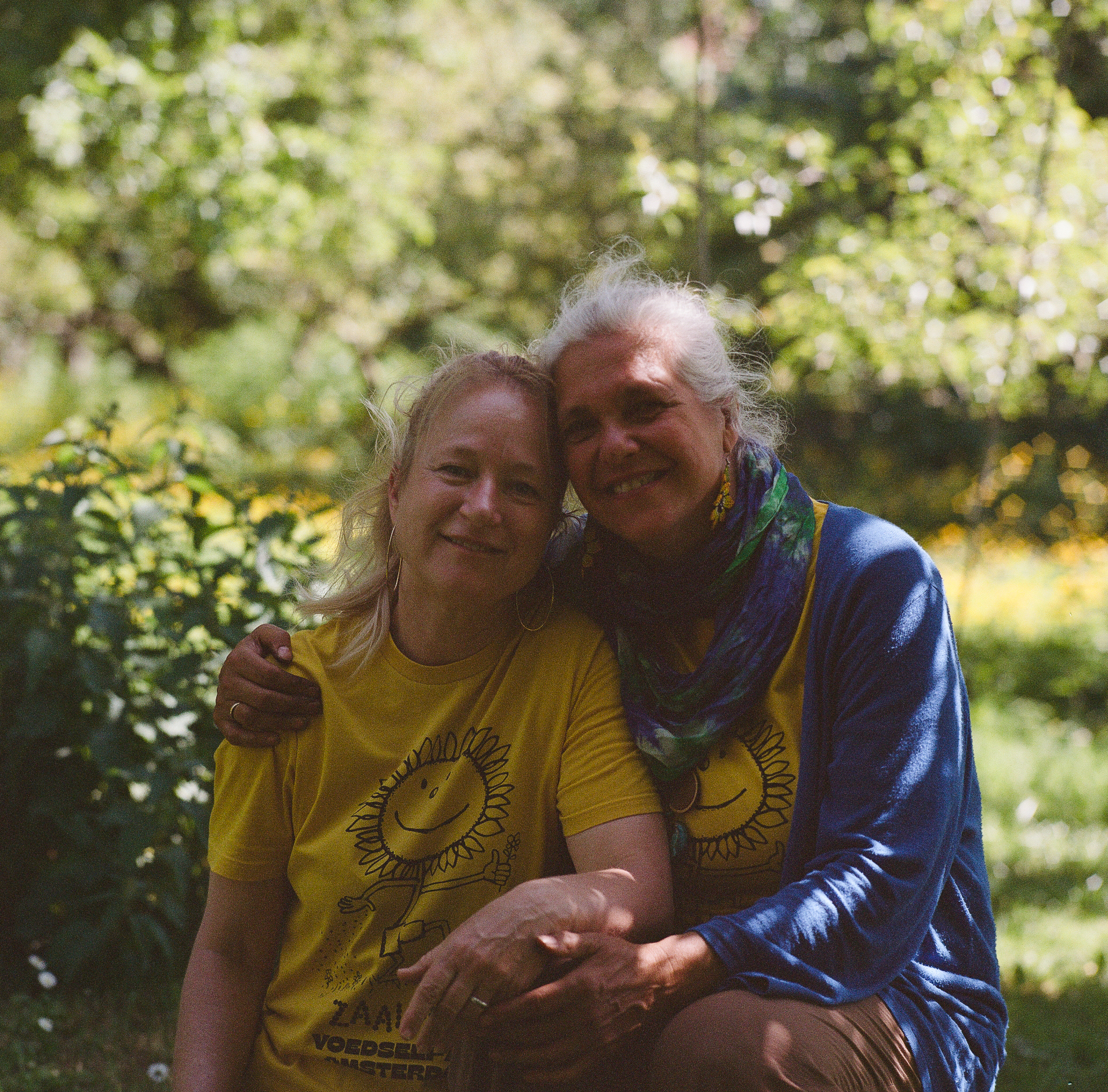
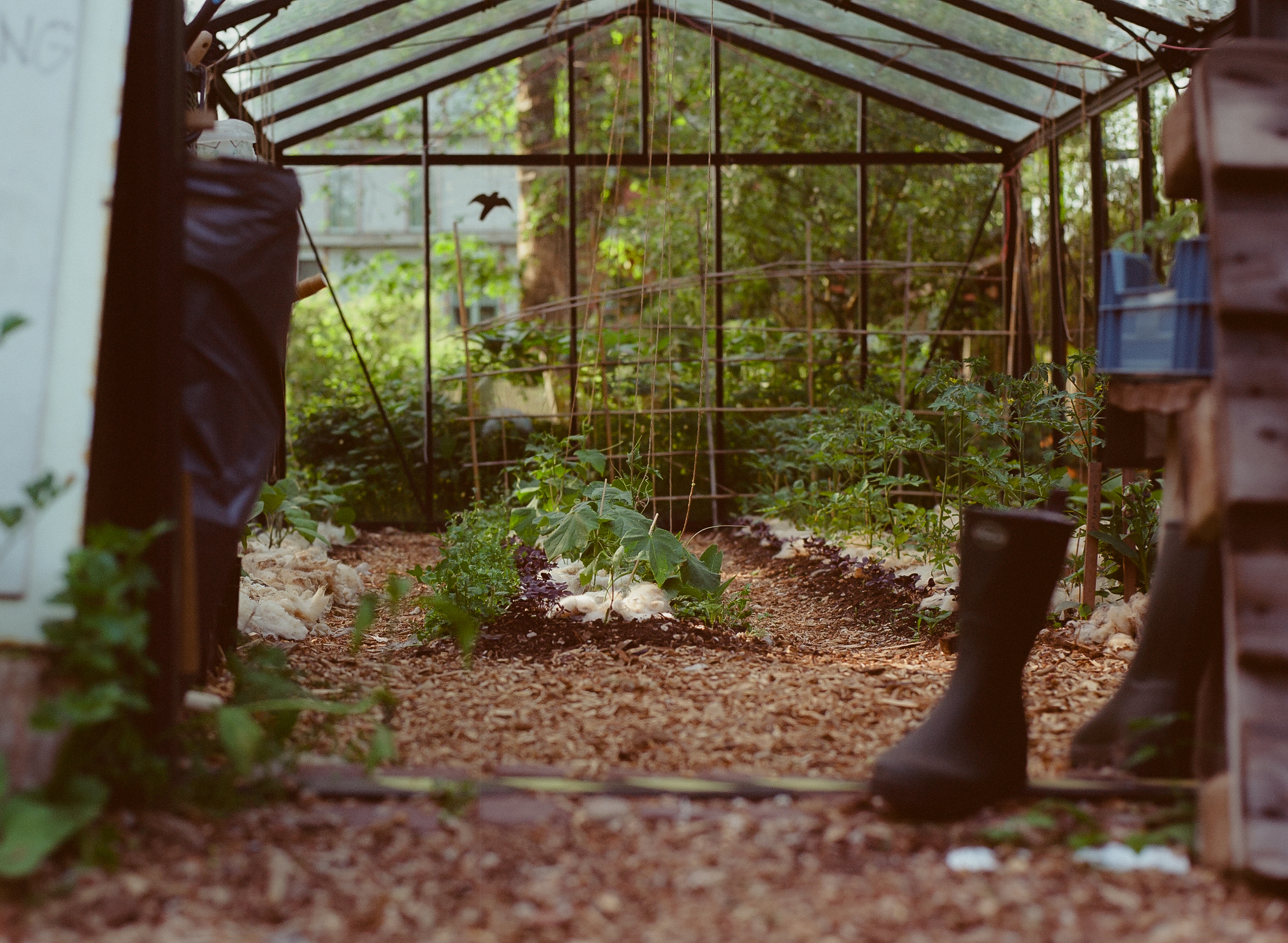
Cityplot may best be described as a facilitator among different organizations throughout Amsterdam. Those affiliated with the group keep their hands deep in the soil—they seem happiest here. Their disposition is evidence that if land can be “made,” then its landscape and our relationship to it can also be re-imagined. Or, better yet, restored to a symbiotic relationship.
פרק 2 כותרת
טקסט נכנס לכאן...
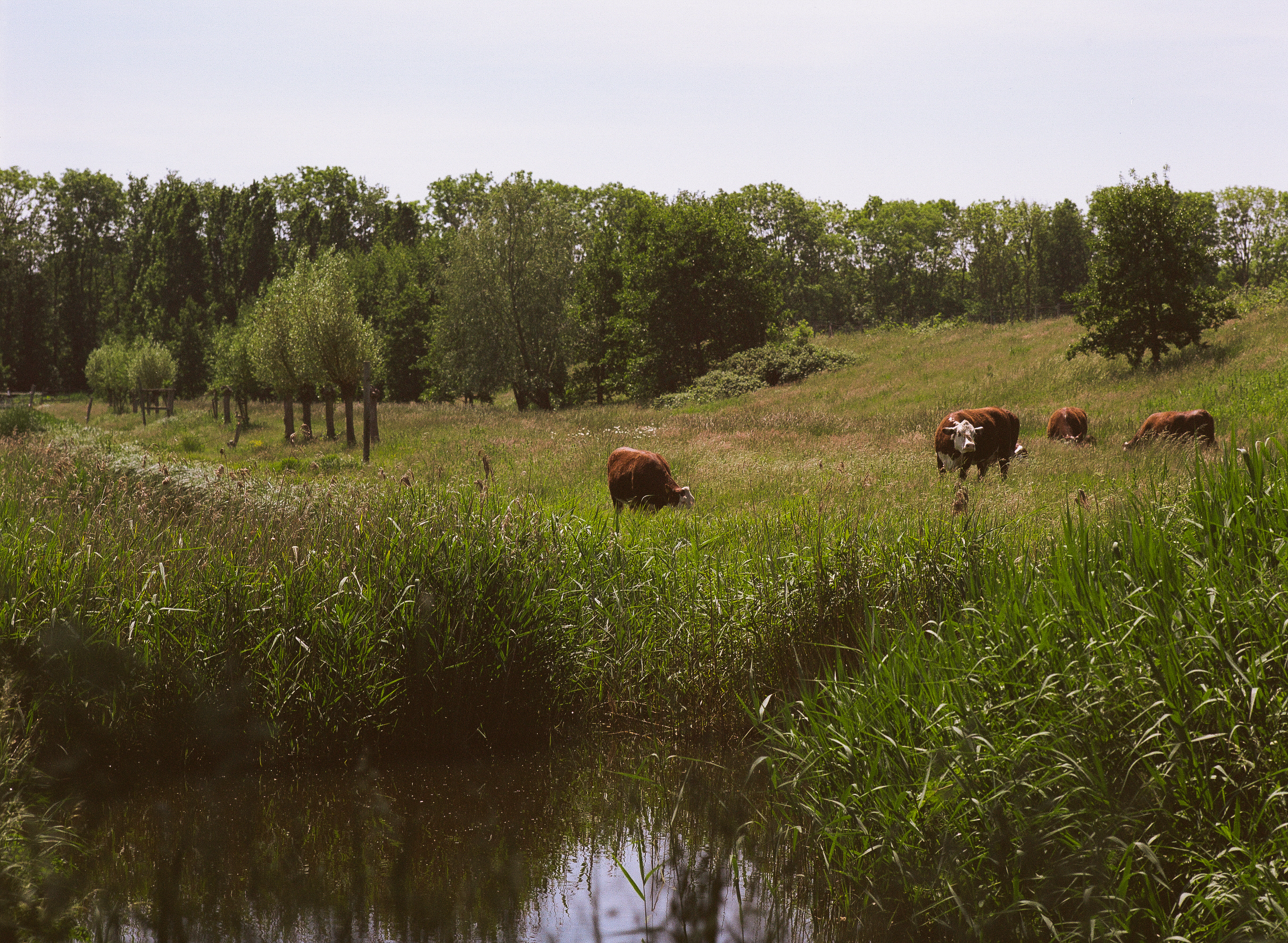
The area, the Lutkemeerpolder in Nieuw West, was a former lake transformed into land in 1865. It holds the last of the fertile clay soil in the city. Totaling just under 495 acres, a majority of the land is now managed by the local municipality. The government supports some agriculture and startup efforts, at one point offering to pay up to half the costs of new builds in the area. They have also awarded another five acres of land to Voedselpark Amsterdam, a local endeavor to encourage sustainable food production.
But even with these gains, much of the acreage has been leased to corporations for industrial use. Only five acres are currently being used for agriculture. The rest hold large distribution centers that, as Iris points out, are empty. The initiative to transform the land into an industrial business park was over 20 years in the making; the municipality believed it would be too expensive to shift gears and return the land to its agricultural heritage.
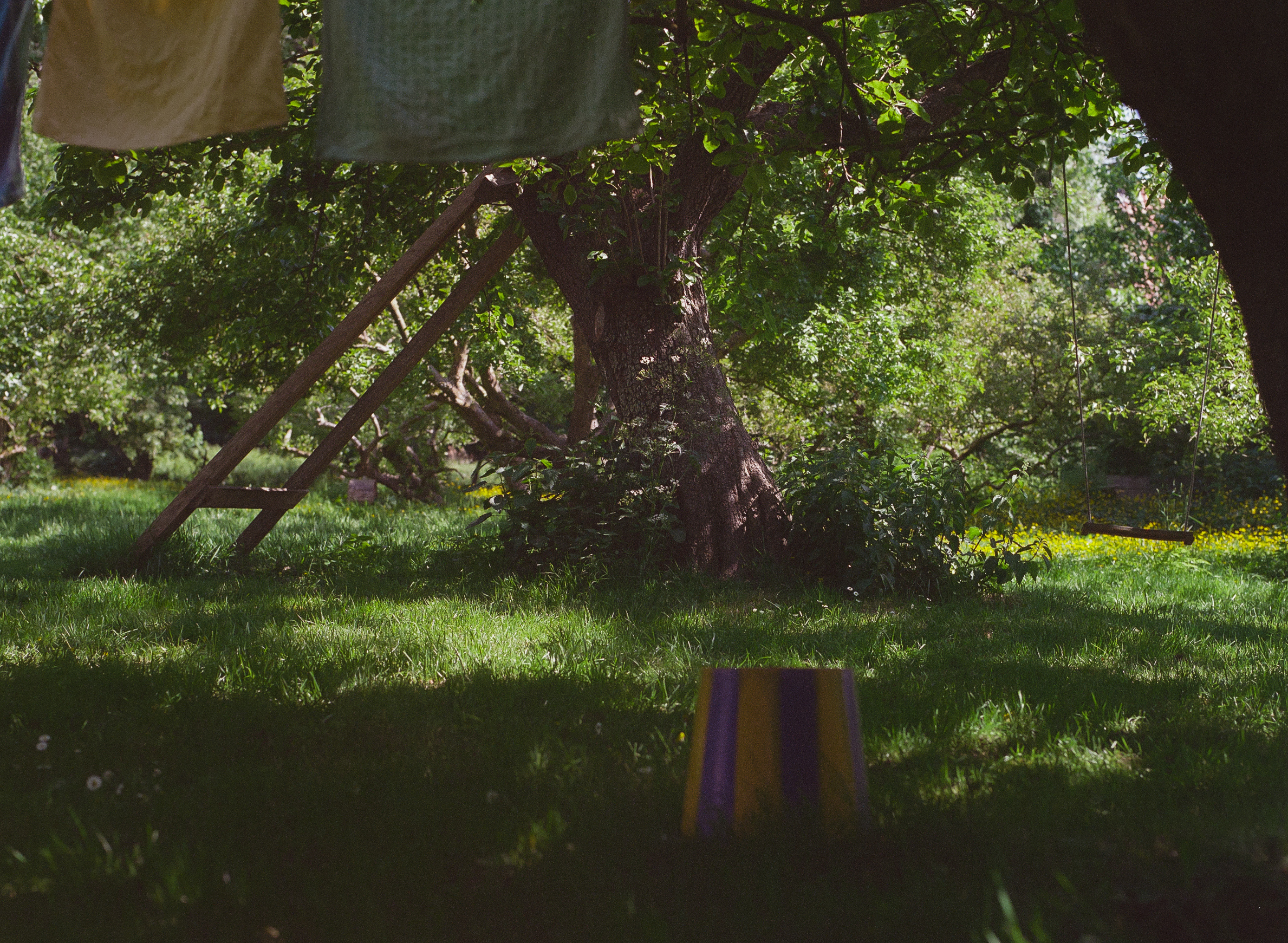
The pear tree sits in a 100-year old orchard. There is also a small store on the property where residents can buy dry and specialty goods, like locally baked breads.
Obiekwe Okolo
The area, the Lutkemeerpolder in Nieuw West, was a former lake transformed into land in 1865. It holds the last of the fertile clay soil in the city. Totaling just under 495 acres, a majority of the land is now managed by the local municipality. The government supports some agriculture and startup efforts, at one point offering to pay up to half the costs of new builds in the area. They have also awarded another five acres of land to Voedselpark Amsterdam, a local endeavor to encourage sustainable food production.
But even with these gains, much of the acreage has been leased to corporations for industrial use. Only five acres are currently being used for agriculture. The rest hold large distribution centers that, as Iris points out, are empty. The initiative to transform the land into an industrial business park was over 20 years in the making; the municipality believed it would be too expensive to shift gears and return the land to its agricultural heritage.
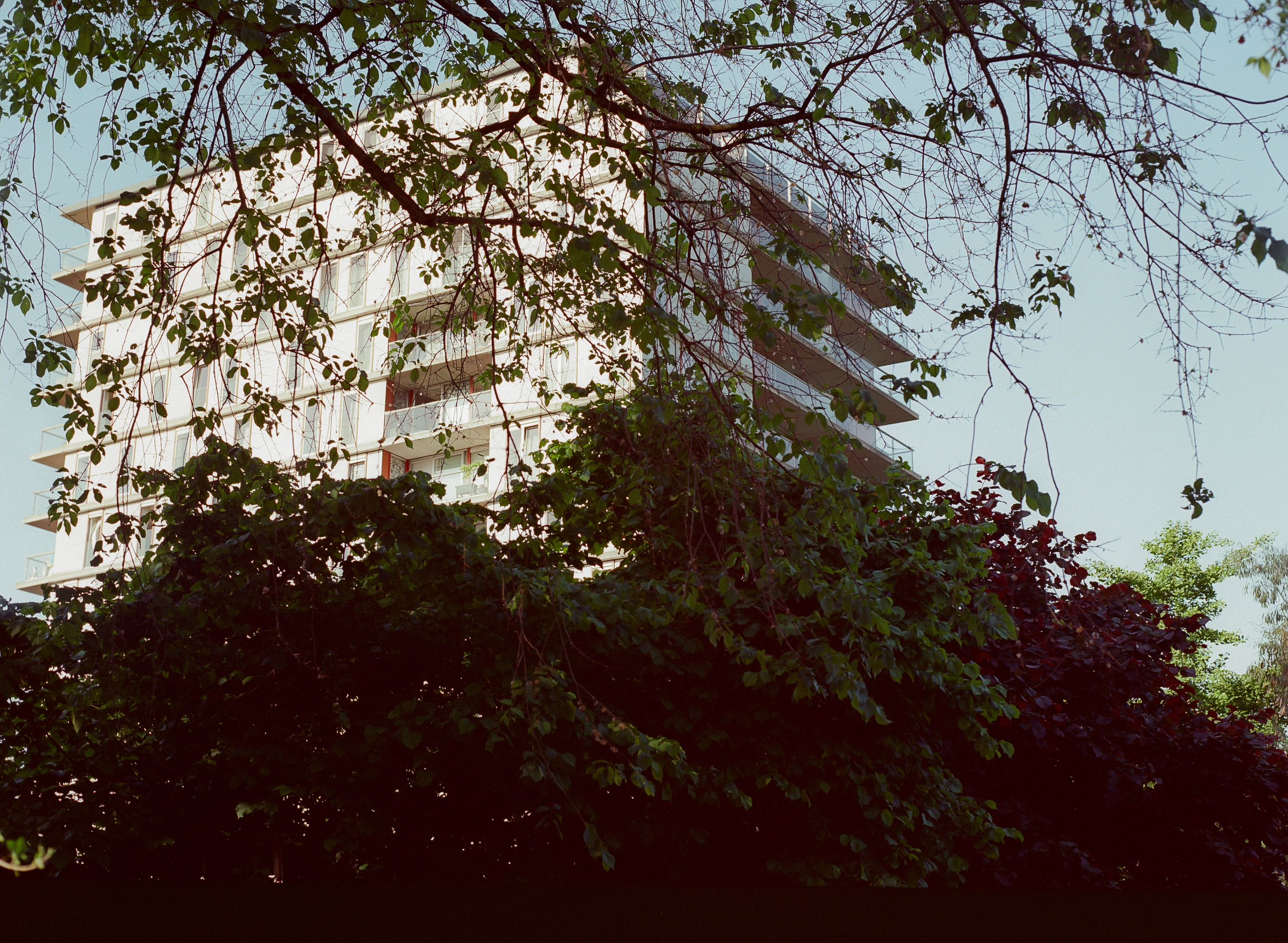
But even with these gains, much of the acreage has been leased to corporations for industrial use. Only five acres are currently being used for agriculture. The rest hold large distribution centers that, as Iris points out, are empty. The initiative to transform the land into an industrial business park was over 20 years in the making; the municipality believed it would be too expensive to shift gears and return the land to its agricultural heritage.
Iris and Catherina have joined local activists in preserving the last 50 acres of good farmland. The group’s efforts have effected real change: in 2021, they protested against Albert Heijn, a prominent supermarket chain creating warehouse space in the Lutkemeerpolder, by gluing the doors of its stores closed. The confrontation convinced the corporation not to build on the land.
Iris says that the activists were determined to “transform this business land into agricultural land again.” Their hope materialized into three social entrepreneurship startups currently in Lutkemeerpolder. One of them is the Pluk! CSA concept founded by Cityplot. This location, Boterbloem—named for the field of yellow that surrounds it—is one of two outposts run by the organization. What makes them unique is that its 110 members self-harvest their produce, active participants in communal resistance against corporate dependency and the disunity of humanity and nature.
Iris and Catherina were inspired towards this work through personal experience.
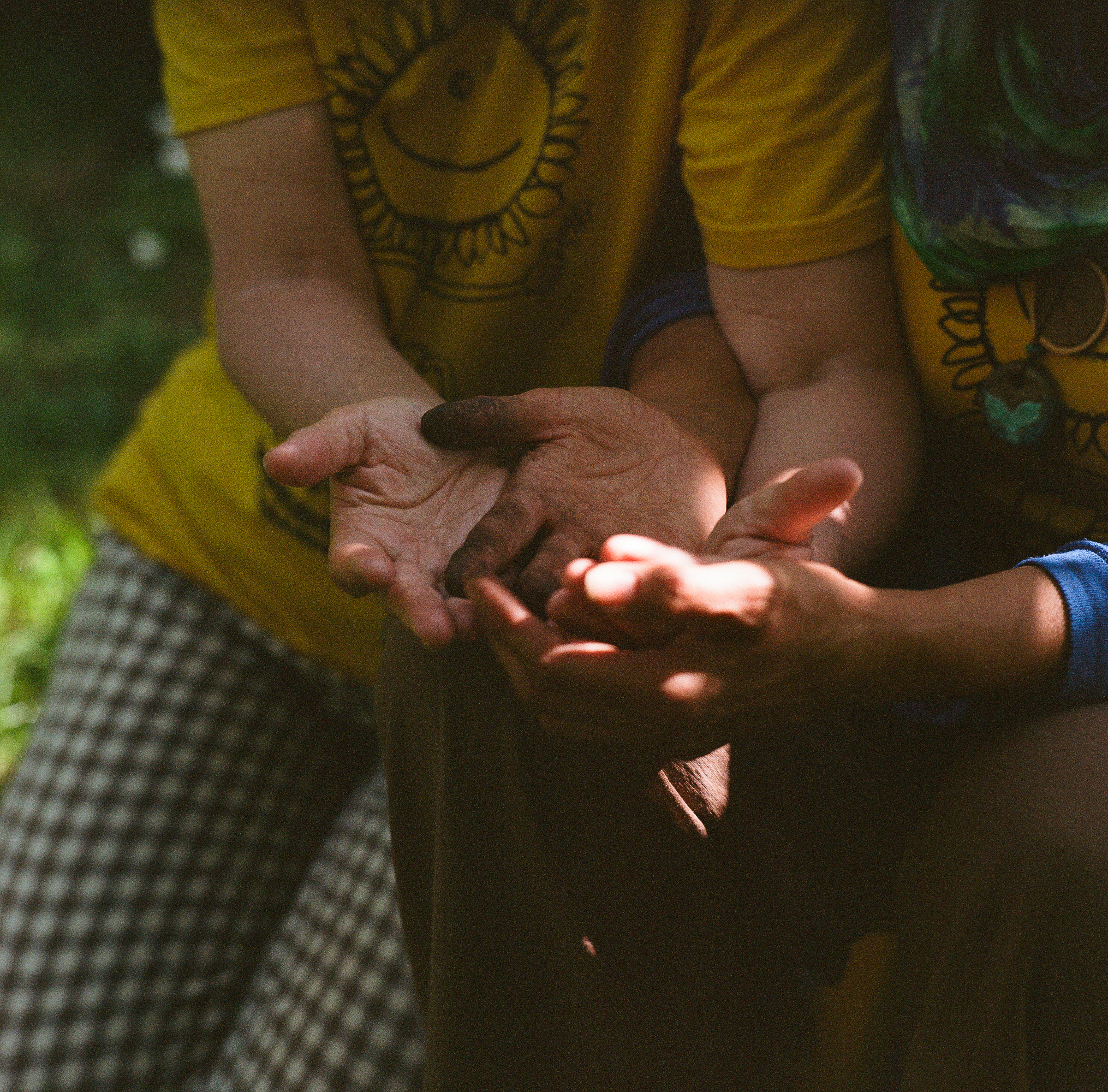
“I grew up on a farm myself,” says Catherina. “On our land is a highway now. It was land of 500 years of farming, and that is gone. And I saw the same happening here. So something happened in my soul.” Her hands portray an artist at heart, one who is both sensitive to the realities of life and unafraid of the dirt that comes with pursuing relational healing. It was in her role as an artist that she first worked with Cityplot, creating an agriculture focused exhibition using clay from her husband’s factory. The collaboration, back in 2011, sought to help communities understand where their food comes from.
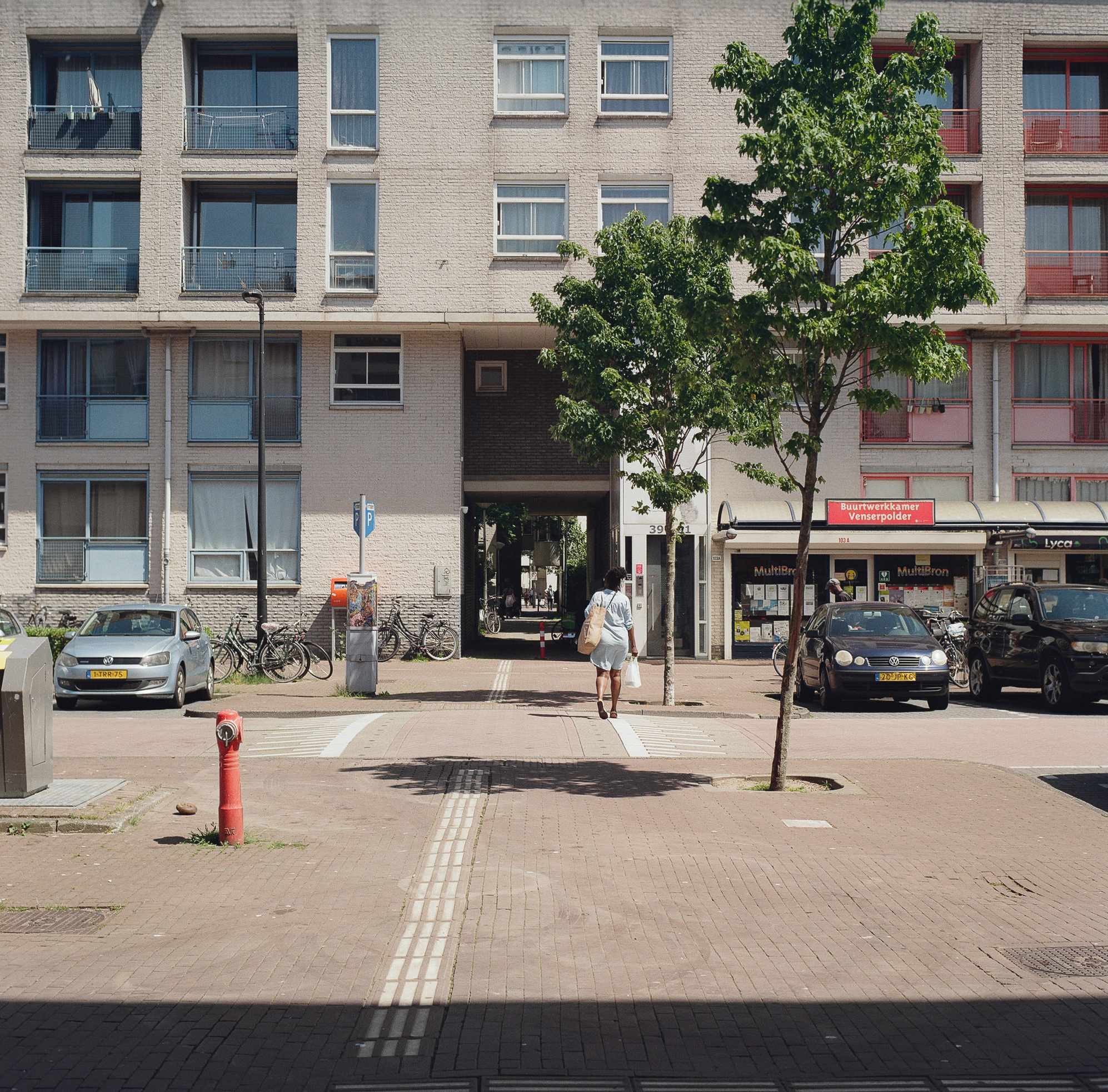
Similarly, Iris came into this work later in life but remembers being fascinated with soil and geology as a young girl. The work seemed to find her from there. She eventually built a career in tourism and uses that experience to conduct bike tours through Nieuw West. The rides bring participants face to face with the realities of the neighborhood, where residents have lower incomes and a lower life expectancy than those who live in the city center, and experience temperatures that are three degrees warmer because there is no open water around to cool the land.
The witness of the pear tree is a revelation of the current realities of Nieuw West. It also reminds Catherina and Iris of what this land has been and what it can return to: a home that can feed and nourish itself at relative scale. “My dream is [that] the children walk out of the door and can get their own fruits for free,” Catherina says.
פרק 3 כותרת
טקסט נכנס לכאן...
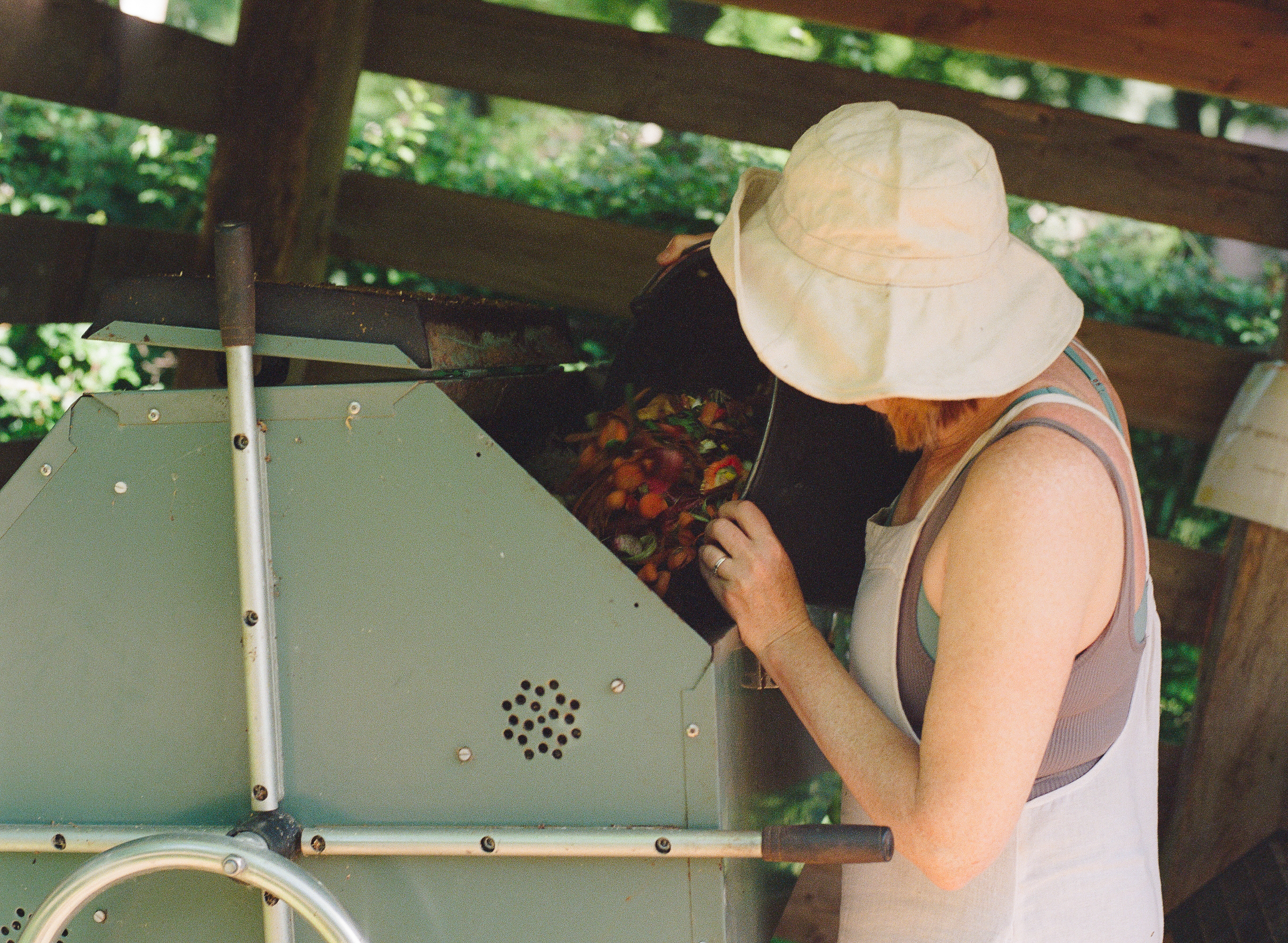
The group’s practice is a commitment to food justice and interdependence. Workshops on seed swapping, composting with worms, or starting your first edible garden show participants how small actions can build towards an alternative existence. It is backed by a devotion to communal knowledge, as evidenced by Ann’s journey to her current role. Hailing from Boston, she has been gardening in Amsterdam for more than 30 years and studied urban farming at the Warmonderhof, an immersive agriculture college in the Netherlands. She also served in communications for the global environmental justice organization Friends of the Earth. While she valued its mission, she craved the chance to work outdoors instead of behind a desk.
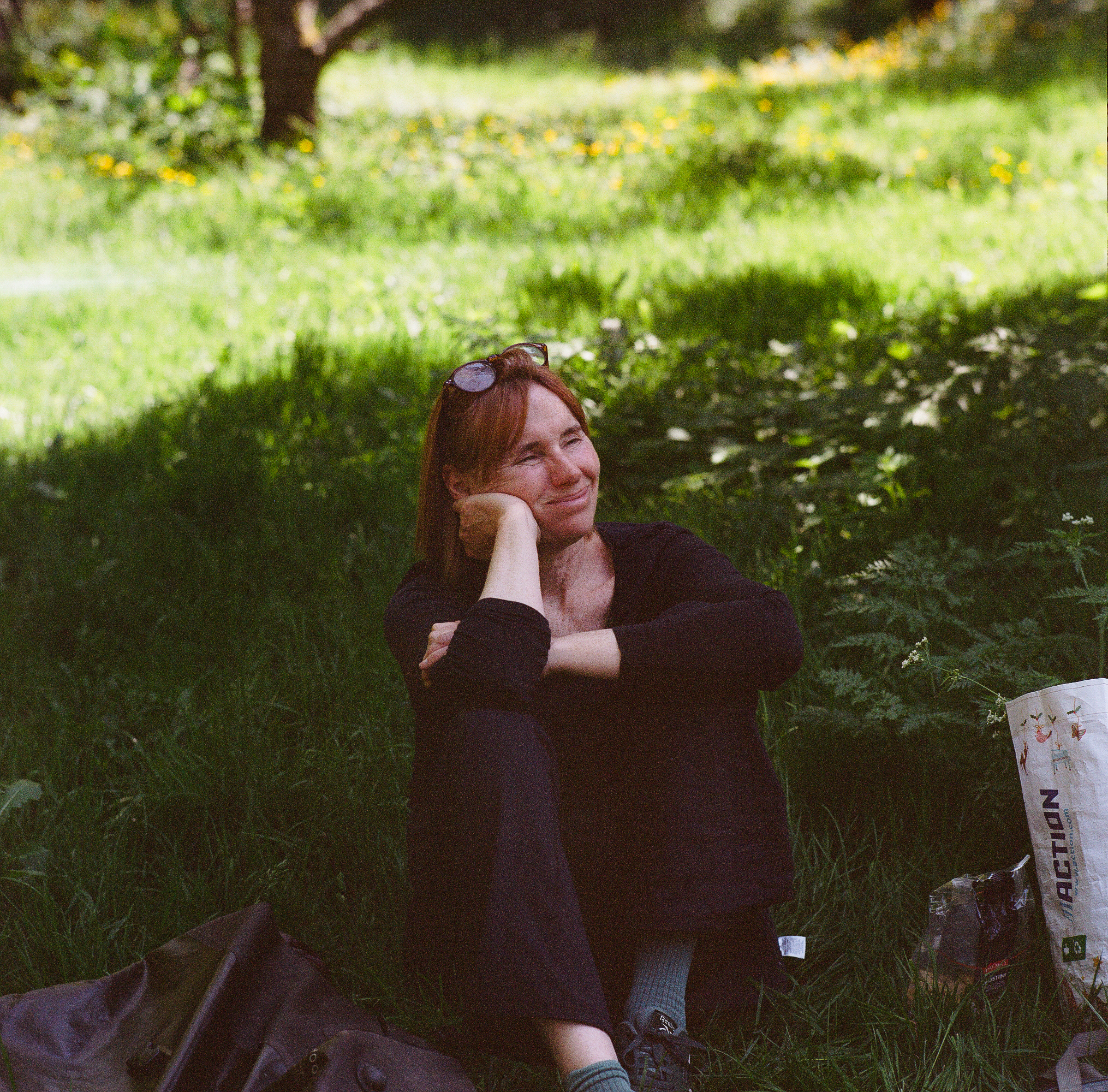
Her varied experiences, from backyard gardener to environmental advocate, mirror the trajectory of many Cityplotters. While they often join the organization from vastly different backgrounds, their outlook on the condition of land, people, and food systems binds them together. Ann sees it as the power of the garden. “It’s not that we’re all like-minded or anything,” she says, “but they're good people and we have fantastic conversations and you feel like there’s a lot of solidarity and caring for each other.” Their shared values align them with a broader movement. “We started off extremely small and now I feel like we’re big,” Ann reflects. “There’s a lot of us out there that are using food and growing food as a way to make change, not just locally, but globally.”
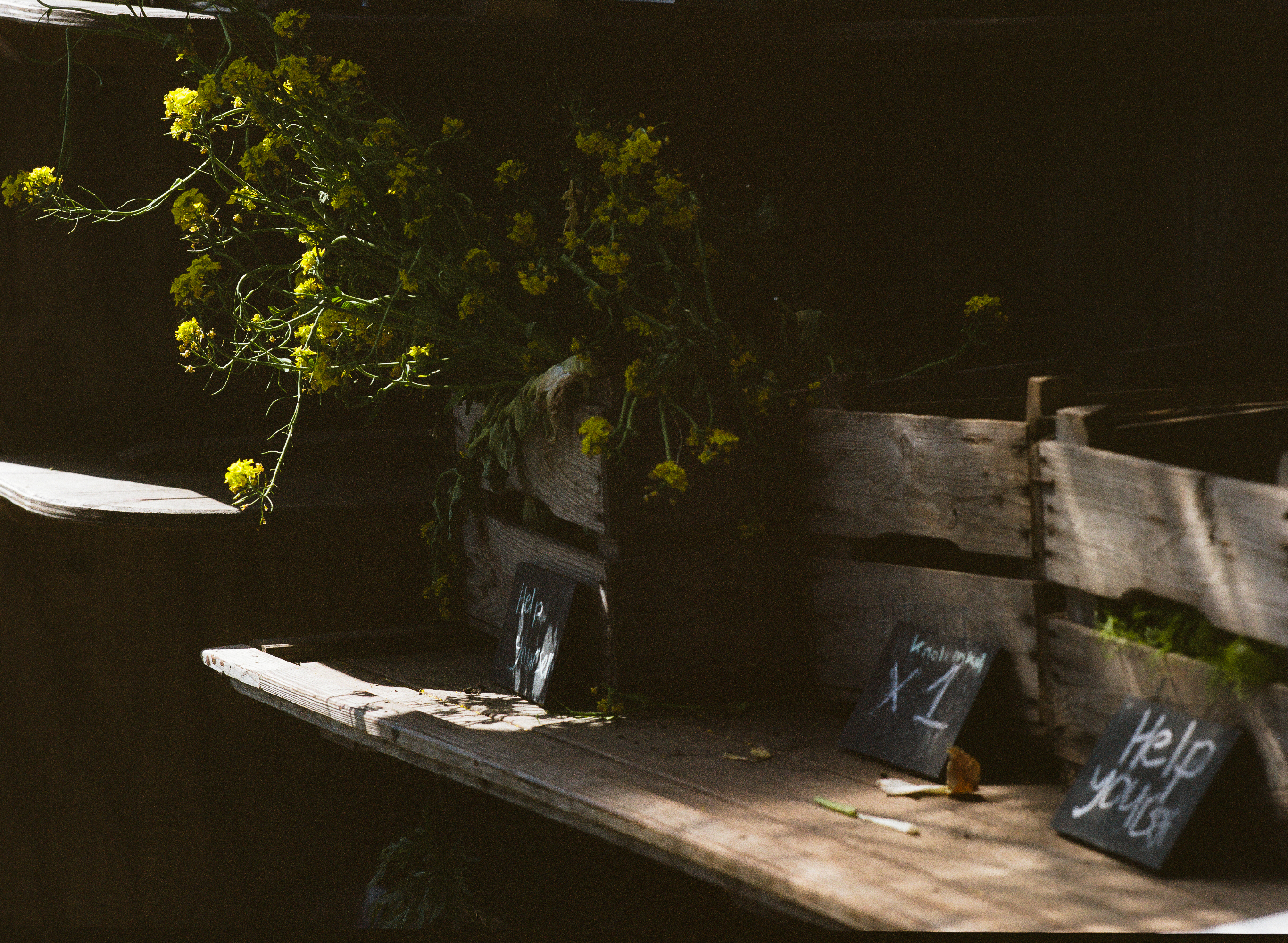
In Detroit, Michigan, wildflowers like Queen Anne’s Lace are received as a sign of fertile ground. They also speak to the resilience needed to nurture a full existence. Queen Anne’s Lace abounds in Amsterdam. Coincidentally, Cityplots’s founders were inspired by the essential work of urban farmers around the world, including in Detroit and Cuba. The vision of a single flower that flourishes under drastically different material conditions anchors the unifying experience of the soil. Fatima Shajoob has lived this vision.
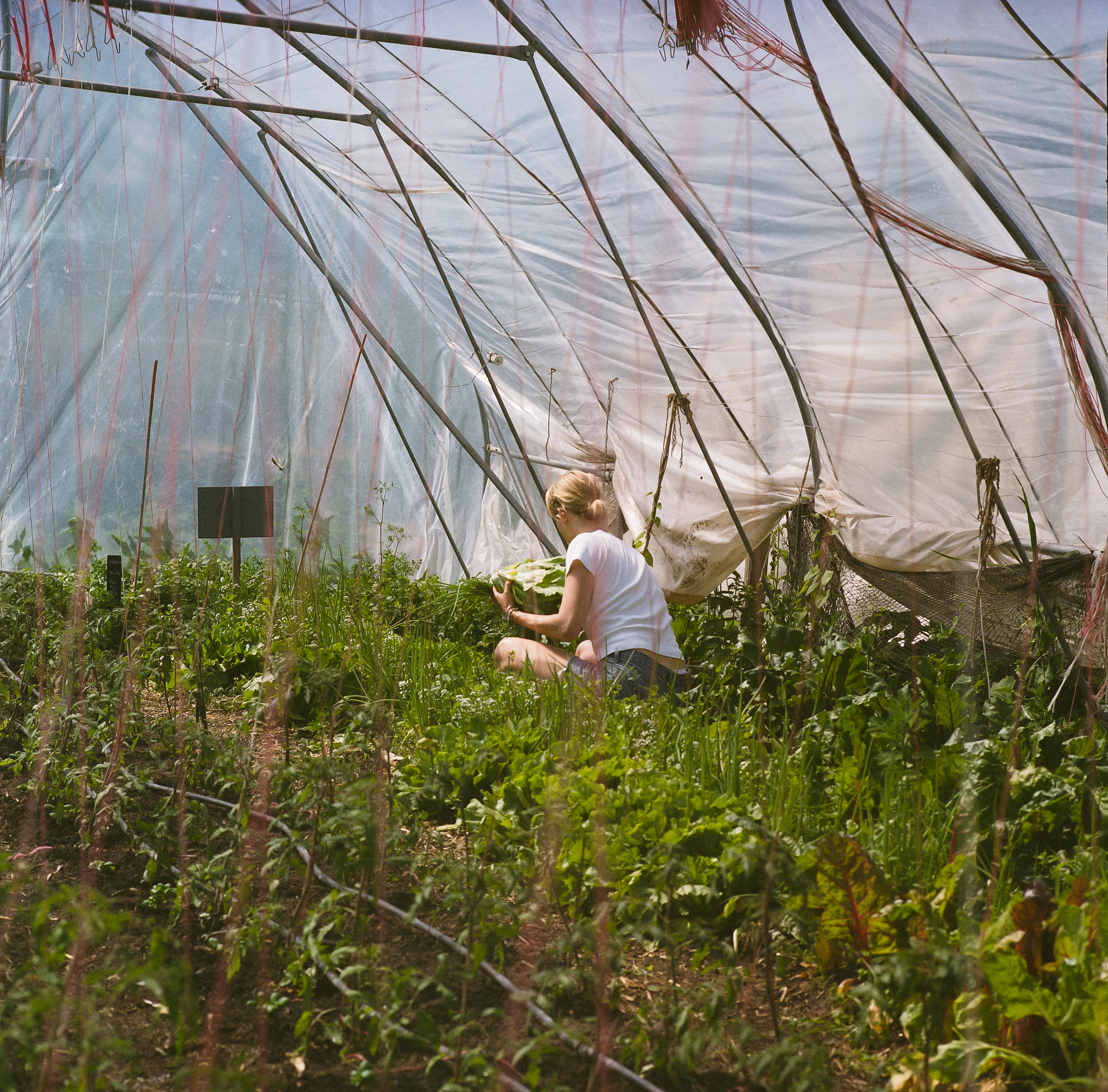
A Kurdish gardener, Fatima came to Amsterdam only a few years ago. She and her sister have recently started to help Cityplot with harvesting produce at another Pluk! CSA location: Fruittuin van West. The sharing of tasks, advice, and recipes is abundant here. As we walk through rows of produce, Fatima cuts lemon verbena leaves to make tea and lemonade. Ann advises her to take a handful of coriander, but to leave about five centimeters of the plant when cutting. She also grabs rapini (broccoli rabe) to cook later. The CSA reminds Fatima of Iran, where she grew up farming with her family. It was a place of vast green hills where “anything you can think to grow will grow.” Childhood memories flooded her mind as she walked the grounds on her first visit.
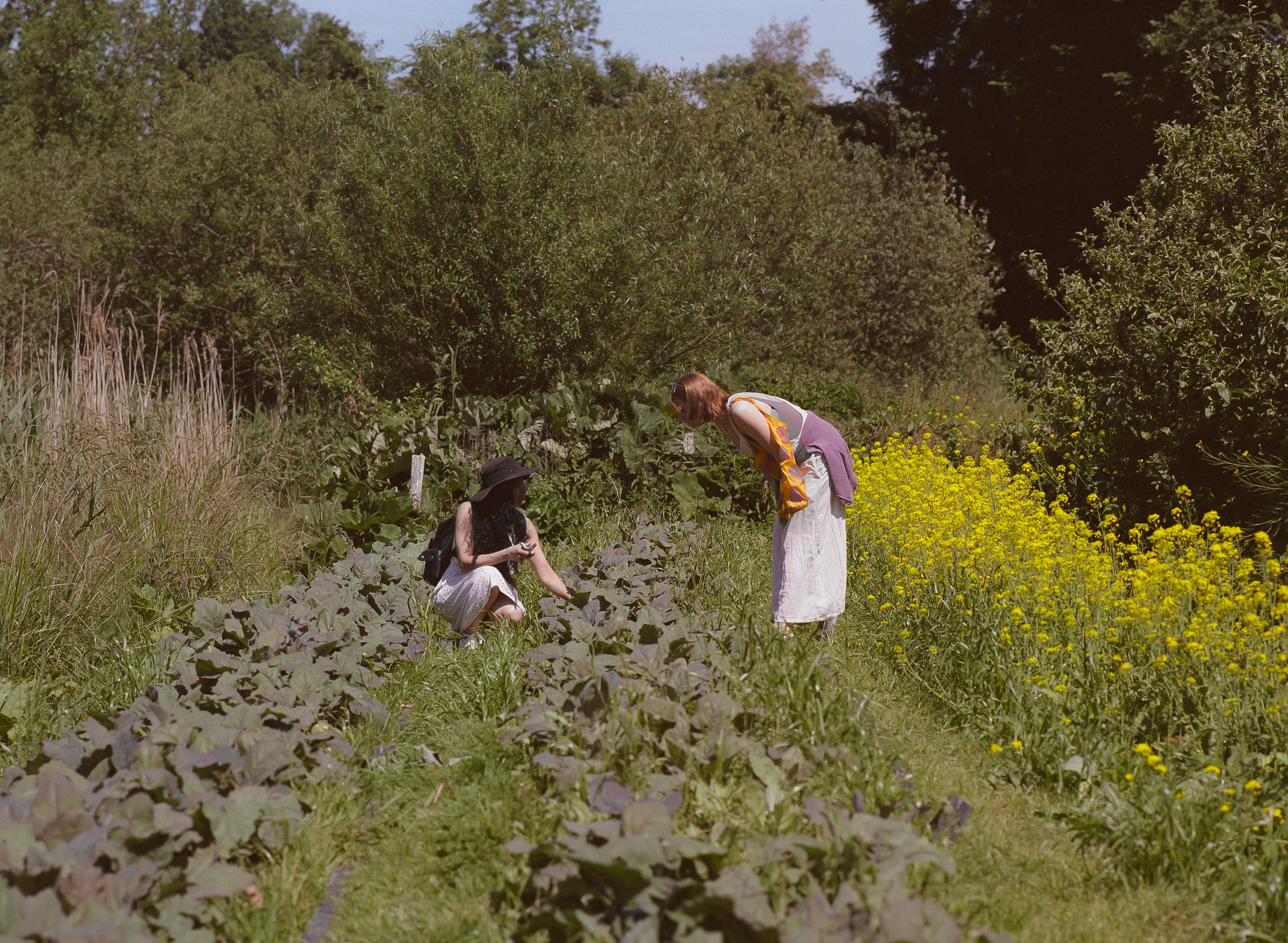
Fatima currently seeks asylum in Amsterdam. She spent much of her youth and adulthood protesting the Iranian regime’s treatment of women and her activism is costly. To avert jail, rape, or worse, she spent 40 days making her way from Iran to the border of the Netherlands. The journey was a “second trauma” because of everything she had to leave in Iran and “even when you try to make your way to freedom, it’s still not working,” she says through a translator. Navigating asylum in Amsterdam has only gotten harder and she is worried about the rest of her family in Iran; maintaining consistent communication has been a challenge.
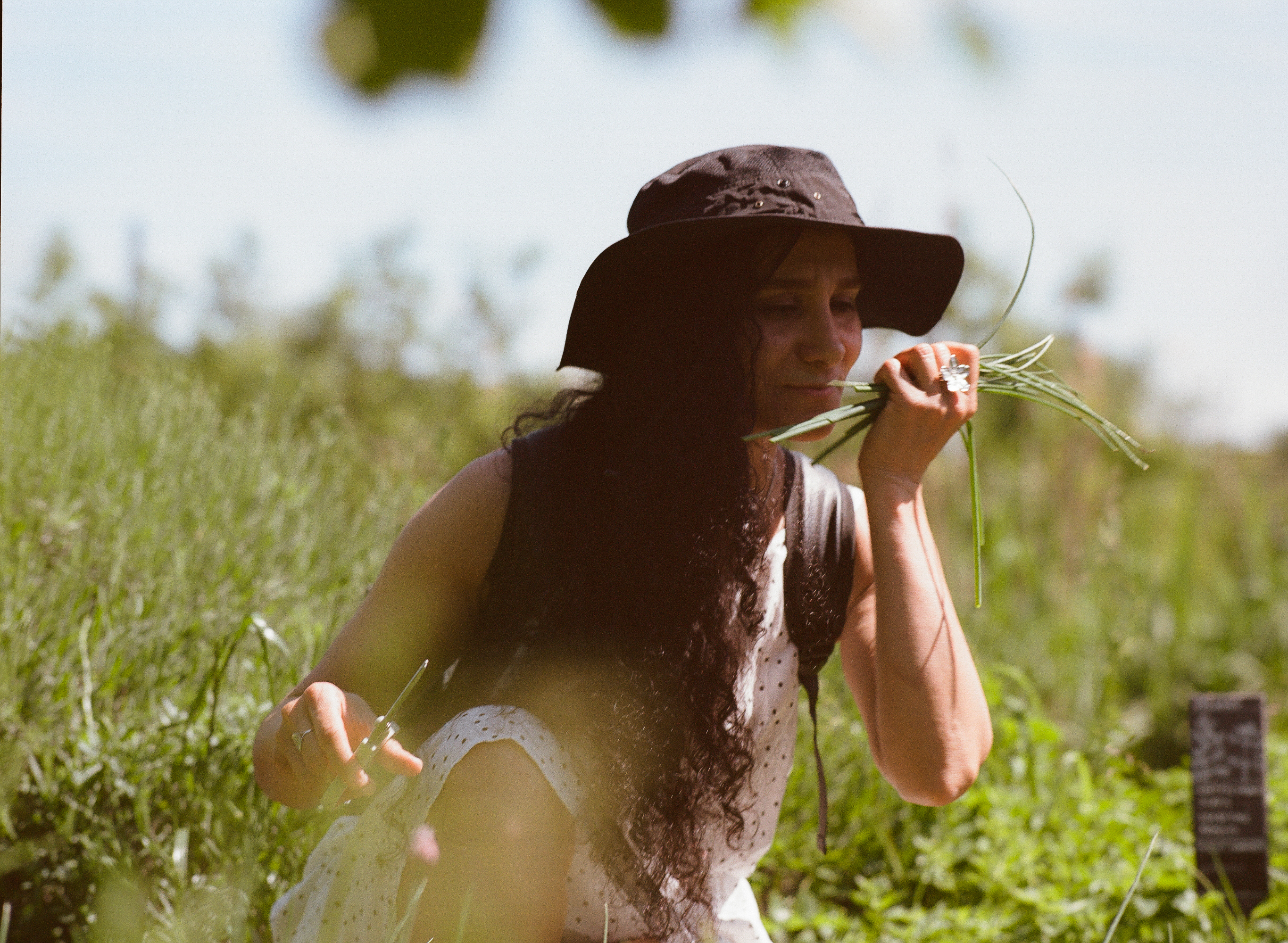
But Fatima finds healing in the garden. For her, hope was found in the rural areas of Tehran, and nature taught her the importance of caring for something other than yourself. Nature teaches care as a two-way street, a sentiment that she has also found to be true as she works in the garden alongside other Cityplotters. As they partake in a common goal, they are able to share their unique lived experiences with one another. Their different worlds are not flattened in uniformity. Instead, Cityplot offers space for them to be woven together, mirroring nature’s model of a more collaborative way of being. The land approves: Fatima beams when a butterfly lands on her face while cutting herbs, eyes widened in wonder.
But Fatima finds healing in the garden. For her, hope was found in the rural areas of Tehran, and nature taught her the importance of caring for something other than yourself. Nature teaches care as a two-way street, a sentiment that she has also found to be true as she works in the garden alongside other Cityplotters. As they partake in a common goal, they are able to share their unique lived experiences with one another. Their different worlds are not flattened in uniformity. Instead, Cityplot offers space for them to be woven together, mirroring nature’s model of a more collaborative way of being. The land approves: Fatima beams when a butterfly lands on her face while cutting herbs, eyes widened in wonder.
פרק 4 כותרת
טקסט נכנס לכאן...
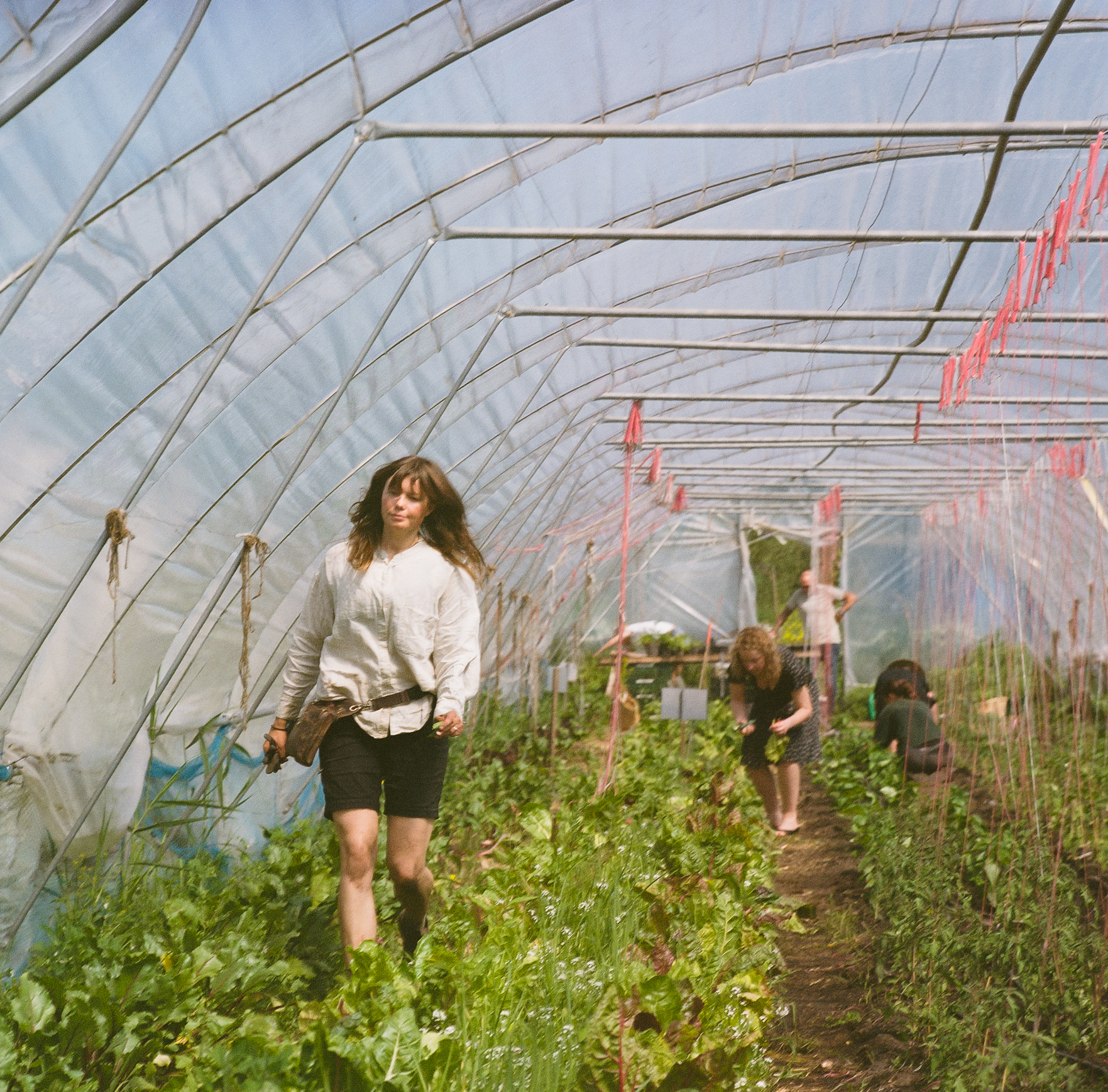
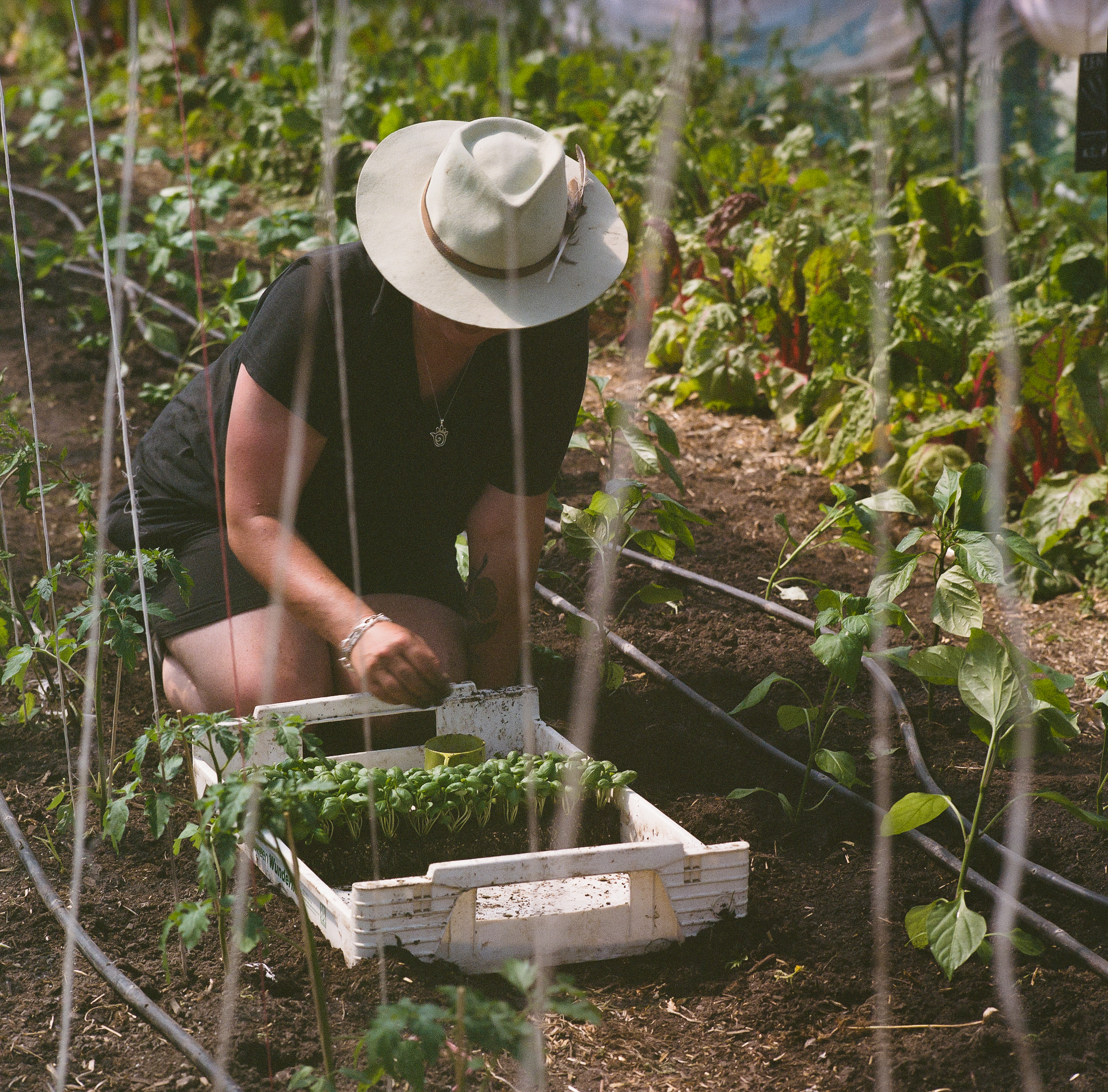
Ida Simonsen spent her graduate studies looking at distribution, studying human rights and food systems while interning with Cityplot four years ago. She has since transitioned into a full-time farmer and coordinator with the Pluk! CSAs. For her, the importance of urban farming in Amsterdam is that it allows people to engage directly with the principle of fair share. “Amsterdam in a lot of ways can be seen as the belly of the beast—that’s what we call it in activist communities—considering its role in the rise of colonialism and also how intertwined that is with the development of our food systems,” Ida says. “Also, the role that the Netherlands still plays today in our global food systems with being, for example, the second biggest exporter of food.”
Their location matters, as it acknowledges the power that bolsters a country to become such a large player in the global food system and explains the Netherlands’s relationship to the rest of the world. “To farm here in particular is to take responsibility. In a way to say, ‘We’re going to grow it here.’ We’re not going to make unfair demands on the countryside,” she says. “We’re also going to stop feeding into a system of exploitation [that] harms ecosystems and societies in other countries. For example, let’s say the Serrato in Brazil where so much forest is cut down and so many communities are being harmed to produce soy in an industrialized way to then make cattle feed that comes here to feed the cows in the Netherlands. This is a way of resisting that and transforming that system.”
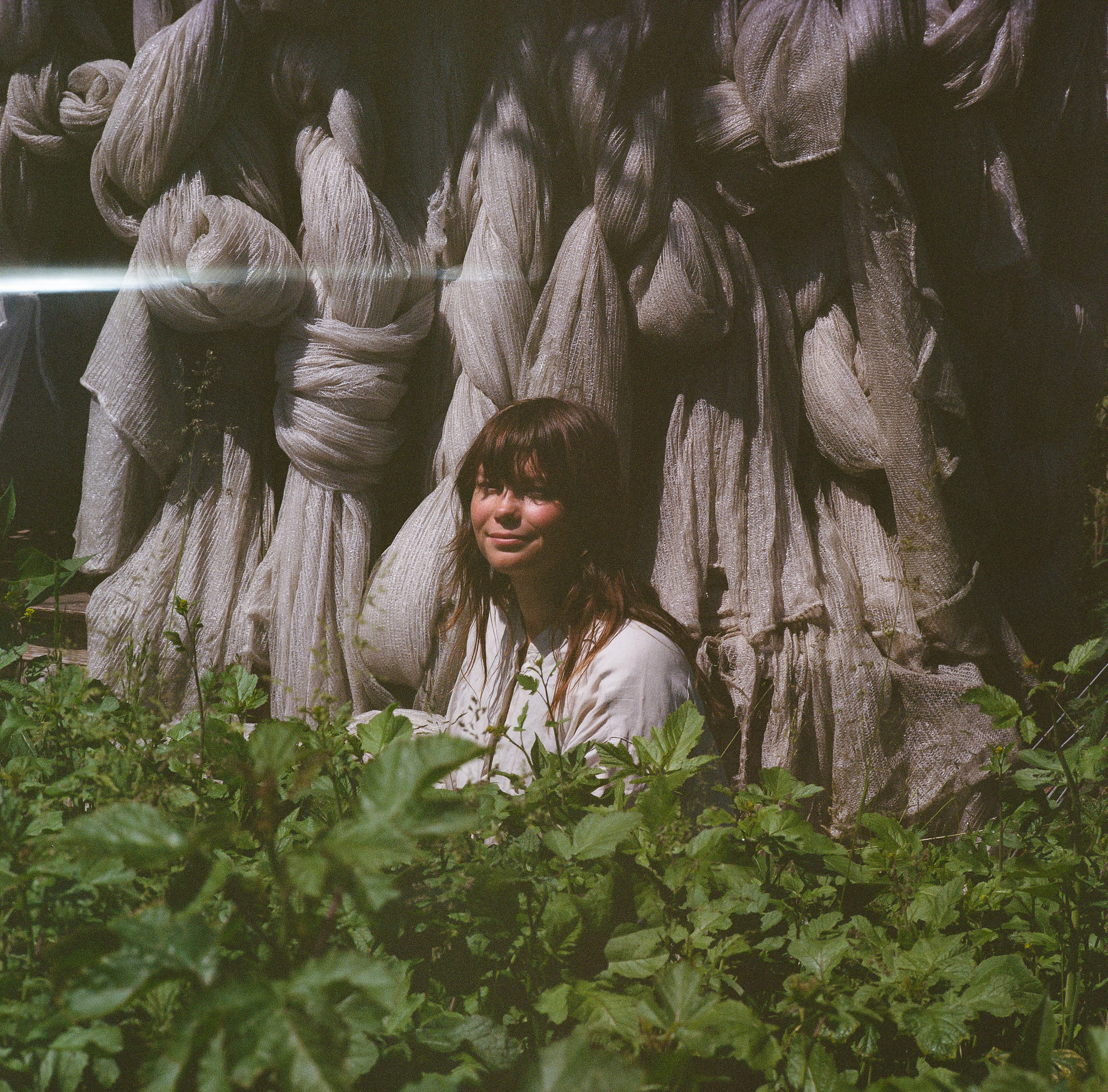
Ida, like Ann, frames care as a type of generative resistance. Growing your own food, sharing with neighbors, upholding the dignity of farm workers, and committing to slower living are all understood as forms of activism. They challenge systems of domination in favor of a reality built on nurture and inclusion.
Ida herself began to see urban farming in this light as she spoke with farmers in La Via Campesina, the international peasants movement. Their example showed that activism encompasses many paths, each one powerful in its own right. She once saw direct action as the main source of activism, but “I got very tired and I saw a lot of my comrades get very tired,” Ida says. “It felt very wrong to do that type of work, then feel so empty afterwards. And you go to Albert Heijn [to] buy something ready-made and you go home and pop it in the microwave.” Purchasing food from an industrial giant while protesting for a more localized food system seemed at odds in her mind and body. Farming allows their community to realign and “nurture new systems while we compost the old.”
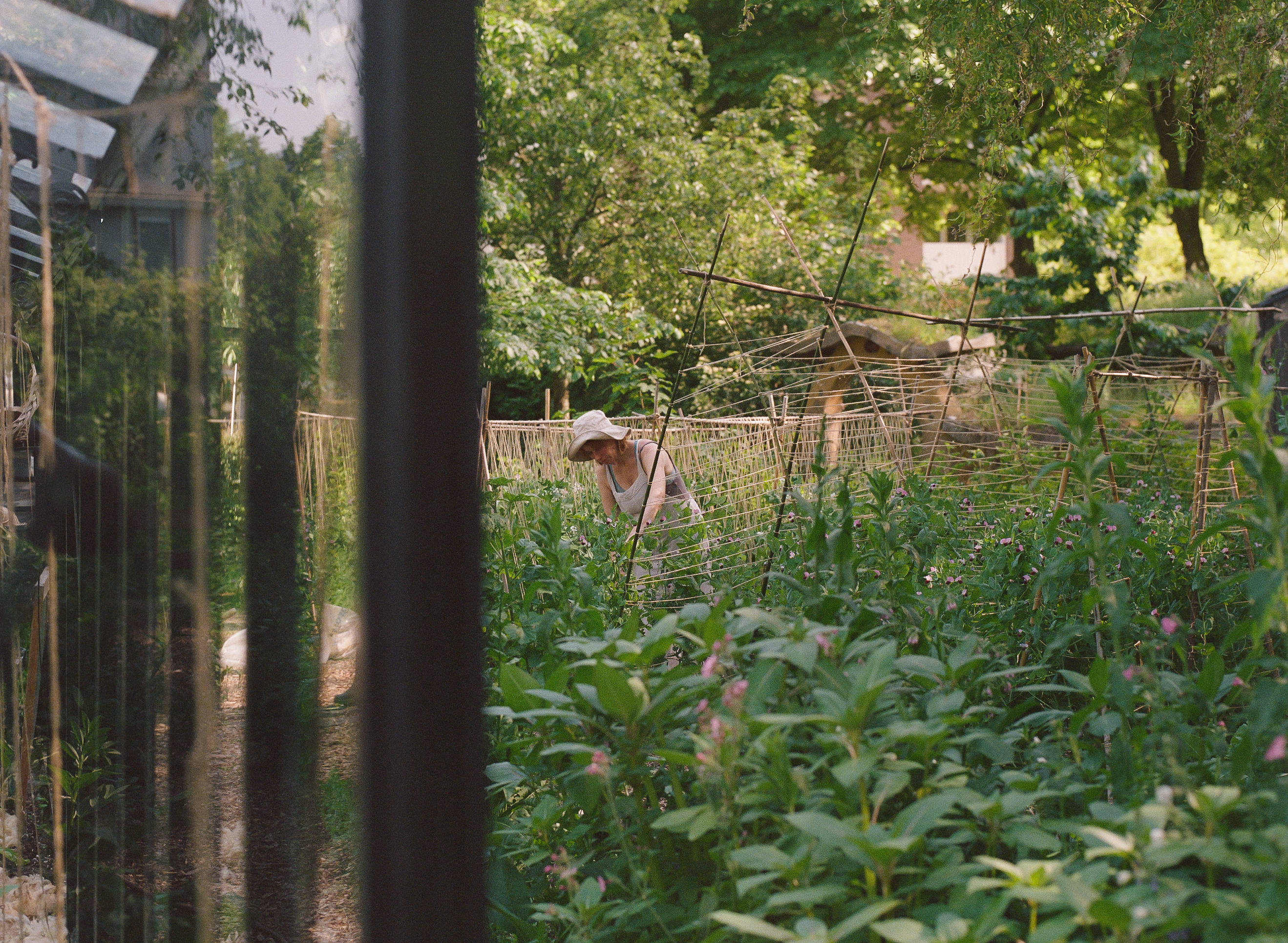
Ida is careful not to glamourize the hard work of gardening, sharing that her morning at Pluk! started by removing a chicken carcass one of the dogs had decapitated overnight. But farming is nurturing because it doesn’t shy away from the complexities involved in caring for land and people. I am reminded of a miller Iris mentioned at the Pluk! Boterbloem location. Every Saturday morning, he bakes about eight different types of bread using flour he has milled on site and is sold in a local store for five euros. “It’s so good,” Iris says. “It’s his way of protest… and is maybe the cheapest bread in town.”
Cityplot and its partners practice care as a collective act. Slow work sparked one neighborhood at a time, fueled by its participants' commitment to those who have historically been left out of abundance. “I can’t wait to get to the garden to see what’s happened within the space of a week,” says Ann when asked what keeps her going in this work. “So that… and just the fact that the people that come to the garden are the salt of the earth.”
פרק 5 כותרת
טקסט נכנס לכאן...
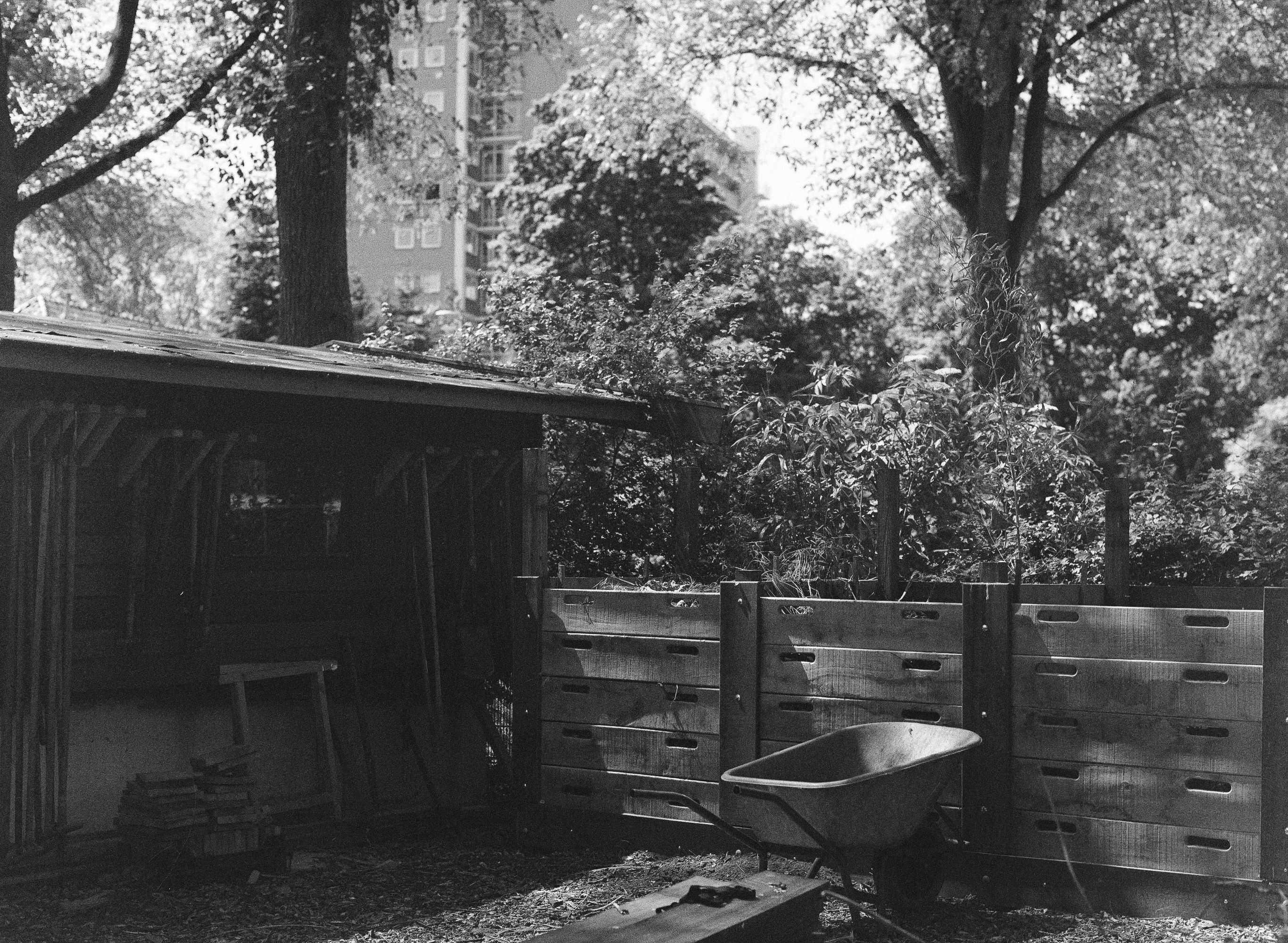
The hallmark of the space is its communal kitchen, where food from the garden is prepared for weekly community dinners by a rotating group of local chefs. Every Wednesday, community members contribute 5€ to share a meal with neighbors they may not have met otherwise. The dinners are a special exchange of time, presence, and family recipes. It was at one of these dinners that Fatima first connected with Ann; she baked an Iranian sesame bread to share with the meal that evening.
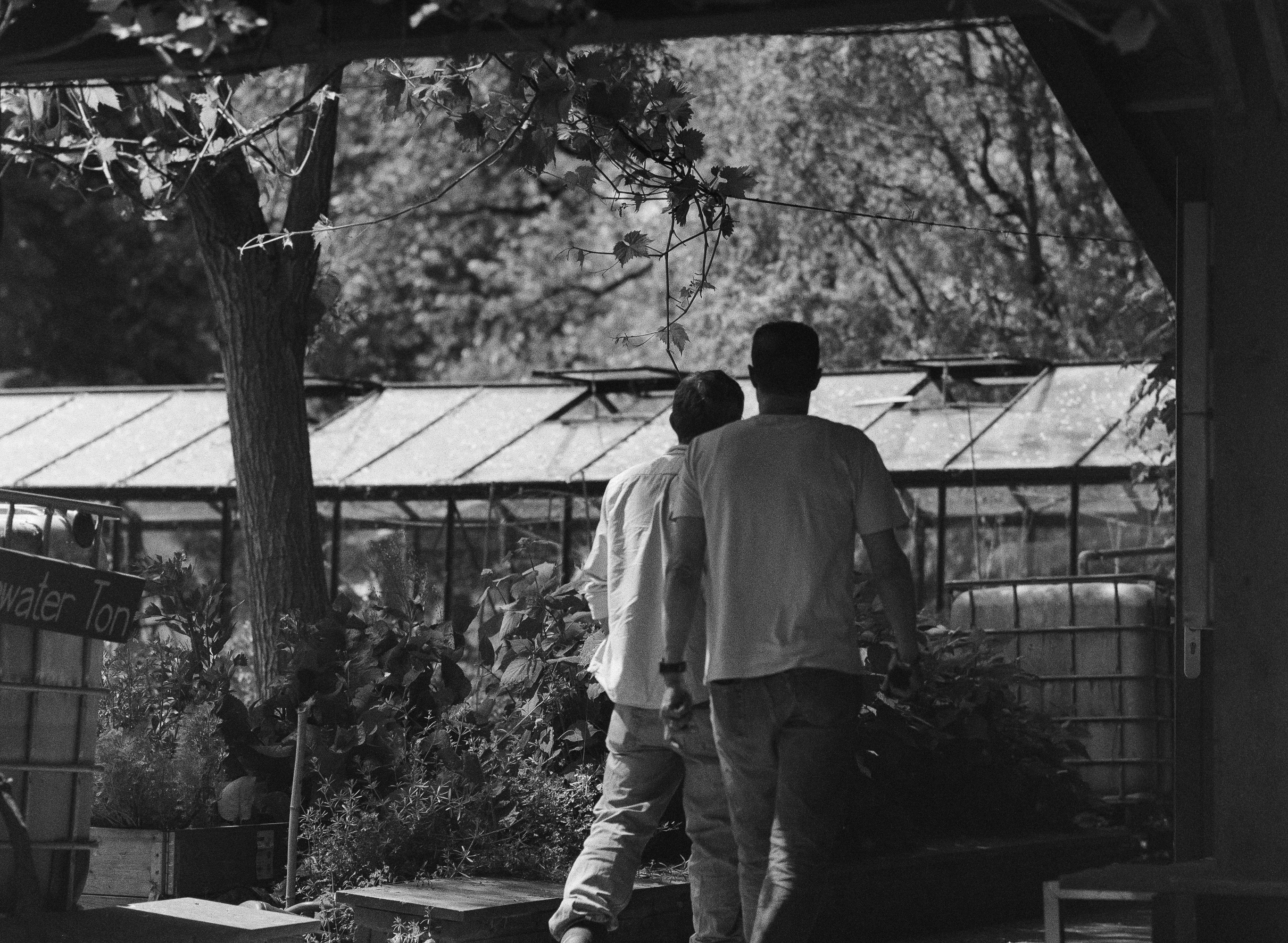
The Stadsboerderij was founded by Martin ten Brinke, its visionary director who describes the space and surrounding neighborhood as “a place of innovation… a place of hope.” He started the farm about 12 years ago with support from the local government. It’s a culmination of his professional experiences in catering, public service, and landscape architecture. Martin believes in the power of green space to bring people together. “It’s a very special place because lots of cultures, religions, people from all kinds of backgrounds live here,” says Martin. “But it's also a place of poverty. Compared to other places in Amsterdam, like the center, you could say there is more poverty here, more [unemployment], and other issues like health. You have to address that and be aware of that.”
The farm is one way to address those issues by preparing the table to build relationships and become aware of each other’s needs. “I think the farm gives us the possibility that people can meet who wouldn’t meet each other in ordinary circumstances,” Martin shares. “You create possibilities. I think the green space helps that even more because you’re outside. Everybody likes nature. Everybody wants to sit in the sun. Everybody likes food. Everybody wants the best for their children and for themselves, for their neighbors. Everybody wants to join people and have a life which is satisfying, which is meaningful.”
The farm is one way to address those issues by preparing the table to build relationships and become aware of each other’s needs. “I think the farm gives us the possibility that people can meet who wouldn’t meet each other in ordinary circumstances,” Martin shares. “You create possibilities. I think the green space helps that even more because you’re outside. Everybody likes nature. Everybody wants to sit in the sun. Everybody likes food. Everybody wants the best for their children and for themselves, for their neighbors. Everybody wants to join people and have a life which is satisfying, which is meaningful.”
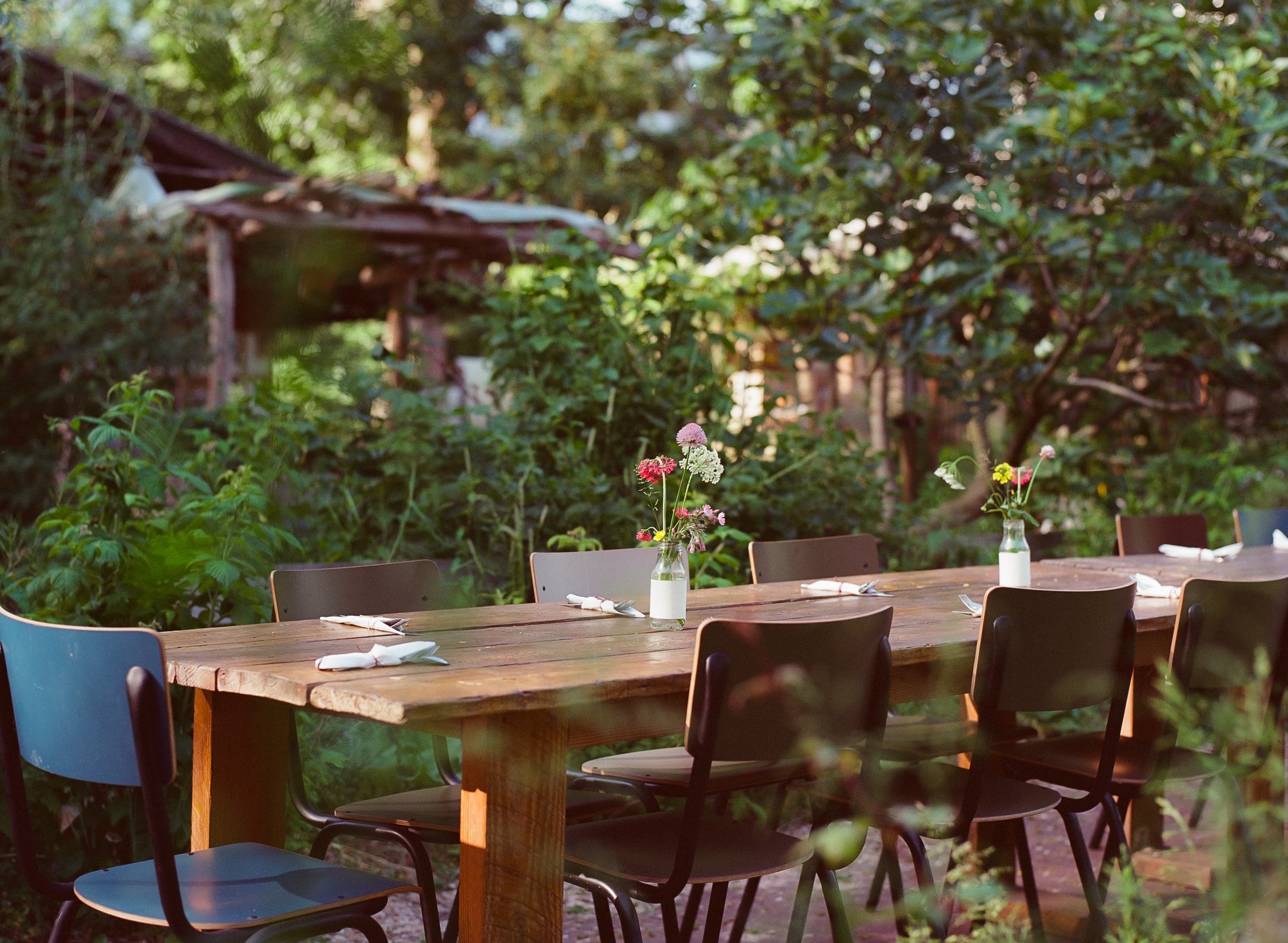
The staff at the Stadsboerderaij, which includes some Cityplot members like Naomi, are intentional in how they nurture the possibility for new creation in the space. Their efforts exemplify “community,” a word that has grown simultaneously trendy and vague as we experience a loneliness epidemic in the U.S. The word is often spoken as conjecture instead of practice. “Some years ago, I did not use the word community,” says Martin. “I always said, ‘community is such an American word.’”
Words can fail a concept that is best understood through experience. It is their continuous, living practice at the Stadsboerderaij that makes its communal intent real. Weekly meals with one another in a beautiful setting eating food that was grown just a few feet away, develops a rhythm for all who participate. It is a practice of dependence: upon one another, upon nature, upon their efforts to plant seeds in the land. They are brought together in such a way that Martin no longer minds having a name for what they do. “Now I embrace the word community. We have a community and I’m so proud that I’m a part of this community. I’m proud of having taken my role in it.”
This spirit defines Cityplot, as they continue to work towards a non-hierarchical team structure. Community is about a collective identity where every person is embraced in full.
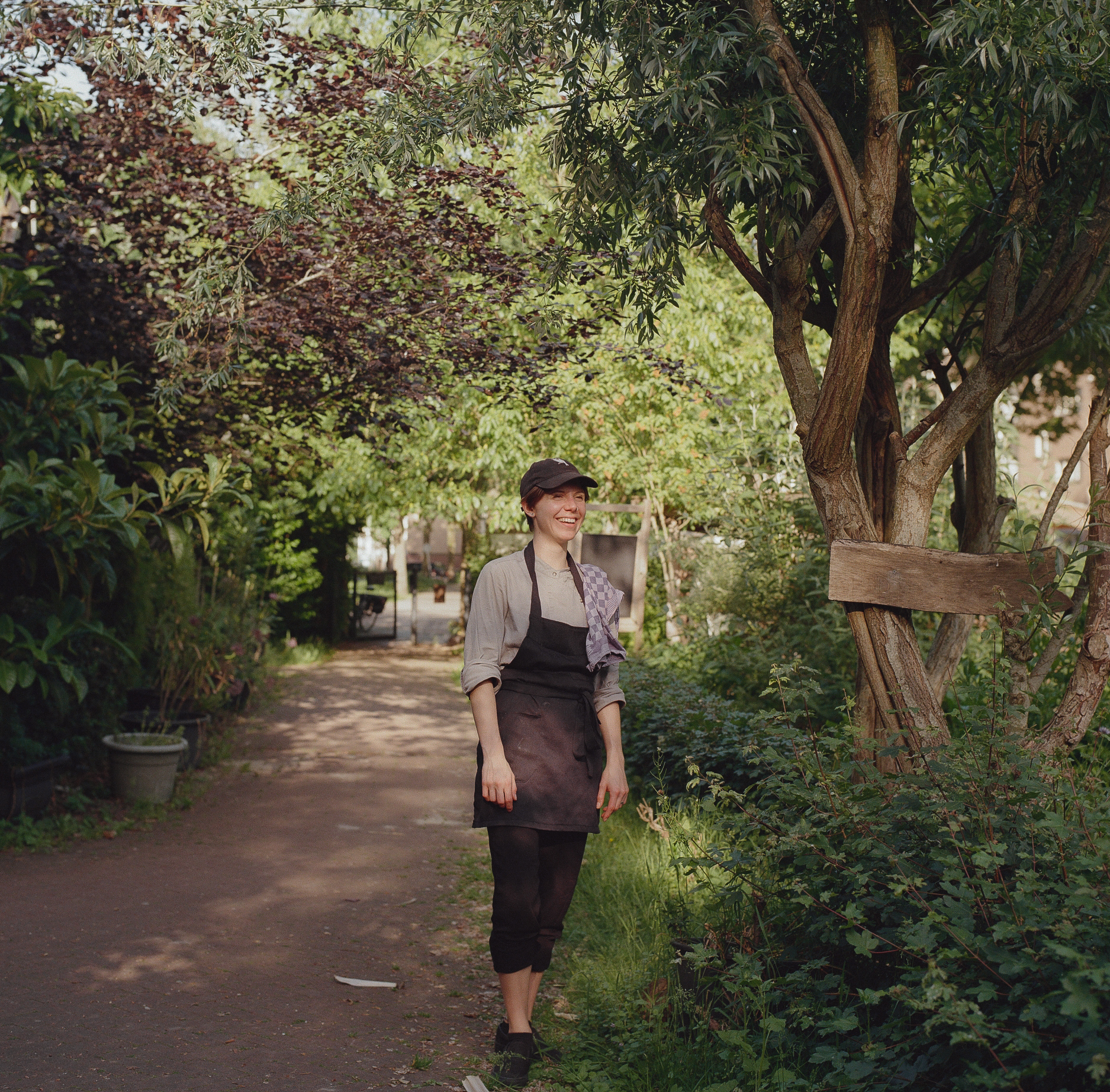
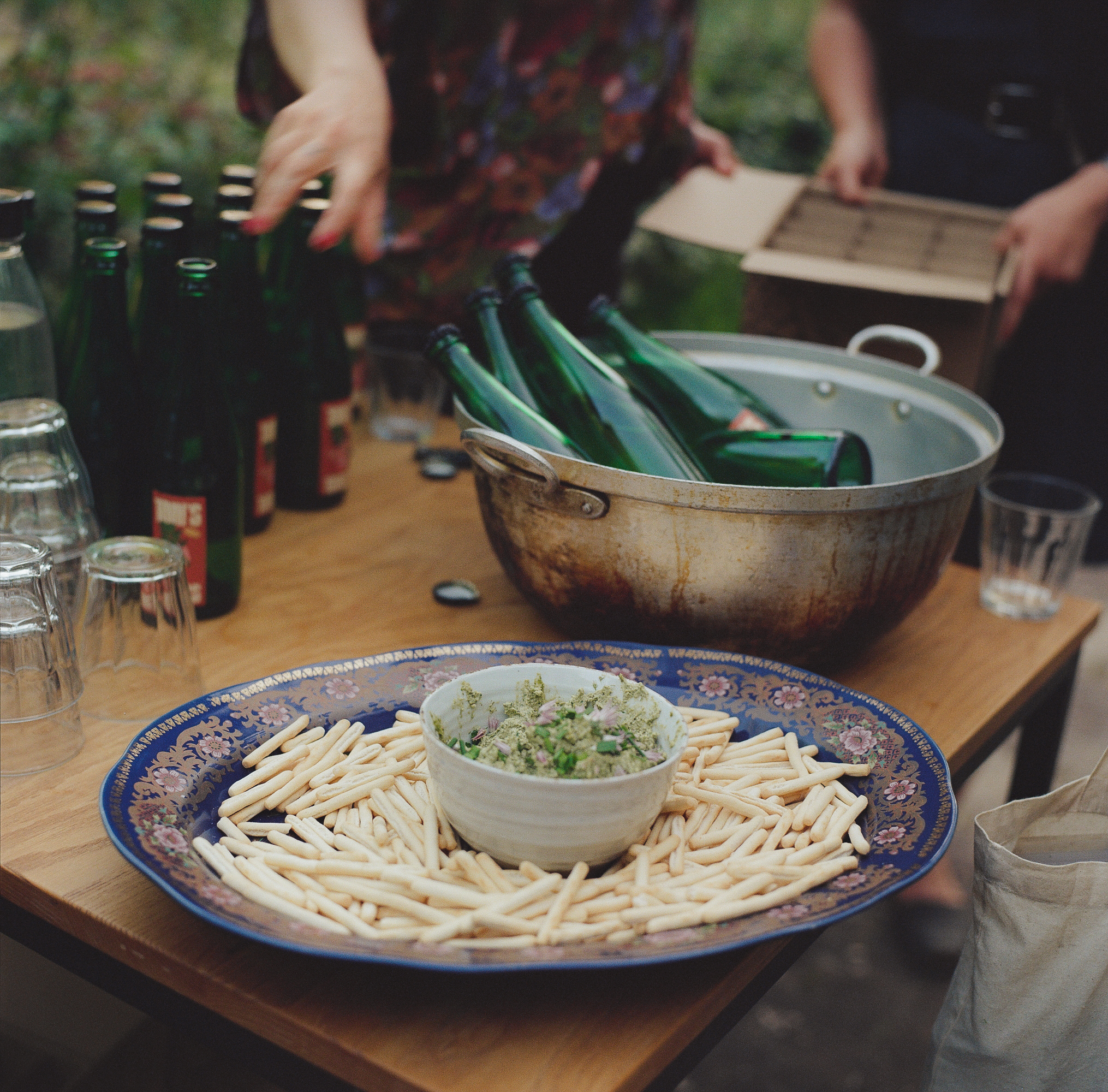
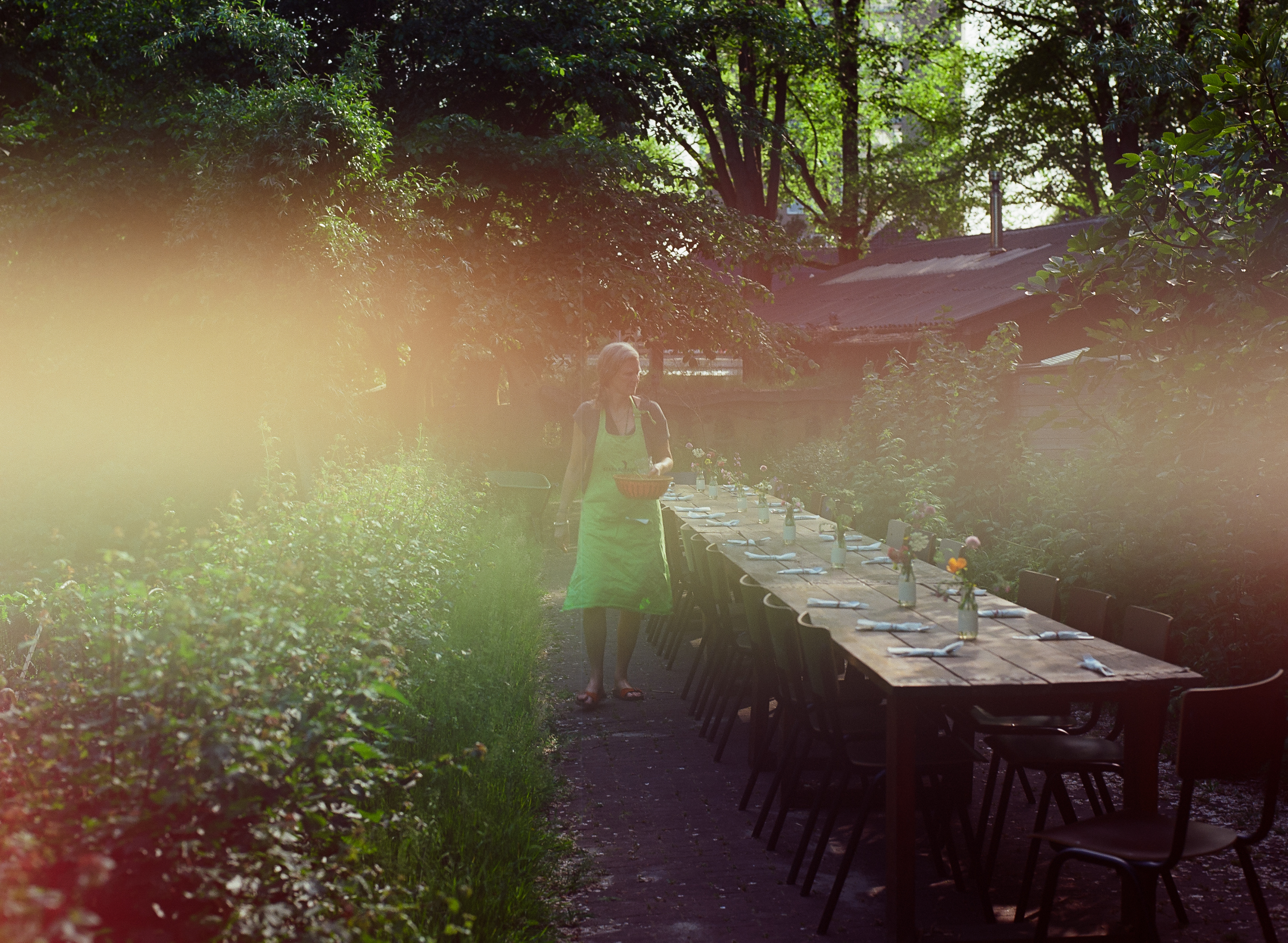
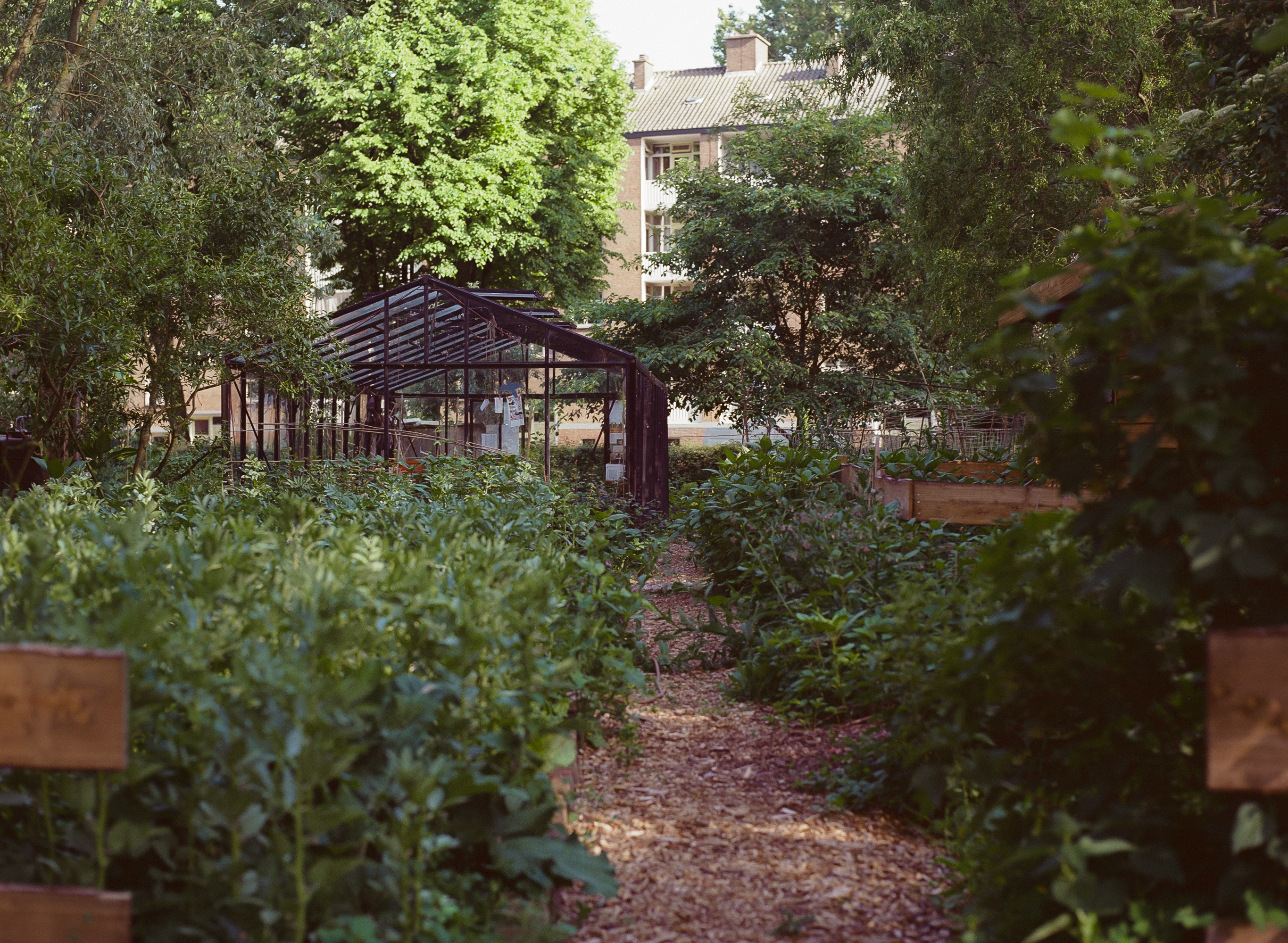
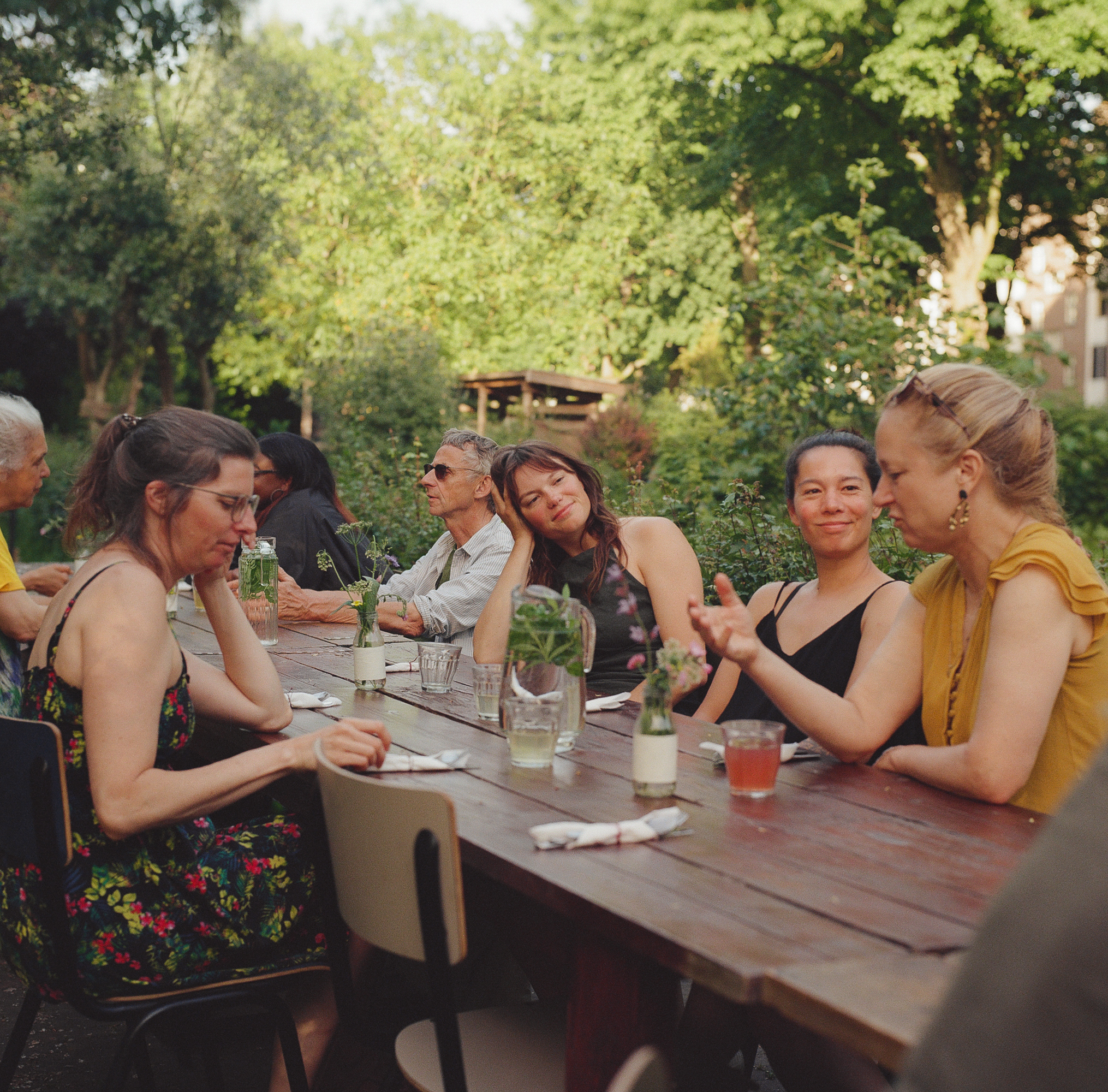
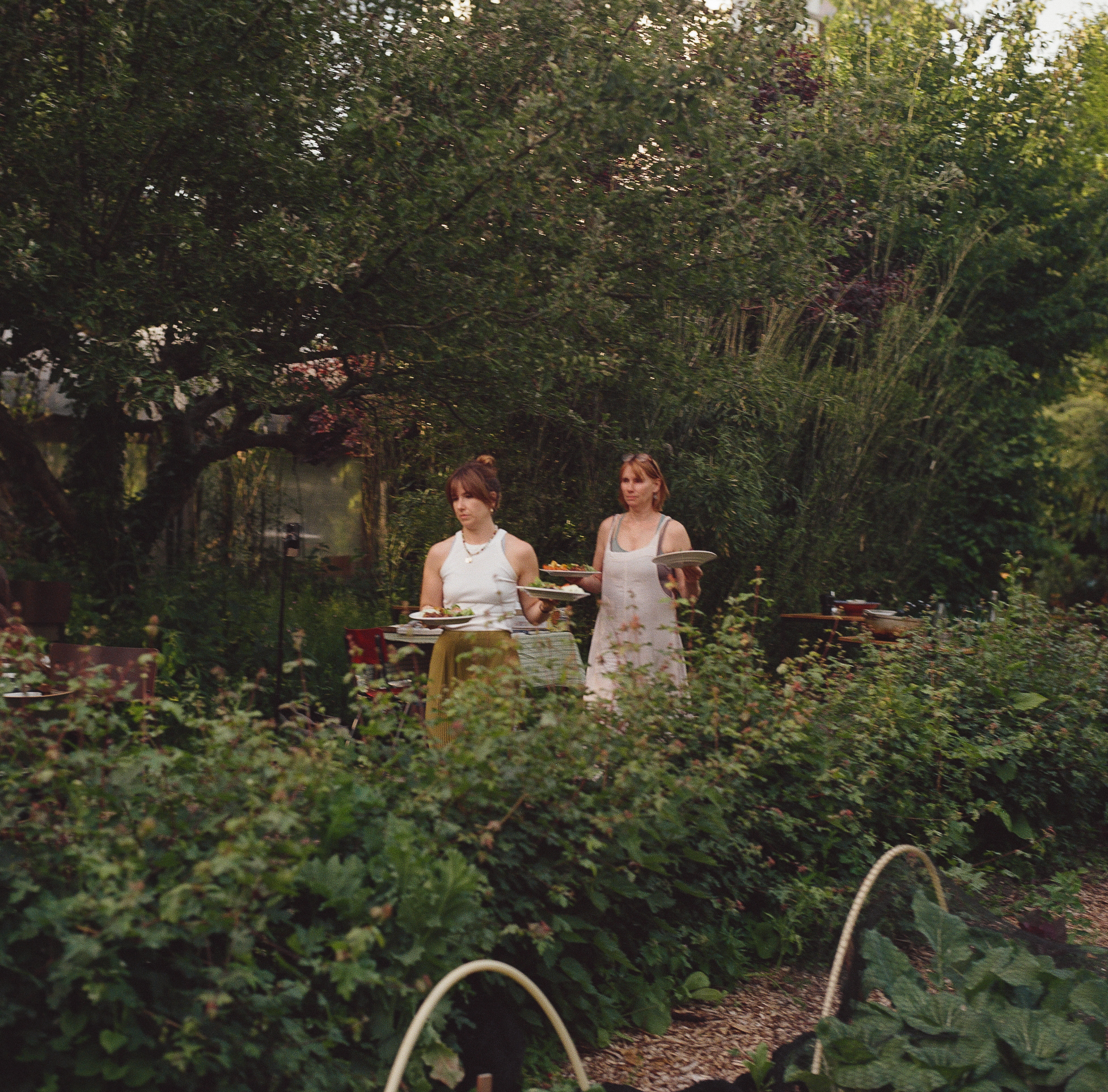
As a story team, we were grateful to witness the power of this community up close. On a Tuesday in May, various members of their collective gathered to share a plant-based meal in the pathway of the Stadsboerderij’s vegetable garden. Three or four long wooden tables were brought out for the family-style dinner, each lined with an array of vintage vases filled with wildflowers handpicked from the garden by Cityplot staff. On the table are drinking glasses and napkin-wrapped silverware elegantly tied with pieces of rhubarb. The collective showcased that, with a little imagination, everything can be used for something. Ann made a pesto using leftover carrot tops, lemon juice, and sunflower seeds. We shared a fizzy drink from Toni’s Tonics, made from the colakruid plant picked from the Pluk! CSA.
Our chef for the evening, Cityplot team member Zoe Jungmann, prepared a delicious dinner of roasted root vegetables, marinated tofu with chili oil, vegan mayo, and salad greens with rhubarb dressing. Dessert was a take on her grandmother’s recipe for rhubarb cobbler. Much of the food was taken directly from the garden and, just hours prior, some of the guests played sous chef in the kitchen for the night’s dinner. A beaming sun illuminated this secret garden from late afternoon to dusk—the briefest glimpse of all that is right and good amidst all that has yet to be transformed. The vision is attractive, rich with the kind of attentiveness, care, and creative energy our wildest dreams hold.
In the hands of Cityplot, the image of a future where everyone is able to eat well and partake in the beauty of a healed world is not only possible, but here. In seeing it up close, one wonders, How can this become real for others? How might it exist within more ordinary Tuesday nights? As Martin outlines his hope for the Stadsboerderij, it is a fitting portrayal of Cityplot’s work as a whole: “This can be a place to get rest, to meet people and to find out for yourself. I think a lot of people do that here.”
“They come here to find out what’s next to do.”
Our chef for the evening, Cityplot team member Zoe Jungmann, prepared a delicious dinner of roasted root vegetables, marinated tofu with chili oil, vegan mayo, and salad greens with rhubarb dressing. Dessert was a take on her grandmother’s recipe for rhubarb cobbler. Much of the food was taken directly from the garden and, just hours prior, some of the guests played sous chef in the kitchen for the night’s dinner. A beaming sun illuminated this secret garden from late afternoon to dusk—the briefest glimpse of all that is right and good amidst all that has yet to be transformed. The vision is attractive, rich with the kind of attentiveness, care, and creative energy our wildest dreams hold.
In the hands of Cityplot, the image of a future where everyone is able to eat well and partake in the beauty of a healed world is not only possible, but here. In seeing it up close, one wonders, How can this become real for others? How might it exist within more ordinary Tuesday nights? As Martin outlines his hope for the Stadsboerderij, it is a fitting portrayal of Cityplot’s work as a whole: “This can be a place to get rest, to meet people and to find out for yourself. I think a lot of people do that here.”
“They come here to find out what’s next to do.”