Furniture City
If you’ve ever browsed an estate sale and gone home with an antique table or inherited a wooden cabinet and felt the unexpected weight of it, you know there’s something different about old furniture. Traditional joinery used to be the cornerstone of furniture design—precise, interlocking joints precluding the need for nails or metal fasteners until modern joinery hardware was adopted for affordability and ease of assembly. In an age of mass production and IKEA BESTA ubiquity, there’s something special about coming across a piece of furniture crafted using traditional joinery—an integrity that speaks to a legacy of craftsmanship.
The mortise and tenon joint, beautiful in its simplicity; the utilitarian dowel joint; and one of the most common, the dovetail joint, used primarily on drawer boxes. The dovetail joint is a highly durable joint renowned for its resistance to being pulled apart. Flared trapezoidal tails on one piece of wood slot perfectly into corresponding pins on the adjoining piece. Because of its interlocking shape, the dovetail joint is nearly impossible to pull apart, even without glue.
It's also beautiful—like hands clasped, fingers interlocking.
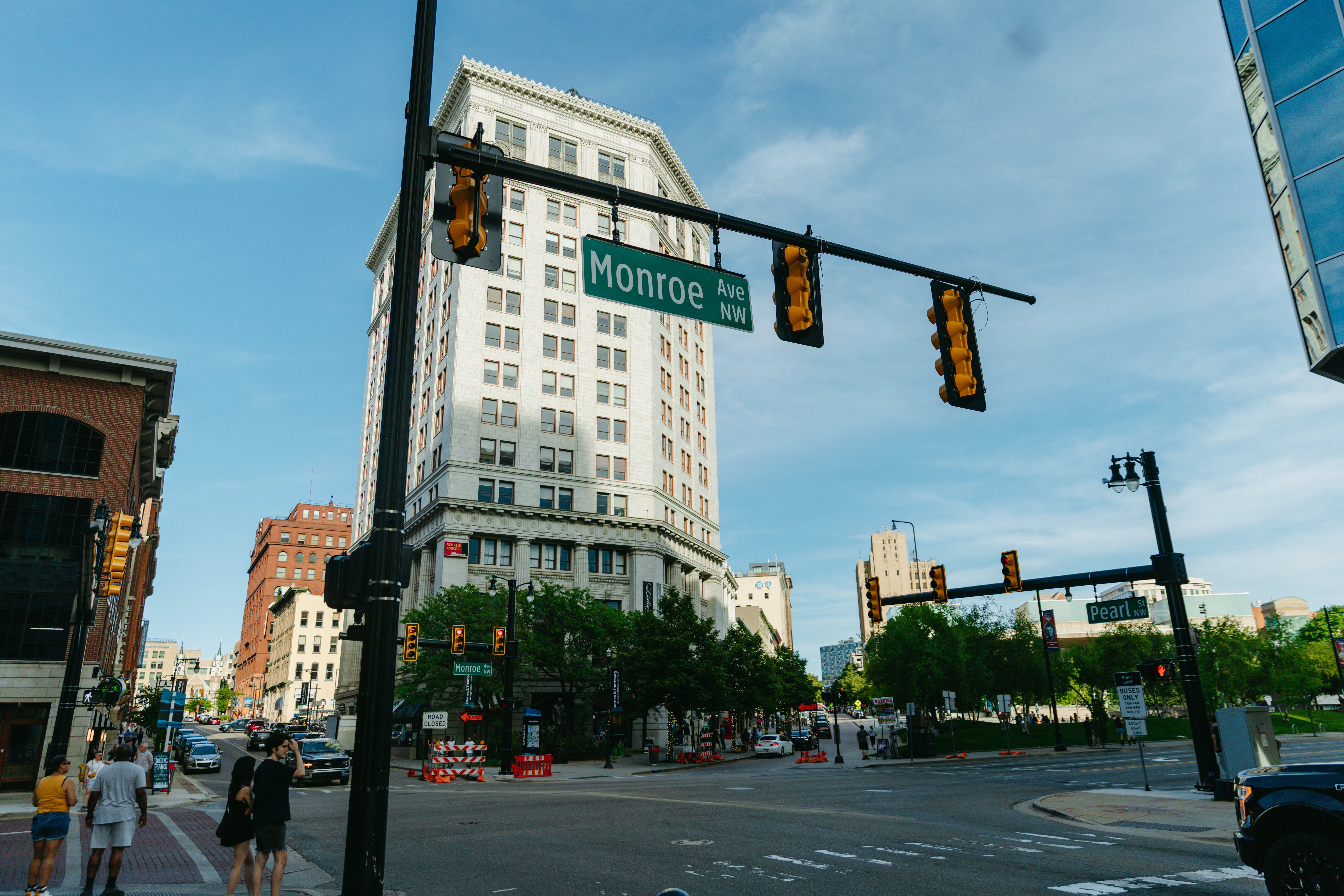
McKay Tower, one of the oldest buildings in Grand Rapids, was dedicated in 1926 on the 100th anniversary of the city's founding, during which Grand Rapids was declared "an ideal home city" and "a good place to live."
Erica Baker
From the 1870s through the 1930s, Grand Rapids, Michigan, was the epicenter of the furniture-making industry. At its peak, some 30 percent of the labor in Grand Rapids was working in this one trade. But as hardwood forests began to vanish, the furniture industry had to adapt.
While some furniture is still made in Grand Rapids today—primarily office furniture and stadium seating—it’s no longer the world leader it once was. But the remnants of this trade are visible all over the city. Some of the old factories remain vacant, but others have been repurposed as offices, antique stores, and condominiums—and one is the hub of an organization attempting to transform the city.
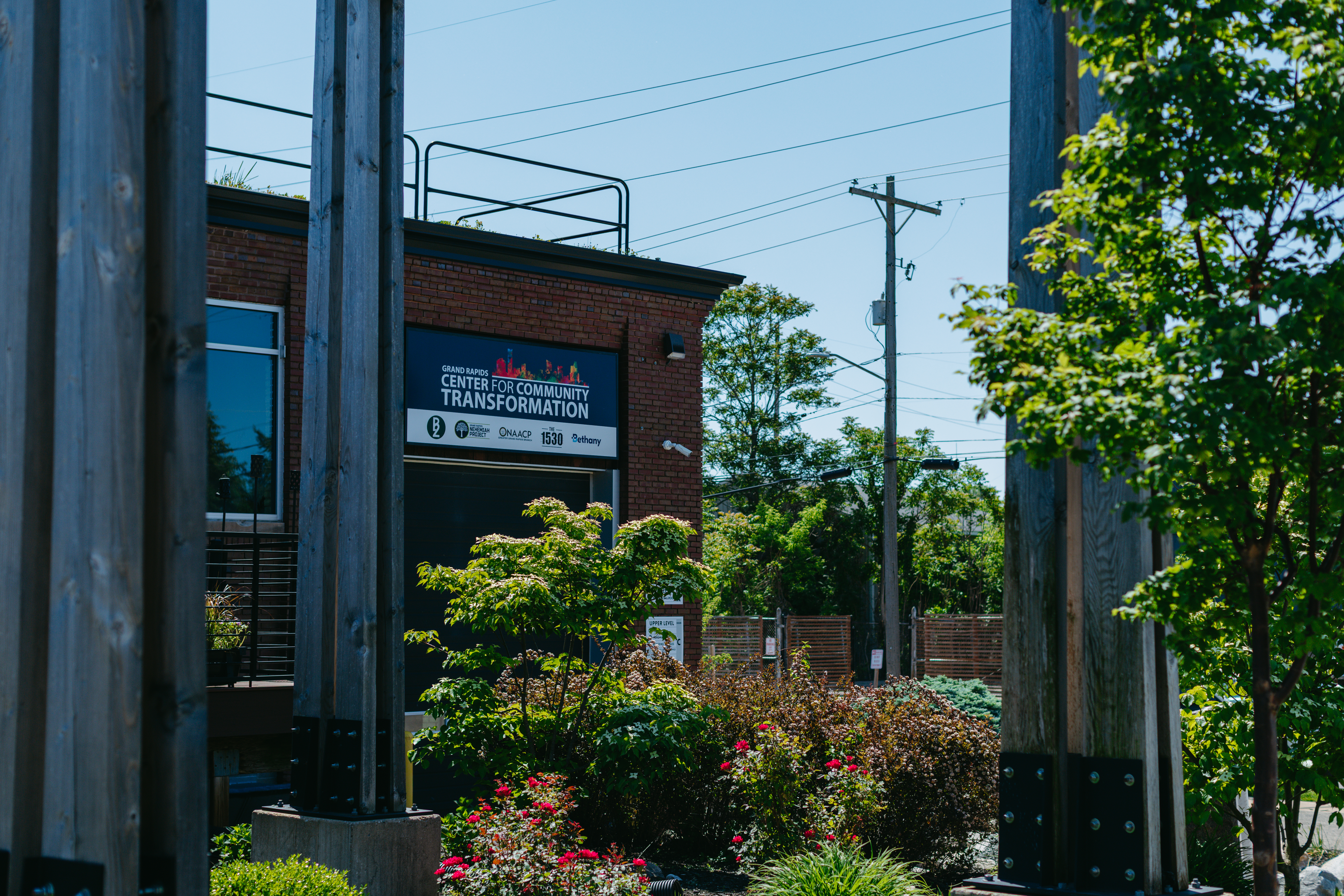
Grand Rapids Center for Community Transformation is located in a former furniture factory on the southeast side of town.
Erica Baker
A former furniture factory at 1530 Madison Avenue on the southeast side of town is home to the Grand Rapids Center for Community Transformation, the seeds of which were planted ten years ago when founder and Grand Rapids native Justin Beene noted that not everyone had a seat at the table.
A 2015 Forbes article had just been published ranking Grand Rapids the second-worst city economically for African Americans, ranking 51 out of 52 based on home ownership, entrepreneurship, median household income, and demographic trends. That same year Grand Rapids had the largest wealth gap of any city in Michigan, and while job growth in Kent County had outpaced national averages, Black and Latino residents were more than twice as likely to be unemployed as white residents and three times as likely to be living in poverty. It was perhaps not surprising then that in a data snapshot taken just five years earlier, 44% of children under 18 in Grand Rapids were living in poverty.
At the same time, there were hundreds of millionaires in Kent County, and Grand Rapids was consistently topping lists of best places to raise a family. In 2012, Forbes ranked it the number one metropolitan area for families, and it earned the second spot in 2014.
The incongruity was jarring.
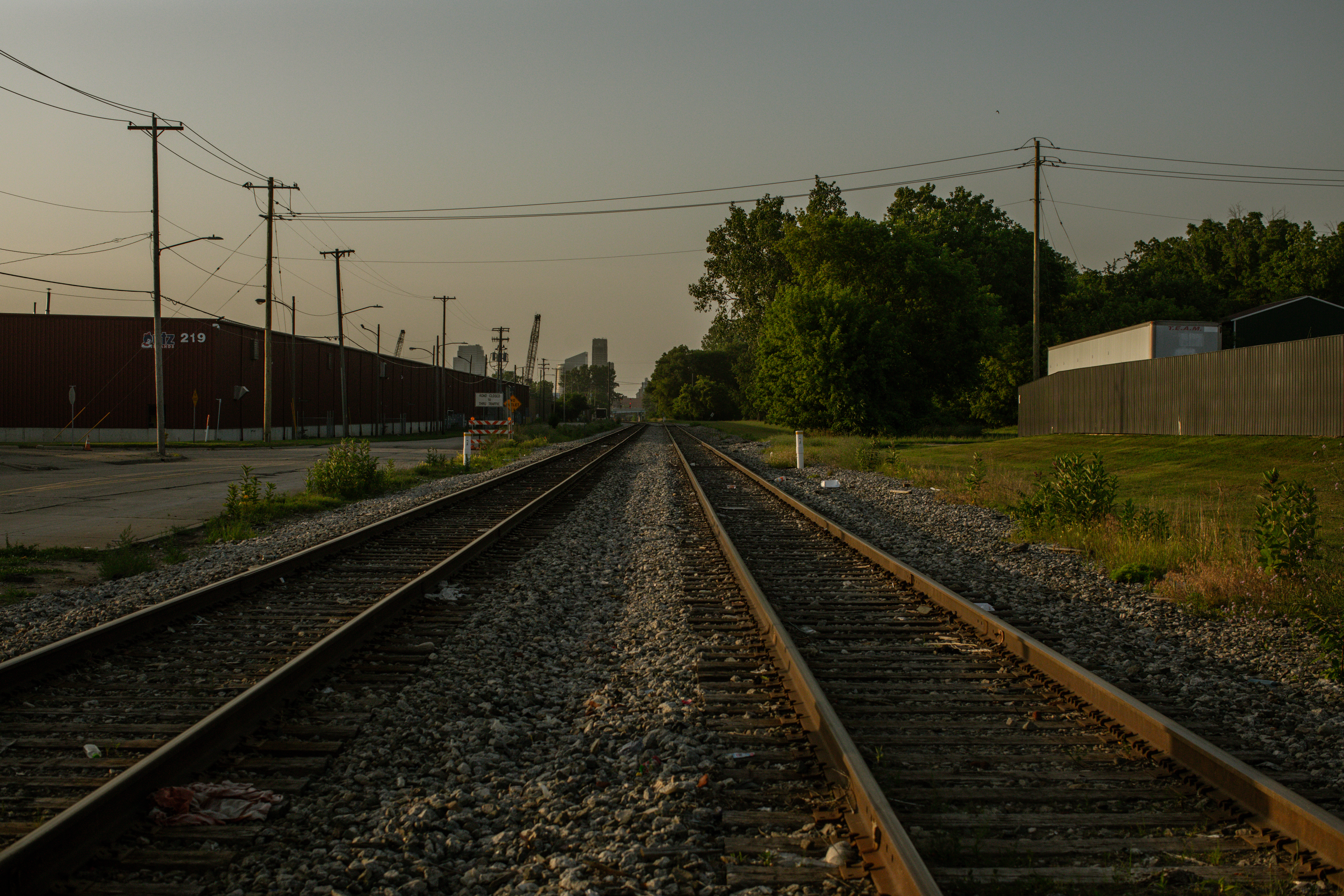
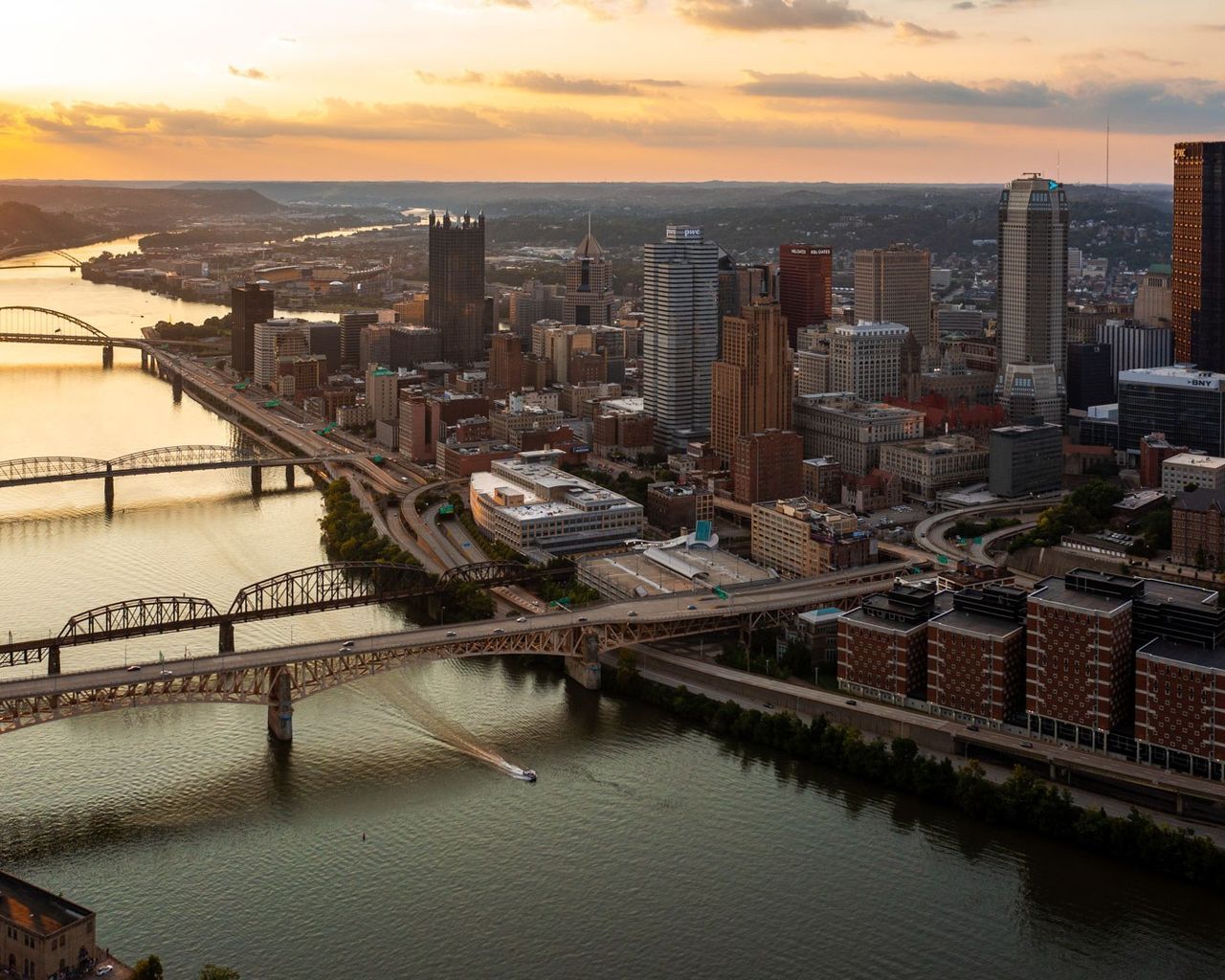
The view of the Grand Rapids skyline from the southeast side of town.
Erica Baker
In the decade since the damning Forbes article, the city has made some progress, but it’s still a city of extremes. Of the 50 largest U.S. metro areas, Grand Rapids had the highest overall homeownership rate in 2023 and the lowest Black homeownership rate. Less than 1% of businesses with more than one employee are Black-owned. And while child poverty rates have dropped since 2010, at 33% they are still more than double the average child poverty rate in Michigan.
It’s a city replete with philanthropy and heavily churched. Billionaire residents invest in the city, and it’s a global hub for the Christian Reformed Church and evangelical publishing, home to major houses like Zondervan and Baker Publishing Group.
It’s a wonderful city for some, but it’s not a city for everyone.
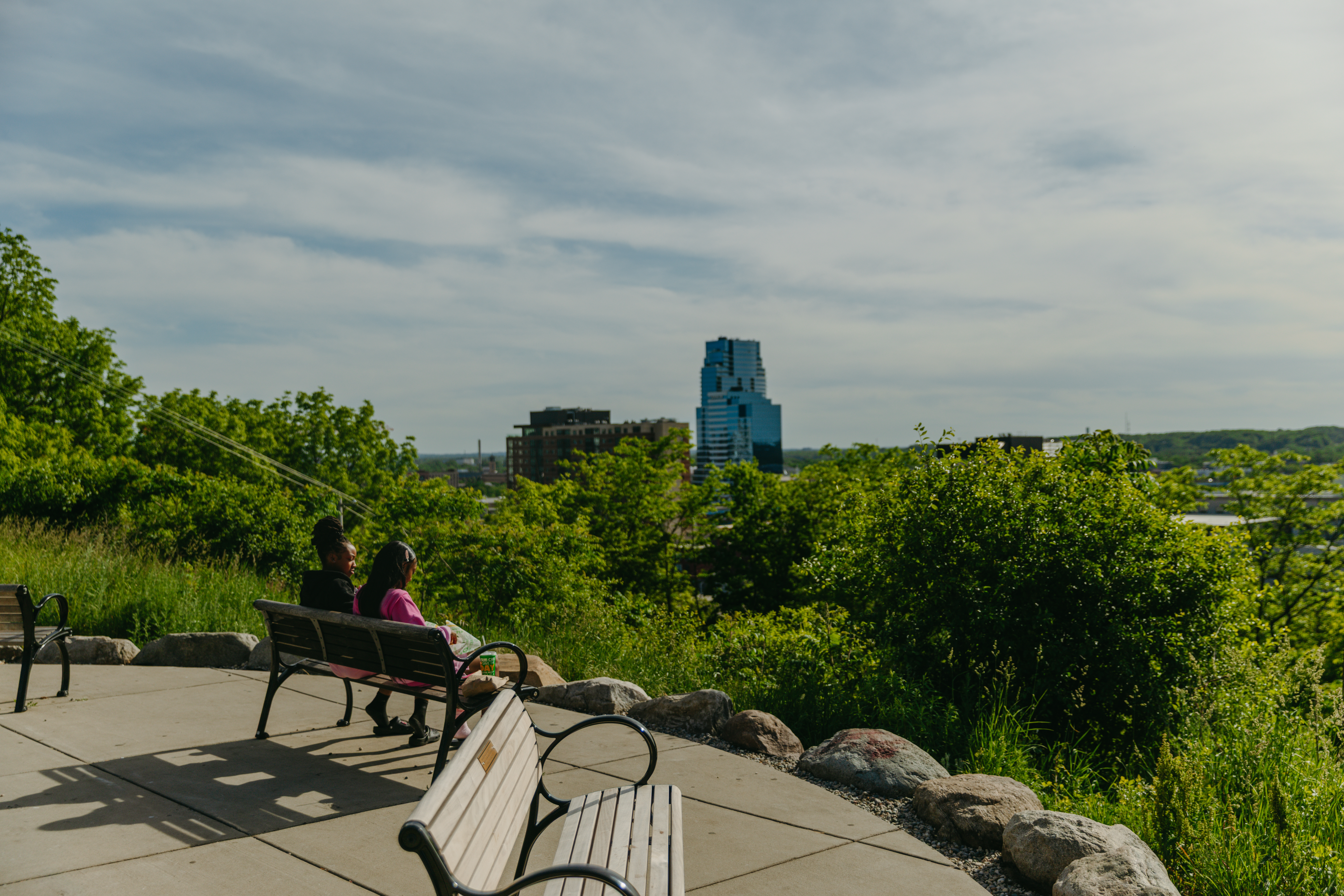
The view from historic Lookout Park in Grand Rapids is known for its views of the city and the Grand River.
Erica Baker
“All I smell is hope”
Most Grand Rapids natives grow up in one of these worlds or the other. In some zip codes, farmers markets and trips up north to lakeside cottages are de rigueur; in others, many young people have never seen Lake Michigan, just an hour away. But Justin and his brother Nathan Beene, the CEO of the Center, had a rare membership to both versions of Grand Rapids.
Their Black father was one of twelve siblings and the son of a Pentecostal pastor who owned the Youth Crime Prevention Center and employed many people from their neighborhood at his business—Beene Concrete Construction. A high school dropout, Justin’s father got a job sweeping floors at the Amway Hotel, where he spent 42 years, working his way up to a position as head chef. Their mother, also a Grand Rapids native, was one of five children in one of the many Dutch families in West Michigan. Her father started a successful optical company, gave generously to the Christian Reformed Church, and went on global missions providing eye care. Two very different families—both rooted in faith, community, and entrepreneurship.
Justin and Nate describe a happy childhood, if an incongruous one. “Lots of people came to our house even though we were in a poor urban environment—Bible studies, basketball,” Justin says.
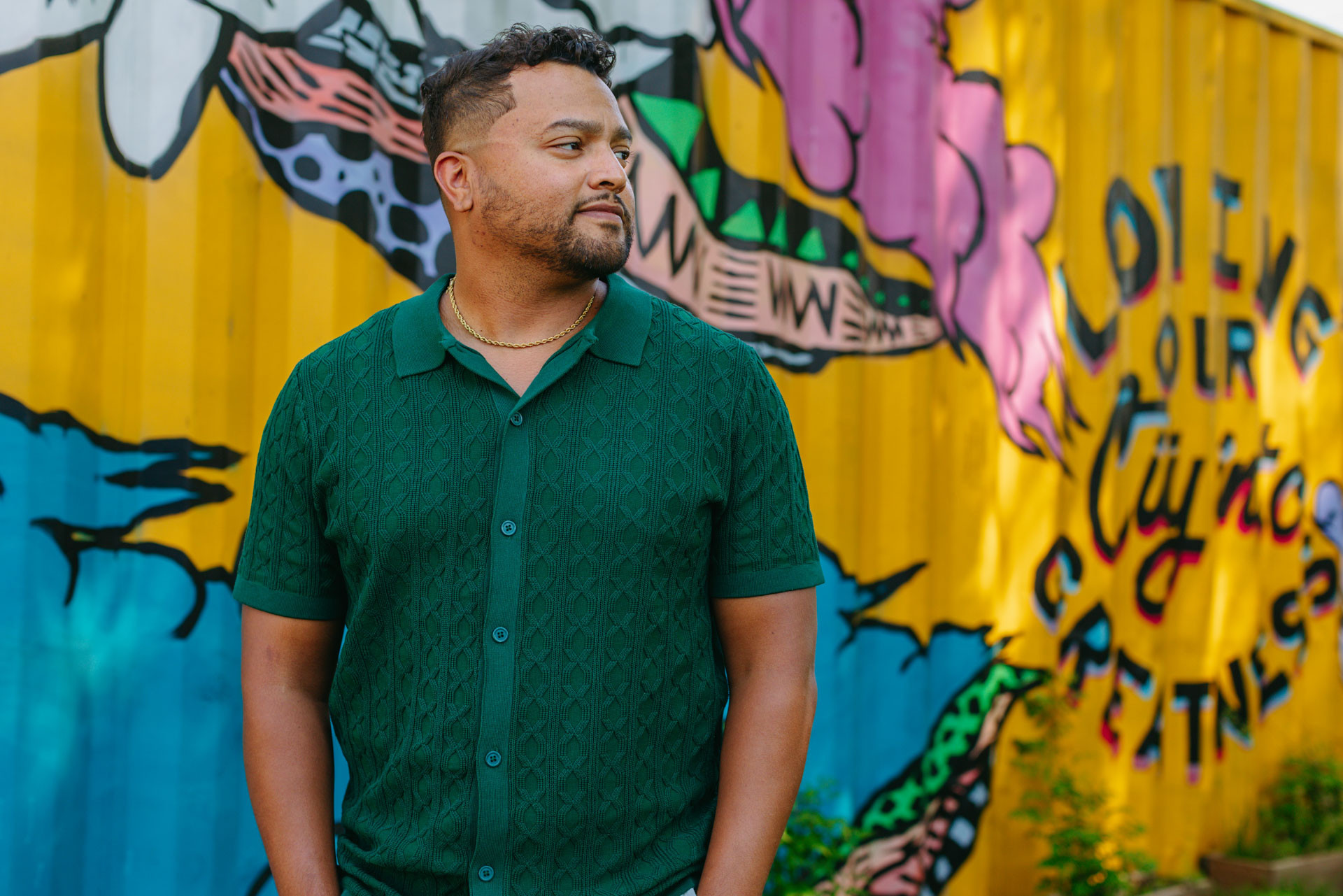
Nate Beene, CEO of the Grand Rapids Center for Community Transformation, poses for a portrait in the courtyard of the 1530 Madison Avenue building where the Center offices.
Erica Baker
“On the Black side of my family, I would say family was valued and it was very rich from that perspective. We never really felt poor relationally.” Nate says. But they couldn’t ignore the disparity.
“Our grandparents paid for us to go to private Christian schools,” Justin says. “We were on Medicaid and food stamps and went to the local community center to get all of these government services and waited in lines for food, and then we would be on my uncle’s yacht and going to Grand Rapids Christian High School.”
“[We] got to live in two different worlds and see the beauty and the pain and the brokenness in both,” Nate says. “In the business circles, the city’s thriving, it’s growing, and oftentimes it’s the people that are benefiting from the economic and infrastructure growth of the city [saying that]. And then you go in the other circles and it’s people who aren’t able to afford their apartments or their homes anymore, and the place actually feels very bleak and it’s a place of despair.”
The disconnect between the two worlds led the brothers to start thinking from a young age about how to integrate them.
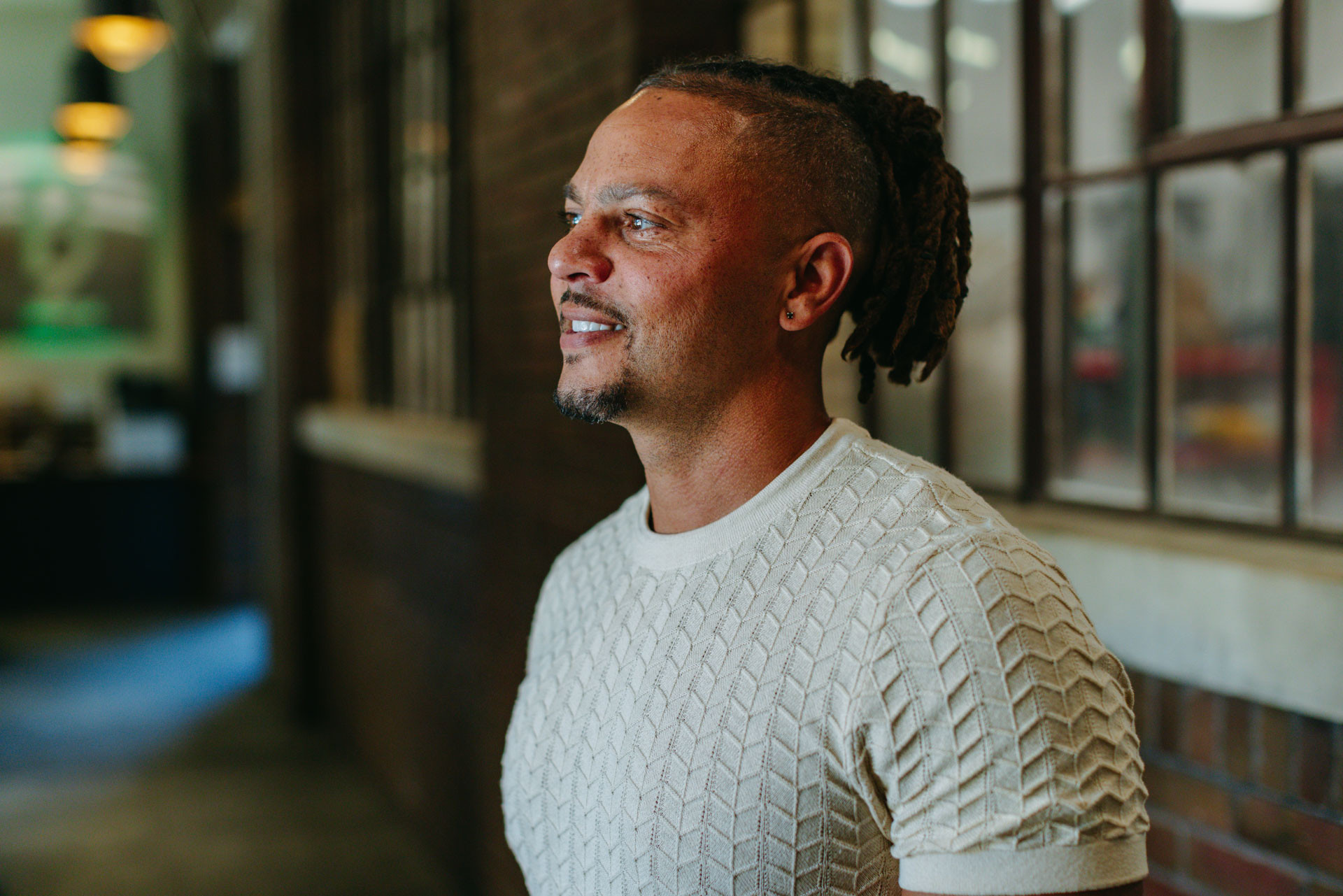
Justin Beene, founder of the Grand Rapids Center for Community Transformation, poses for a portrait in the Building Bridges offices, located in the Center's building.
Erica Baker
Justin began his career in social work before going to seminary on a whim after an invitation to study alongside urban pastors at Grand Rapids Theological Seminary. Forming relationships within the cohort gave him insights into the economic issues urban pastors were wrestling with in their congregations.
And none of them knew the best way to deal with it. “I began to realize, in Grand Rapids we have lots of resources and then also lots of poverty, but we have tended to respond to poverty through social and spiritual means. Programming or evangelism or discipleship, but not through business creation,” Justin says. The wheels started turning.
He spent seven months in Guatemala City studying entrepreneurship and the role it plays in cities, seeing people with limited financial resources solving problems in innovative ways. He examined other global cities: Johannesburg, South Africa; Soroti, Uganda; Port-au-Prince, Haiti; Managua, Nicaragua.
“And so I got this really robust way of thinking about the intersection between theology, business, and urban impact,” he says. He created an actionable framework called The Five Dysfunctions of a City: fractured relationships, limited experiences, isolated vision, reactive action, and status quo results.
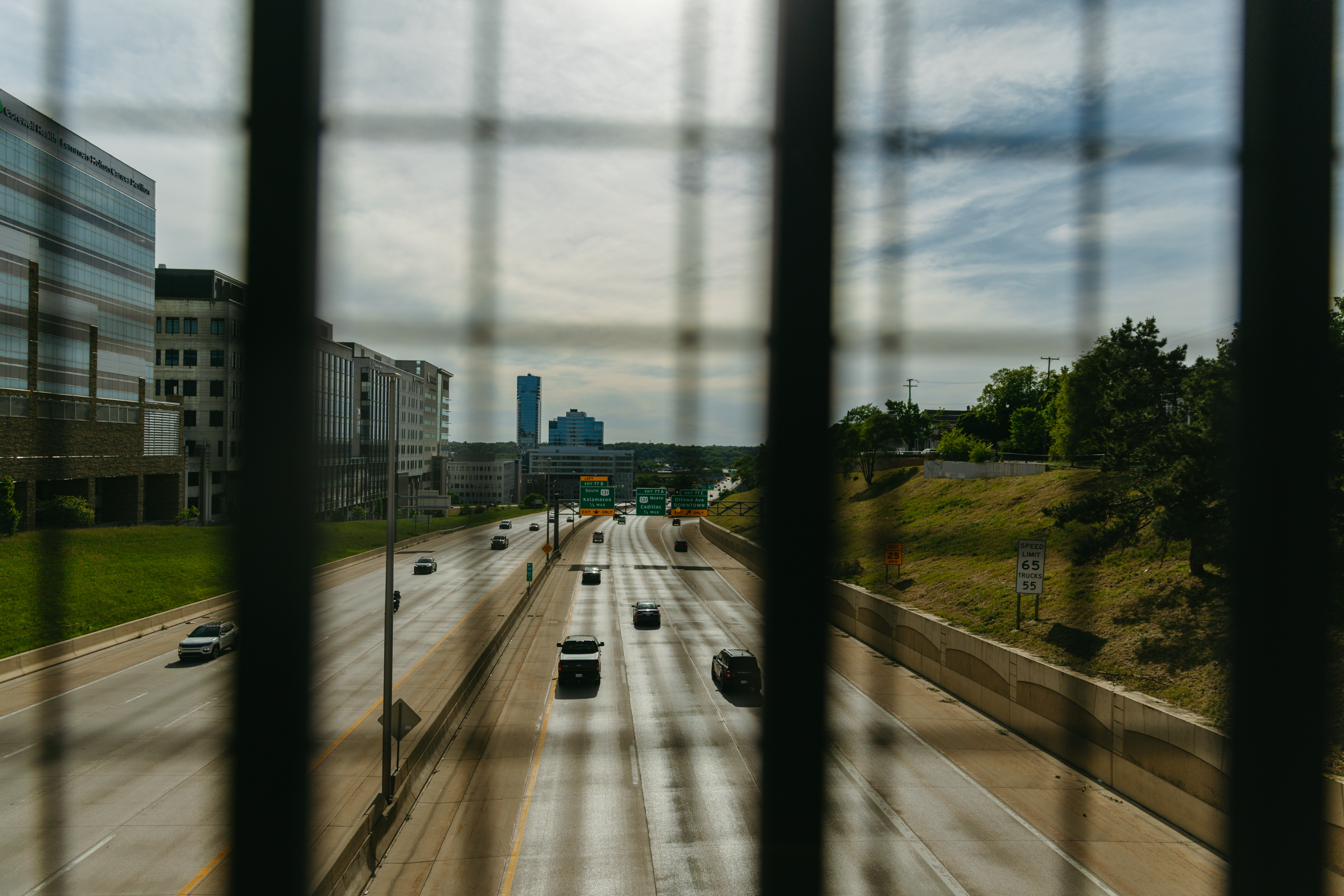
Interstate 196 runs through downtown Grand Rapids, one of the dividing lines between the north and south ends of town.
Erica Baker
He breaks them down. He means fractured relationships broadly—across races, socioeconomic status, denominations, political affiliations. “We tend to hang around the same people, go to the same churches, send our kids to the same clubs. And we live in fairly isolated bubbles,” he says. “But this narrow way of experiencing the world, it tends to lead to a very limited vision of your city. That kind of isolated vision leads to reactive action where we’re responding to problems and challenges that have already happened instead of being proactive about them, and it kind of leads to status quo.”
He had a vision for change, while feeling profoundly disappointed in his city as it stood. “I was trying to wrestle with the concept of how do you love a city into greatness?” he says.
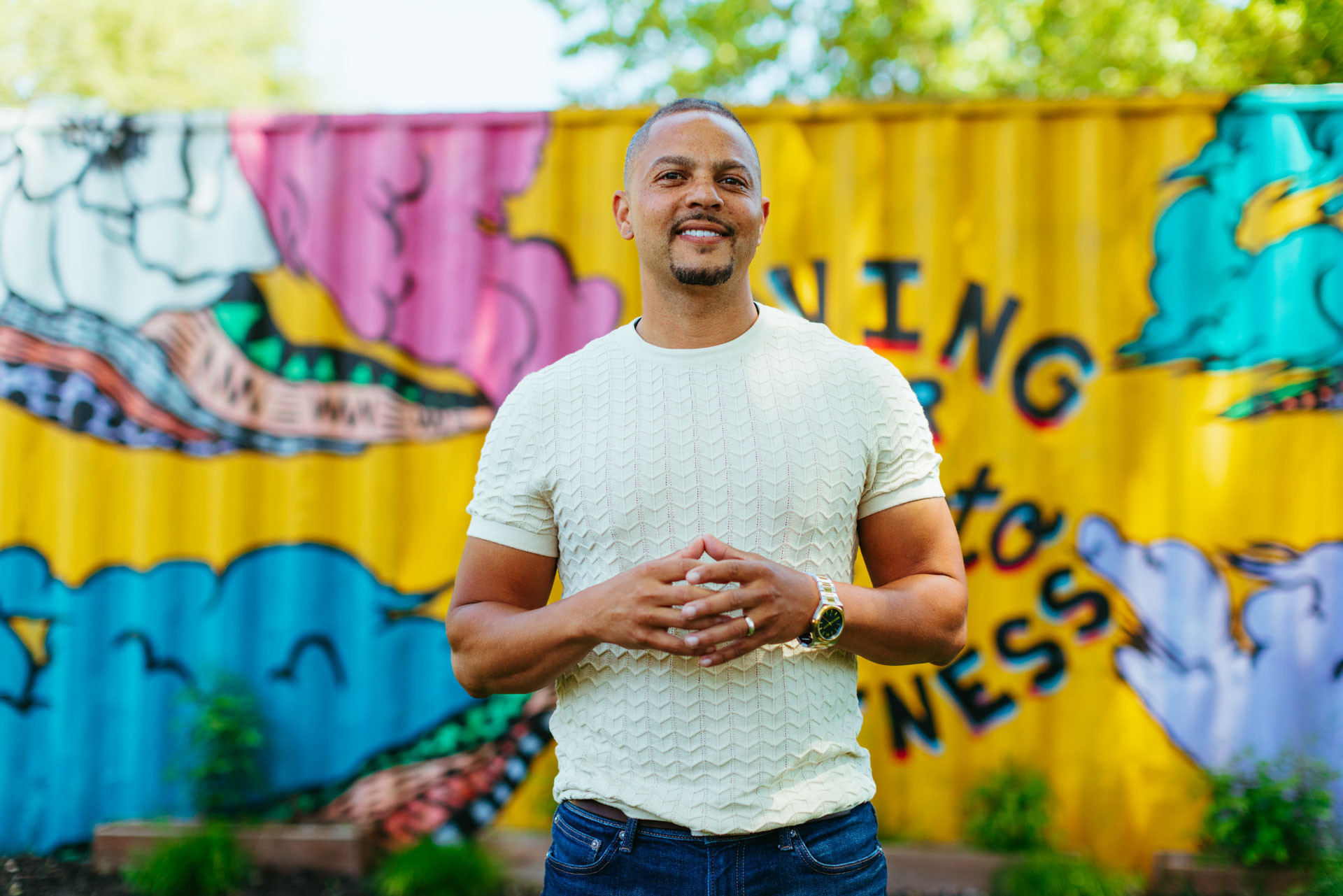
Justin Beene, founder of the Grand Rapids Center for Community Transformation, poses for a portrait in front of their Loving Your City Into Greatness mural.
dave
I was trying to wrestle with the concept of how do you love a city into greatness?
Justin Beene, Founder, Grand Rapids Center for Community Transformation
He comes back to Guatemala. “There’s this woman in my small group in Guatemala, her name was Tita.” There’s a documentary called Reparando, or "Repairing," which tells the story of people living on the outskirts of a garbage dump the size of sixty football fields. Justin recalls being there with Tita—the raw sewage, the flies—a place where it's very hard to exist. And in the documentary, he tells me, Tita looks out and says, “A lot of people see all the trash and they see garbage and people as throwaways, but all I smell is hope.”
“And it was the beginning of me saying, ‘I need a different perspective of my city.’”
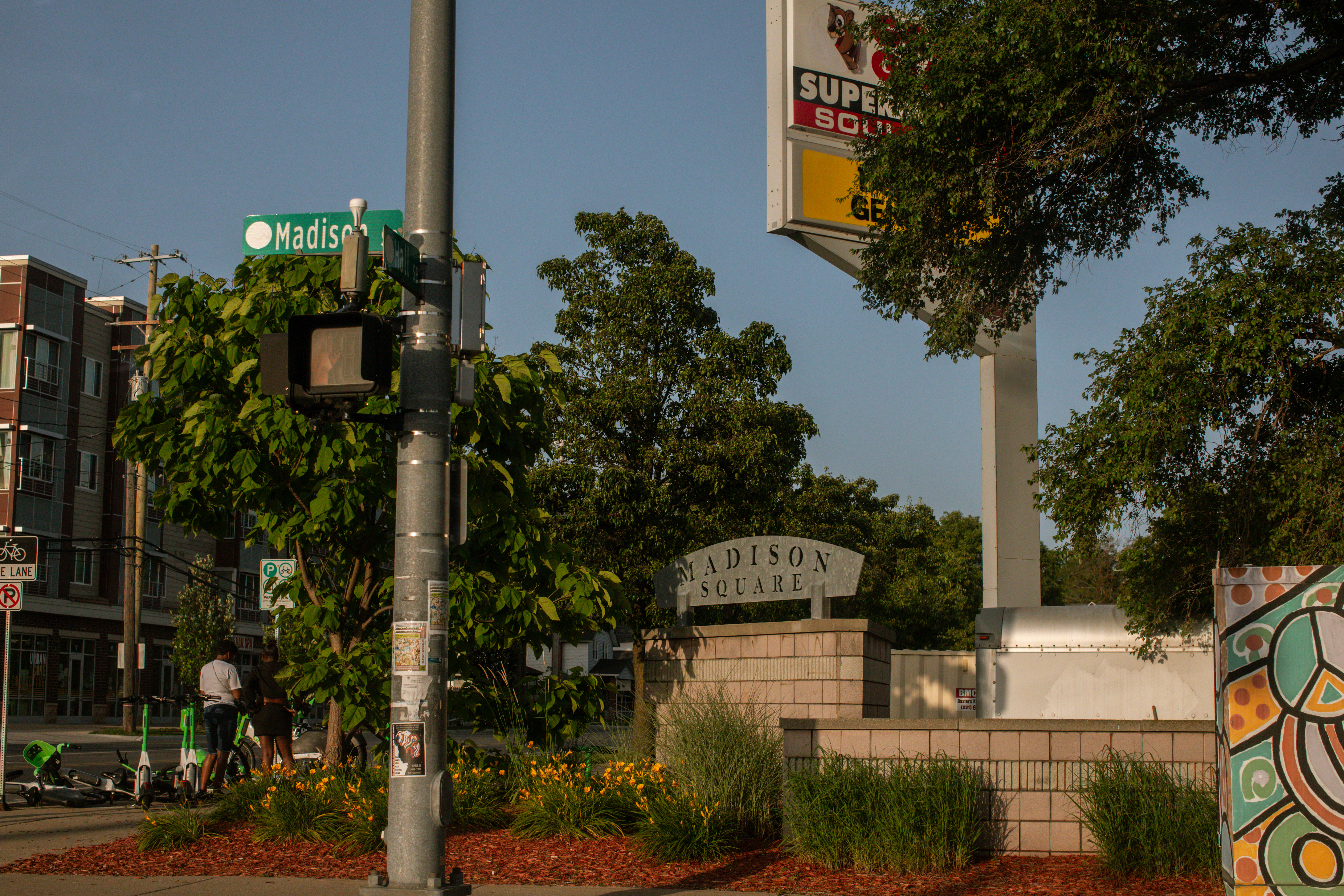
Grand Rapids Center for Community Transformation is located in the southeast side of town, near Madison Square.
Erica Baker
“No one is an island”
The Grand Rapids Center for Community Transformation was born of that kind of hope. A hope that might be hard to understand at first. It’s not an easy elevator pitch.
Nate tries: ”We want to create the right conditions for all people to be able to thrive. And the way we do that is through the leveraging of relationships and opportunities.” It’s a platform for cross-sector collaboration. They focus on opportunities for transformation on three levels—individual, organizational, and city—through workforce development, enterprise, social innovation, and investment.
They believe the strongest organizations are collaborative and co-located; complex problems require complex solutions, and organizations working together are better equipped to respond. The Center’s founding partners were two for-profits and three nonprofits that united around a common mission. They also leverage corporate partners, church partners, community partners, universities, and investors.
Say you need a winter hat, a printer, a catering kitchen, your lawn mowed or deck repaired. Say you’re pregnant, behind on rent, or want to get your GED. You were wrongfully terminated or displaced from your apartment and need legal assistance. You need temporary help with childcare. It’s more than any one organization should be able to handle. But they’re more than one organization.
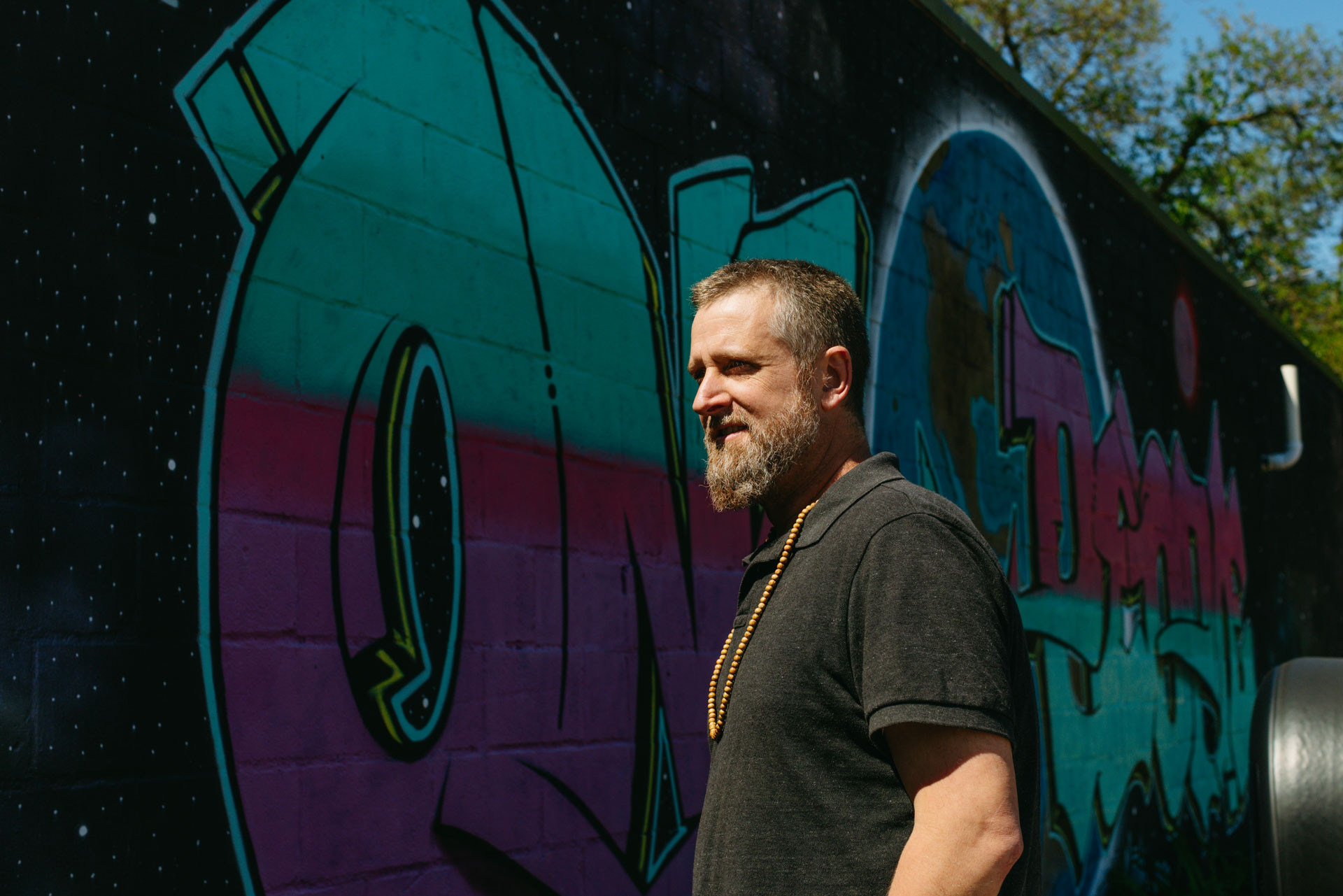
Culture Coordinator Matthew “Monk” Duncan, poses in front of one of the graffiti art installations he created in the neighborhood around the Center.
Erica Baker
Matthew “Monk” Duncan, the Center’s Culture Coordinator, describes it this way: “The Grand Rapids Center for Community Transformation is an idea. It’s a concept. It’s not a place necessarily—even though it is. And within this idea that we label as the GRCCT, you have all these lanes of amazing work that are happening independently. So they could be independent, but everyone in this building has decided to come together under the idea of transformation.”
That isn’t second nature to everyone. “Grand Rapids is a maker city,” Justin says. “Steelcase makes furniture and Bissell makes vacuums and Meijer distributes food and Wolverine makes shoes. It’s like, show me the thing you have built, not your idea. And it’s very hard for them to understand a network.”
It helps that they have a physical space they can point to. At the front of the building, you walk into an event space with natural light and old wooden floors, traces of the furniture factory’s former life adding a lived-in feel to the industrial modern ballroom. There’s a large catering kitchen used by budding entrepreneurs to make sample products that need to be packaged in a commercial kitchen to pitch to grocery store chains and retailers. Bethany Christian Services has offices and classrooms in the basement and an arcade-filled lobby welcoming youth from the neighborhood. The Grand Rapids branch of the NAACP has offices upstairs. There’s a woodshop in the front and a landscaping company operating out of the back.
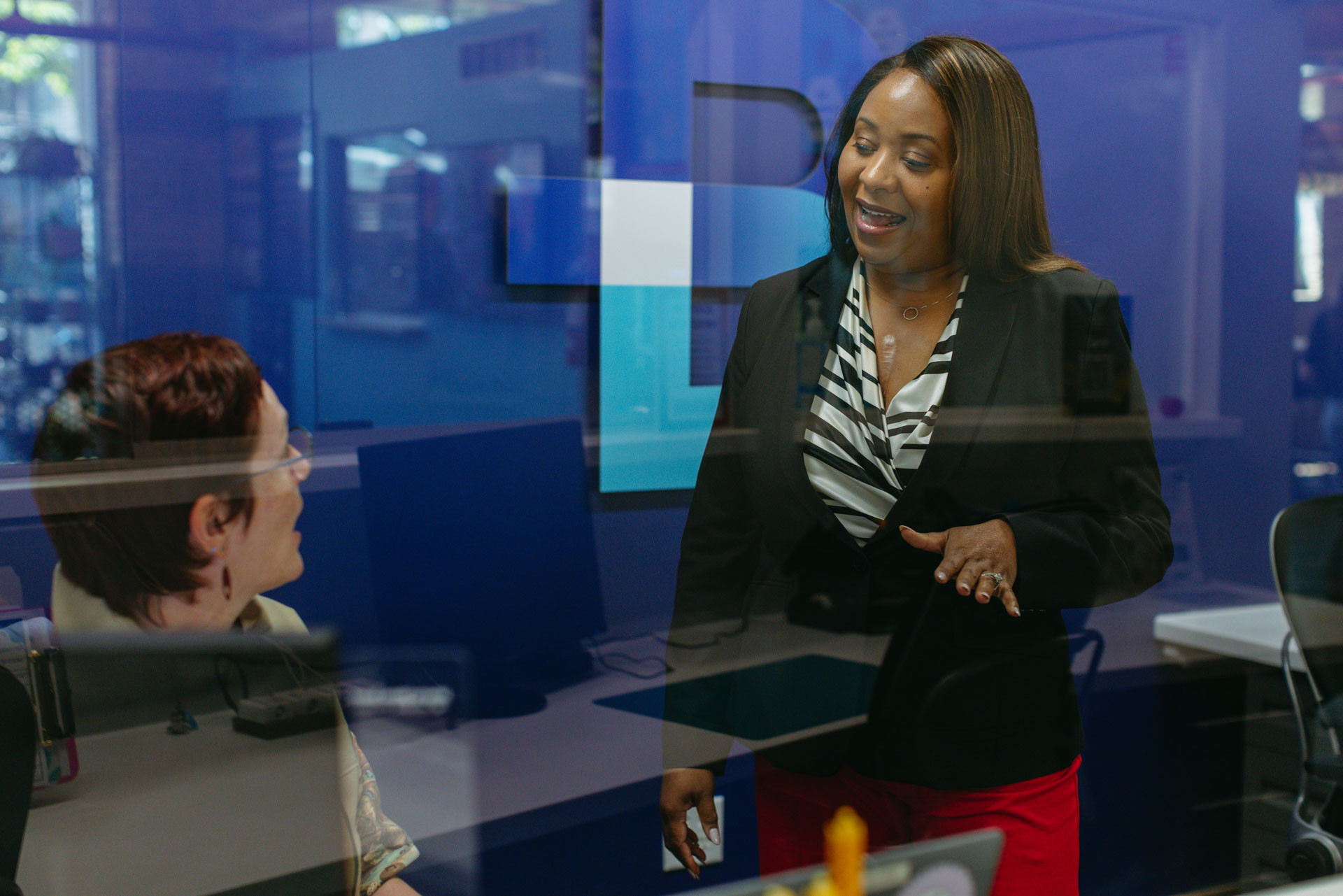
Crystal Houston, the executive branch director for Bethany at the Grand Rapids Center for Community Transformation, meets with Christine Lindeman.
Erica Baker
But they’re far from just tenants in a building. “We’re partners on a mission,” Justin says. They share intangibles like vision and strategy along with more practical things—vehicles, offices, staff.
Some of these organizations working together is unexpected. “It’s taking this 100-year-old Christian white organization [Bethany Christian Services] and putting it next to a hundred-year-old civil rights organization, the NAACP, and saying, ‘yeah, there’s some things that maybe we’re not fully in alignment on, but the greater alignment for community building and making a change is absolutely something that we agree on,’” Monk says.
When they did their first capital campaign, some people were skeptical. “You’ve got a conservative white Christian organization in Bethany Christian Services and a progressive Black organization. And so you had donors who wouldn’t touch Bethany, but they loved the NAACP, and vice versa,” Justin recalls. “They’re always on the opposite side [of] everything,” the Executive Director of Grand Rapids Nehemiah Project, Scott Mackey, says of the two organizations. But they’ve found a way to put those differences aside for the greater good. “That’s where we feel like we thrive. And we are at the forefront of doing that. You go to other cities, that’s not happening.”
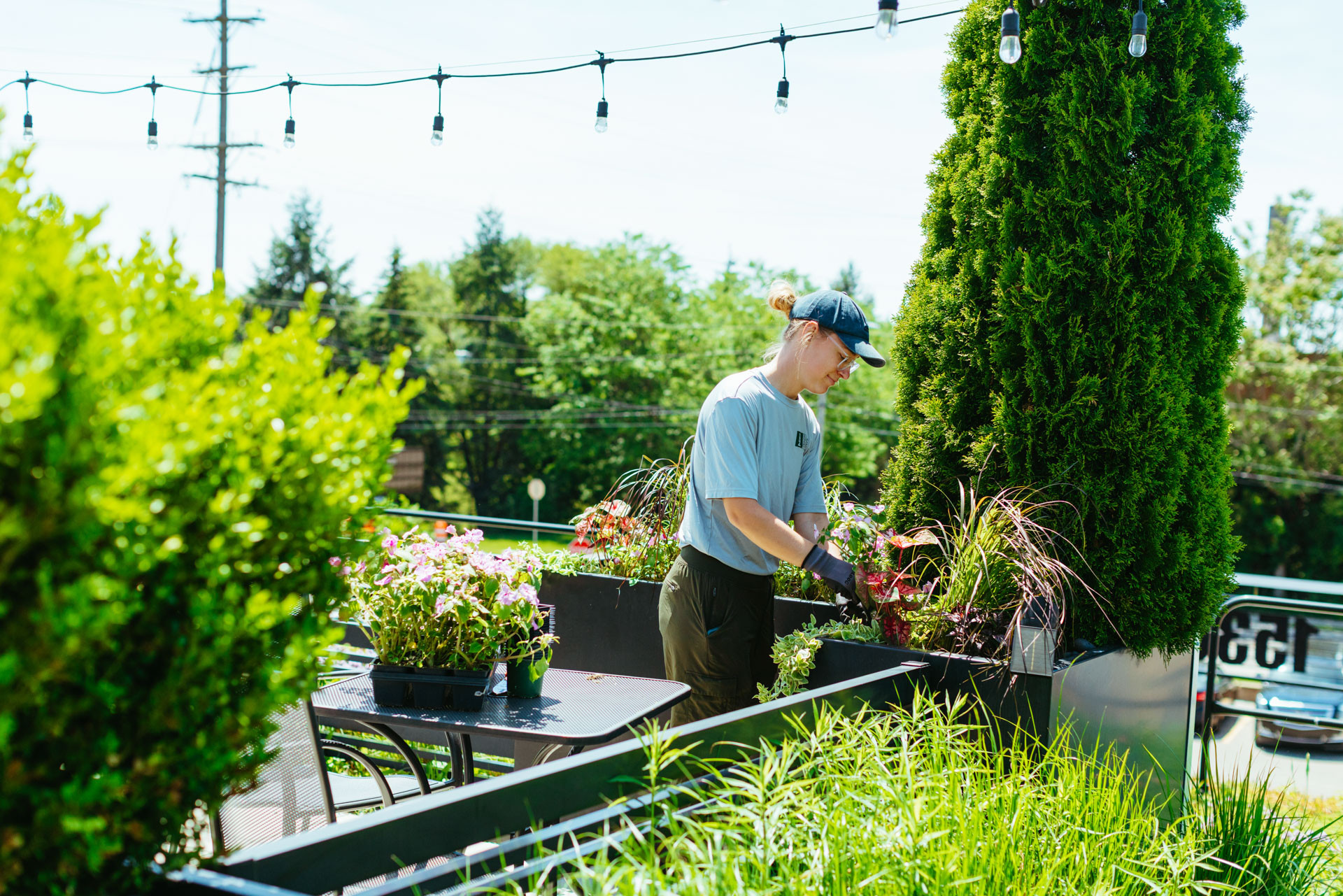
Taylor Niewenhuis, a staff member at the Center’s for-profit landscaping company, Building Bridges Grounds Management, cultivates native plants on the roof deck. The roof deck is part of the 1530 event space, which can be rented out at a discounted rate by people in the neighborhood for community celebrations—everything from weddings and funerals to graduation parties and corporate gatherings.
Erica Baker
When potential investors don’t understand why they would support a for-profit along with the non-profit organizations, it creates opportunities to talk about what collaboration actually looks like in a city. For-profits and nonprofits usually have different priorities—but they don’t have to be competing priorities. The nonprofit Nehemiah Project might get a grant from the state to help seniors; the Center’s for-profit landscaping company, Building Bridges Grounds Management, can fulfill that grant, providing free lawn care to hundreds of senior citizens and allowing them to age at home. The equipment that grant allows them to buy might also be used for their corporate clients, increasing their profit margin at the same time they’re helping people in the community and paying the salaries of employees who might be coming out of rehab or out of the criminal justice system, individuals who would have a hard time getting work anywhere else. It’s a synergistic relationship.
Like Building Bridges, each of the organizations is doing good work in their own right.
In the basement, Bethany Christian Services supports family well-being, serving almost a thousand youth every year. They offer programming for teens focused on healthy relationships and employment readiness, culminating in a paid work experience. The Center also houses Bethany’s YouthBuild program, providing participants ages 17-24 an opportunity to learn construction skills and earn their GED. A large part of their work is with youth in foster care. Crystal Houston, the Executive Branch Director for Bethany at the Center, shares that of the 535 youth in foster care in Kent County, 80% of them are from the neighborhood the Center is located in.
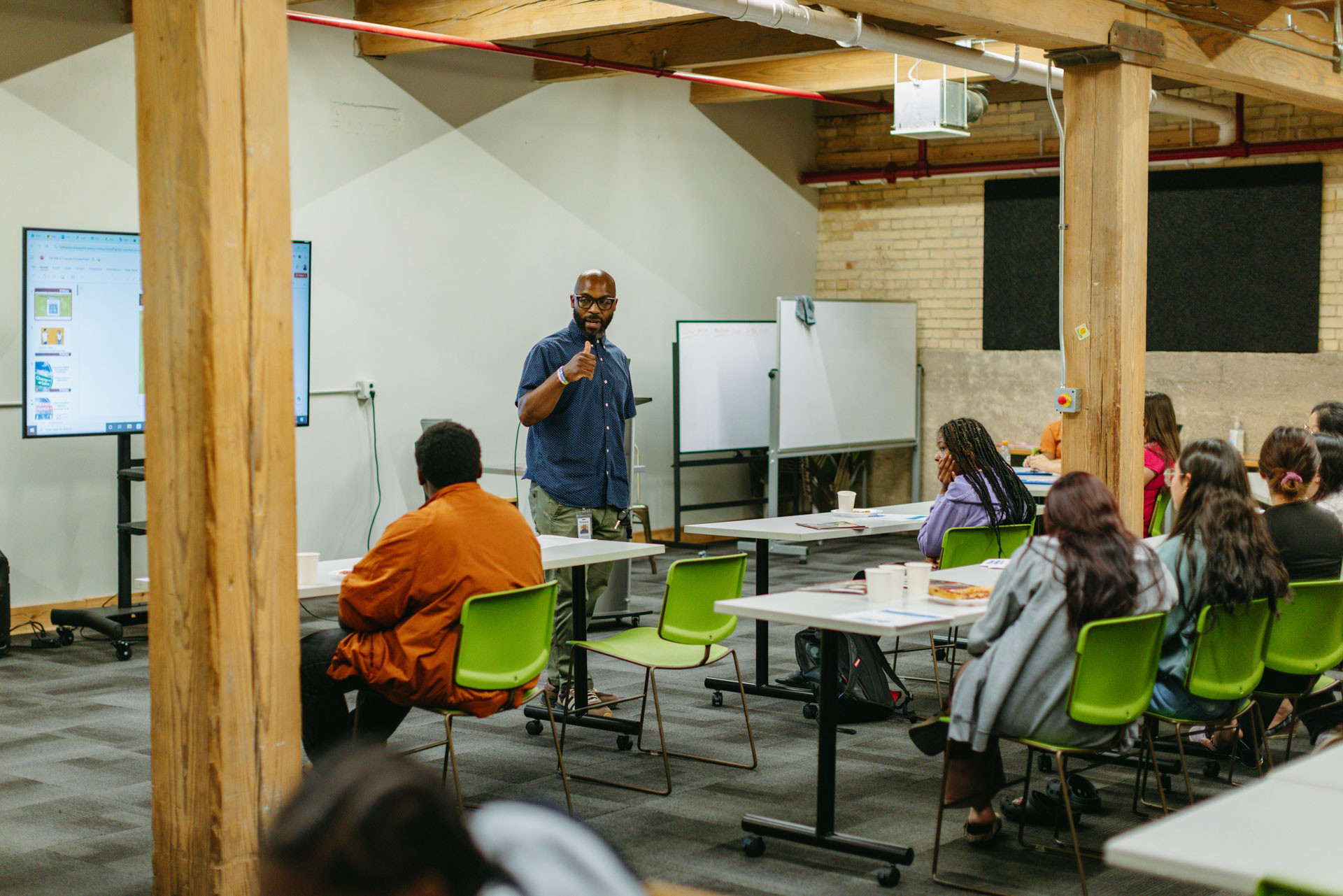
Chris Lovelady leads classes for young people through Bethany Christian Services. They offer programming for teens focused on healthy relationships and employment readiness, culminating in a paid work experience.
Erica Baker
Upstairs, the 1530 event space can be rented out at a discounted rate by people in the neighborhood for community celebrations, everything from weddings and funerals to graduation parties and corporate gatherings. They don’t want people to have to choose between hosting a nice event and paying their electric bill. Their full-size catering kitchen removes another barrier to aspiring business owners who might not have access to a kitchen that meets the specifications needed to get in front of a large grocery chain like Meijer.
YoungLife is a community partner of the Center. Michelle McGlaun, the Area Director, is primarily focused on spiritual development through club meetings and Bible studies, but thanks to partnerships at the Center, it’s part of a holistic model. Michelle invites youth who come to the Center for Bethany’s programming to YoungLife meetings, and students who come for YoungLife might need more than spiritual development. Michelle can connect them with Bethany to help them get a job, or join YouthBuild to get a GED, or take them on college tours. “Within the Center, no one is an island,” she says.
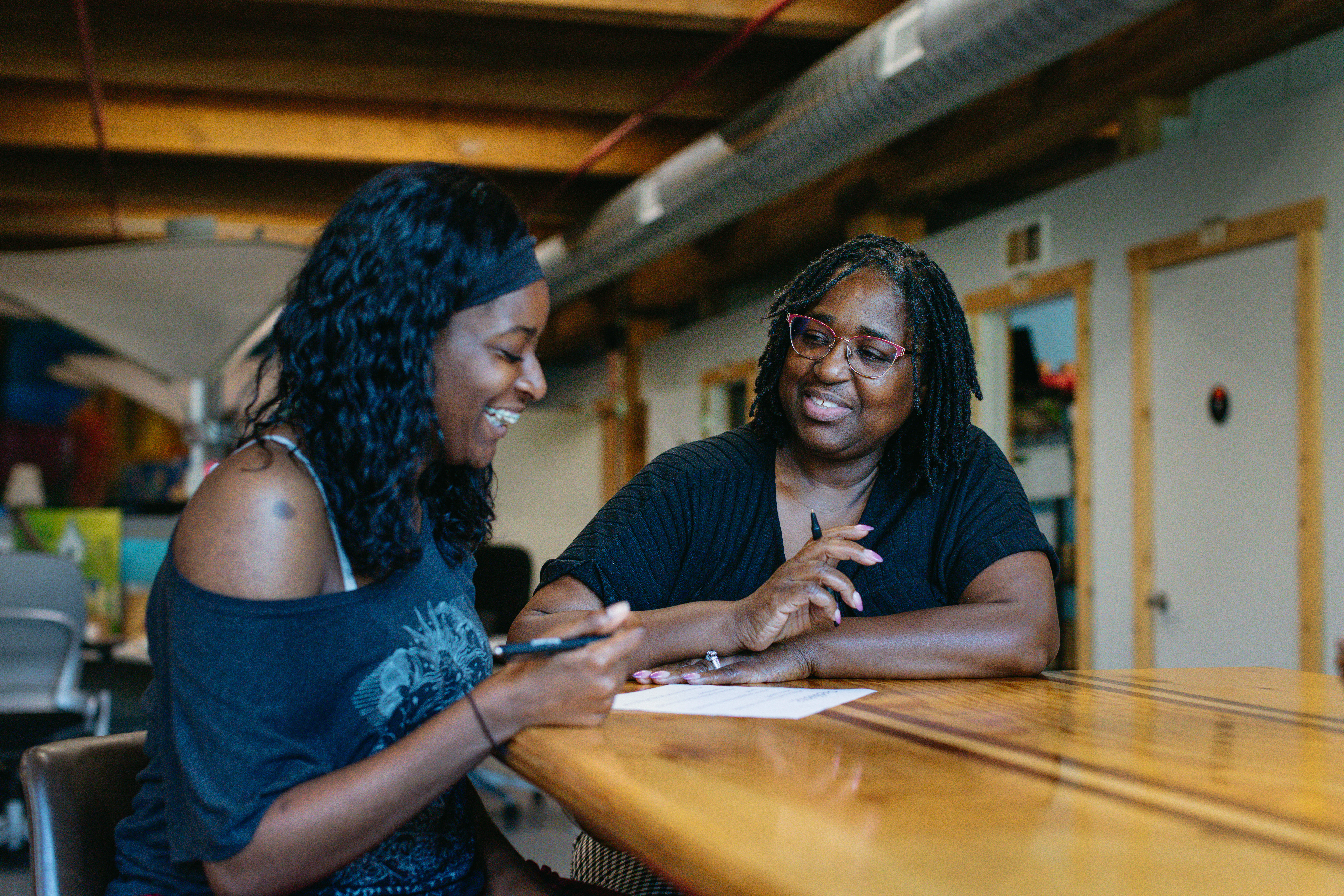
Young Life Area Director Michelle McGlaun works with one of her students on a job application in the Center's offices.
Their cooperation also makes it easier for people to access opportunities. It can be difficult to find resources when you’re in crisis. “We’re telling people to go out there and do it on your own, and we’ve got like 15,000 different numbers for you to call to make it happen,” Crystal explains. The Center allows people to access multiple opportunities under one roof.
Each of these organizations are effective in their own right. But Grand Rapids has always had nonprofits and charities, and they haven’t solved the systemic issues. The defining characteristic of the Center, why it actually has a chance at transforming the city, is its collaborative ecosystem. The leadership team meets on a regular basis to look for opportunities to serve each other’s organizations, promoting and advocating for each other’s work. It’s a true abundance mentality.
Transformation at the Speed of Relationships
They have a saying at the Center: Transformation happens at the speed of relationships. And everyone has a story of transformation.
Nate recalls a man who started at YouthBuild and then worked at Building Bridges. He had a dream of building his own home. Through a corporate partner, a developer, the Center helped him achieve that. He went through their construction training program then participated in the buildout of his own home. Immediately, he had $200,000 in equity.
A 16-year-old single mother was referred to the Center through her case worker. She was in foster care and struggling to stay in the home. She went through the YouthBuild program, graduated with her GED, and went on to postsecondary education. Now, she’s a mom of two, working in healthcare and living independently.
A group of churches got together through the Center to help single moms become first-time homeowners. They help them cross the finish line to homeownership through down payment assistance, credit repair services, matching their savings, and addressing challenges that come up in the first few months of owning a home.
Samantha Ndayishimiye jokes with Veronica Cook, one of the Bethany staff members at the Center, about her upcoming class selections for her first semester of college. She just graduated from high school on Wednesday and is enrolled at the local community college. Samantha went through Bethany’s educational programming, completed a paid work experience, and is now serving as a co-facilitator.
Erica Baker
Another young woman, Samantha Ndayishimiye, went through Bethany’s educational programming, completed a paid work experience, and is now serving as a co-facilitator. She helps hand out slices of pizza and checks in students arriving for class. She just graduated from high school on Wednesday, and she’s enrolled at the local community college for classes beginning in the fall. In between tasks, one of the Bethany staff members asks to see her schedule, weighing in on how many credits she’s taking. “I just feel like I know who I am now,” Samantha tells me.
And then there’s Muaz.
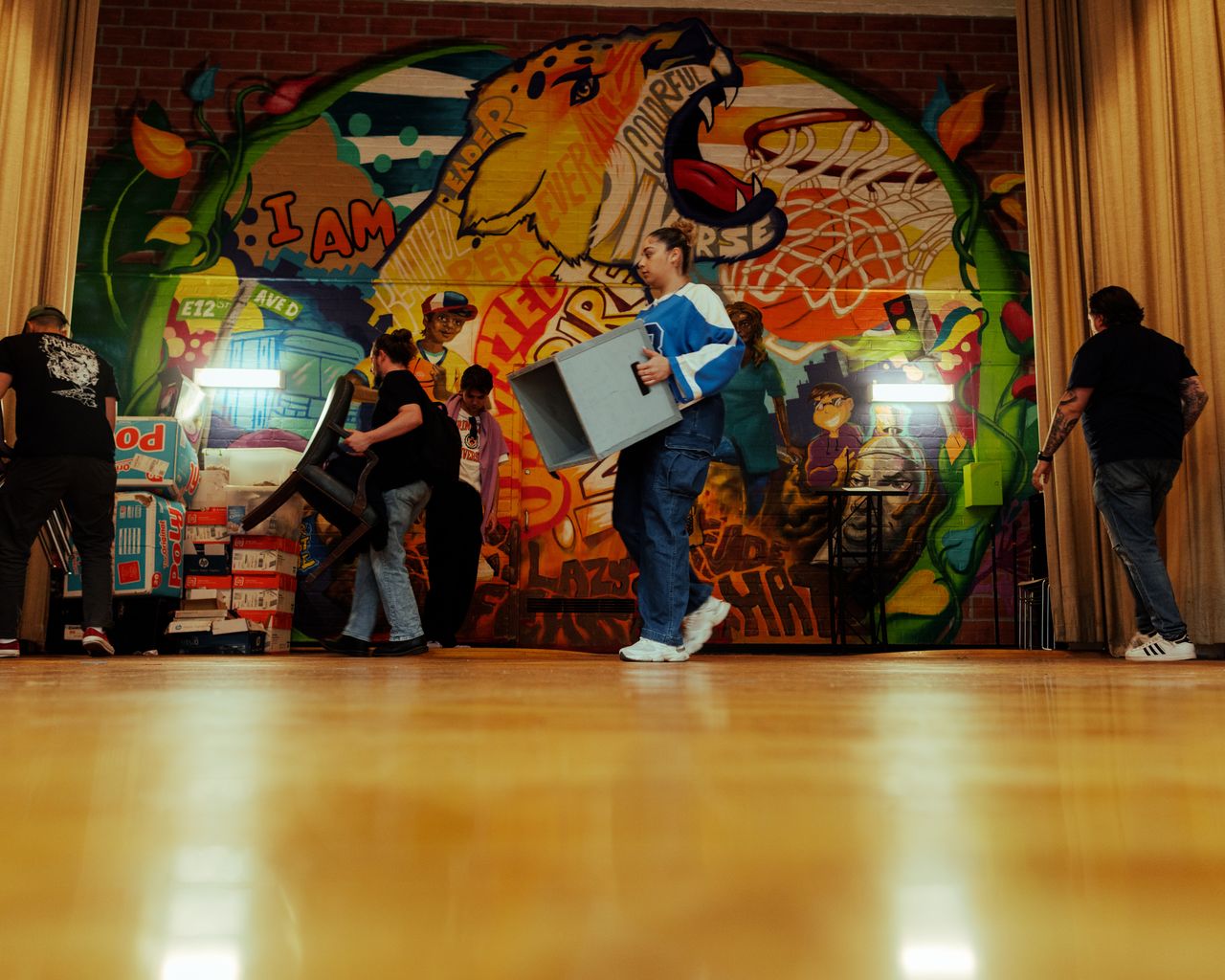
We catch Muaz as he’s finishing a shift setting up for an event at the 1530 event space. He has an easy smile and relaxed demeanor; you just feel good in his presence. He walked into the Center back in 2018 as a curious teenager and signed up for Bethany’s Love Notes program the same day. After going through the relationship education curriculum, he completed a paid work experience, where he was offered a permanent position. But he was drawn back to the Center. He started doing custodial work, spending a couple of years cleaning the building. Then he was hired by Building Bridges. He did landscaping for a year before moving into events, where he’s now a supervisor. He also serves as a youth mentor in their athletic camps for teens. “They changed my life for the better,” he explains. “I seen a lot of people that came through here now are doing something big in life. And I want to be a part of that.”
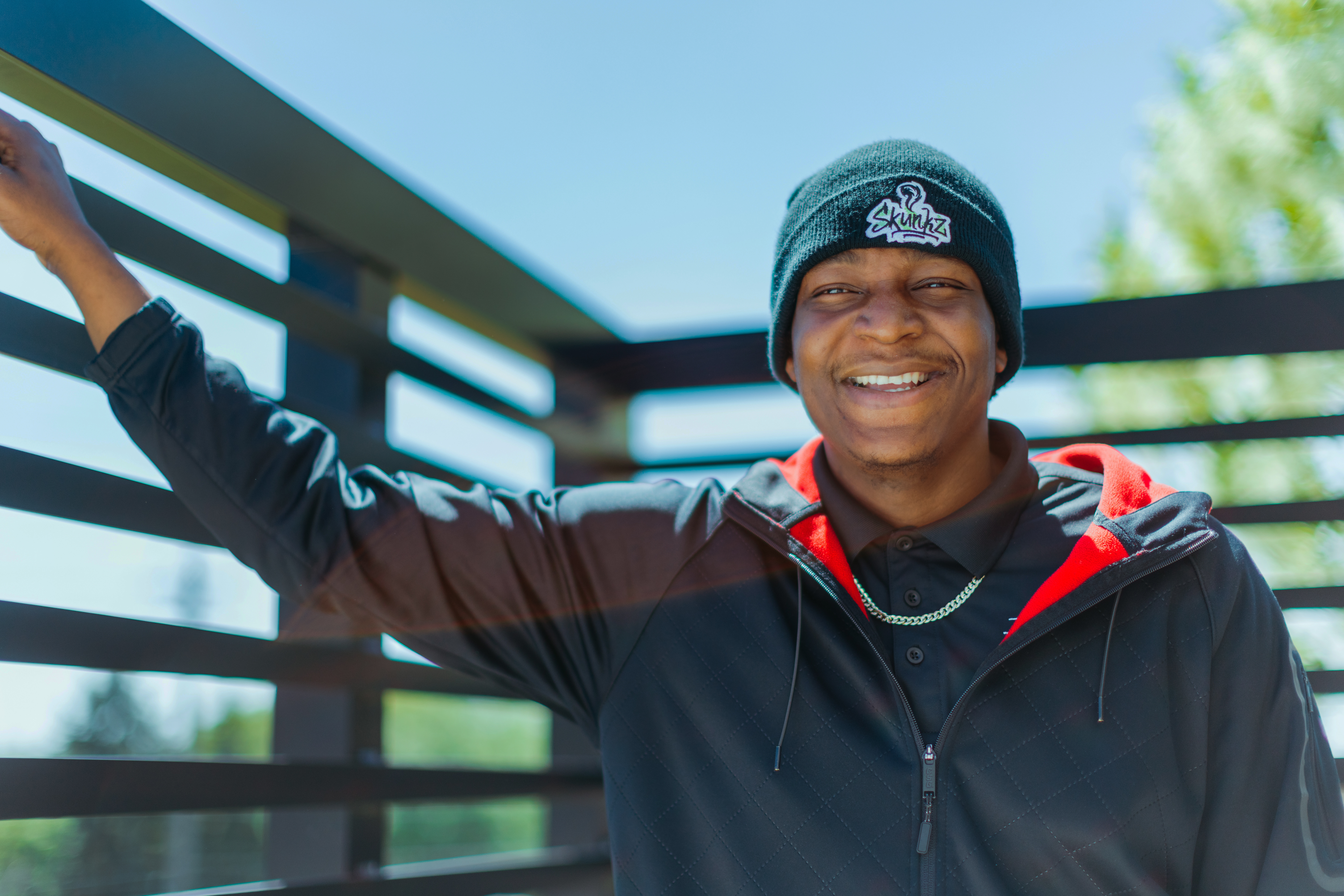
Muaz poses for a portrait on the roof deck of the 1530 event space where he's now employed.
Erica Baker
In his spare time, Muaz is doing an internship in electrical engineering. He’s also an independent contractor. “I’m a very curious person,” he explains. “I see something; I’ll go try to learn.”
“You do all of that?” I ask him.
“Yes. I’m like a 15-in-1 person,” he quips.
He’s humming with energy and positivity. But his words are also laced with sincerity. “I came here and I changed a lot and I’m proud of that. I seen people come in messed up and then left here and now they elevated their self in life. This place is a life changer.”
Perhaps without even meaning to, he taps into what’s so special about the Center: “If you come up here, there’s always something for you. Whether it’s financial, physical, emotionally, spiritually, whatever it is. There is something that’s for you here.”
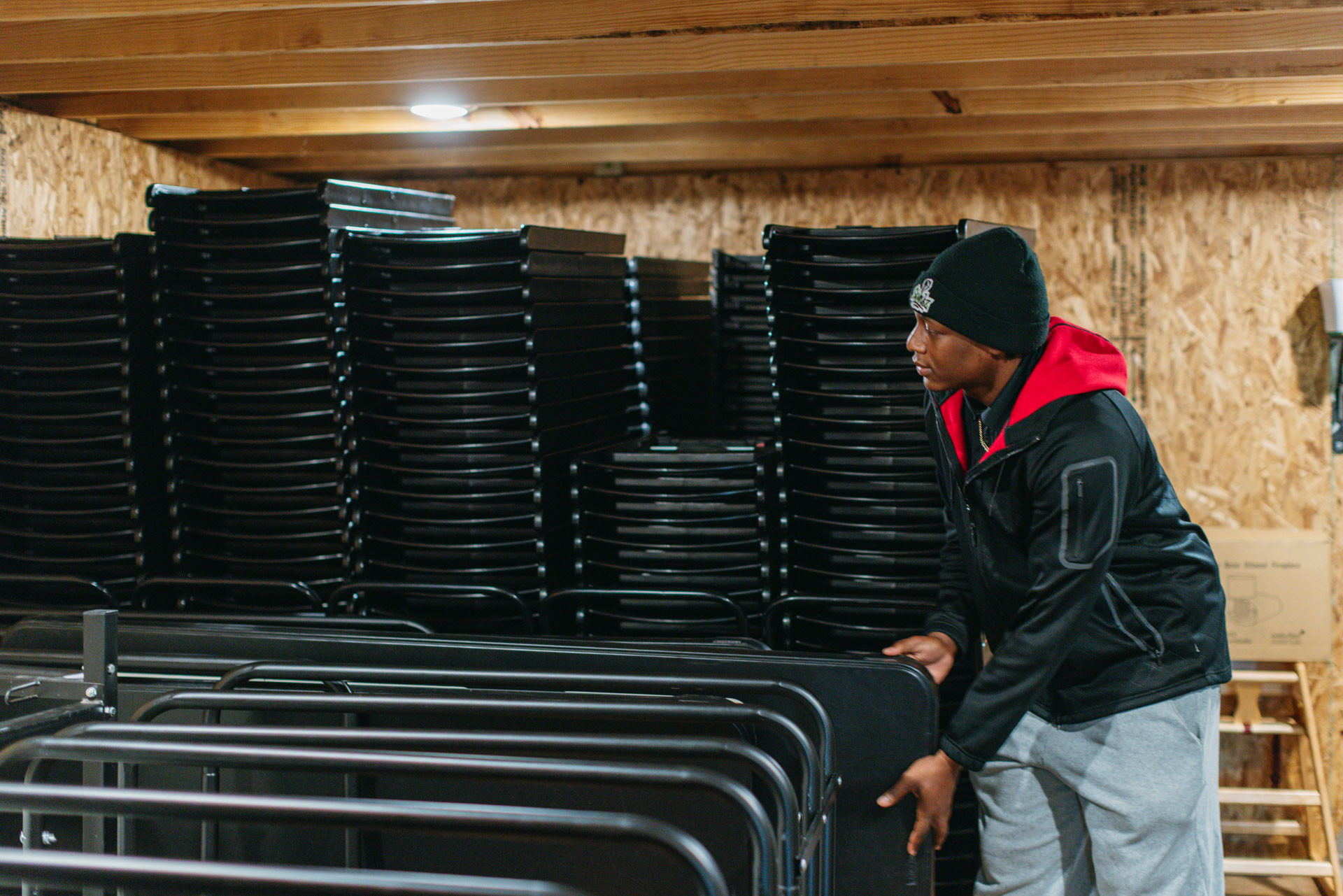
Muaz organizes chairs for a Quinceañera being held at the 1530 event space.
Erica Baker
If you come up here, there’s always something for you. Whether it’s financial, physical, emotionally, spiritually, whatever it is. There is something that’s for you here.
Muaz Abdalla, Youth Mentor
Interlocking Joints
Artie Lindsay is the Pastor of Spiritual Formation at Tabernacle Church and board president for the Grand Rapids Nehemiah Project, the nonprofit that undergirds and supports the work of the Center. He’s been around since the beginning. Like Justin, he radiates warmth, intelligence, and passion. He loves his city yet sees it for all its cracks and scars.
I could use some of his wisdom.
Like Nate and Justin, I have a personal history with Grand Rapids. I grew up in a suburb just twenty minutes north of the Center, a very white, affluent, evangelical place. I didn’t question its homogenous nature until much later, and some of the facts are uncomfortable. It’s something Artie and I talk about, how to reconcile the strong evangelical presence and wealth of Grand Rapids with the economic disparity.
“I have not reconciled it,” Artie says. “The reality is that all of that beauty exists and yet at the same time all of the pain of the inequity and the differences exist as well,” he says. “The gospel calls us to do something about that.”
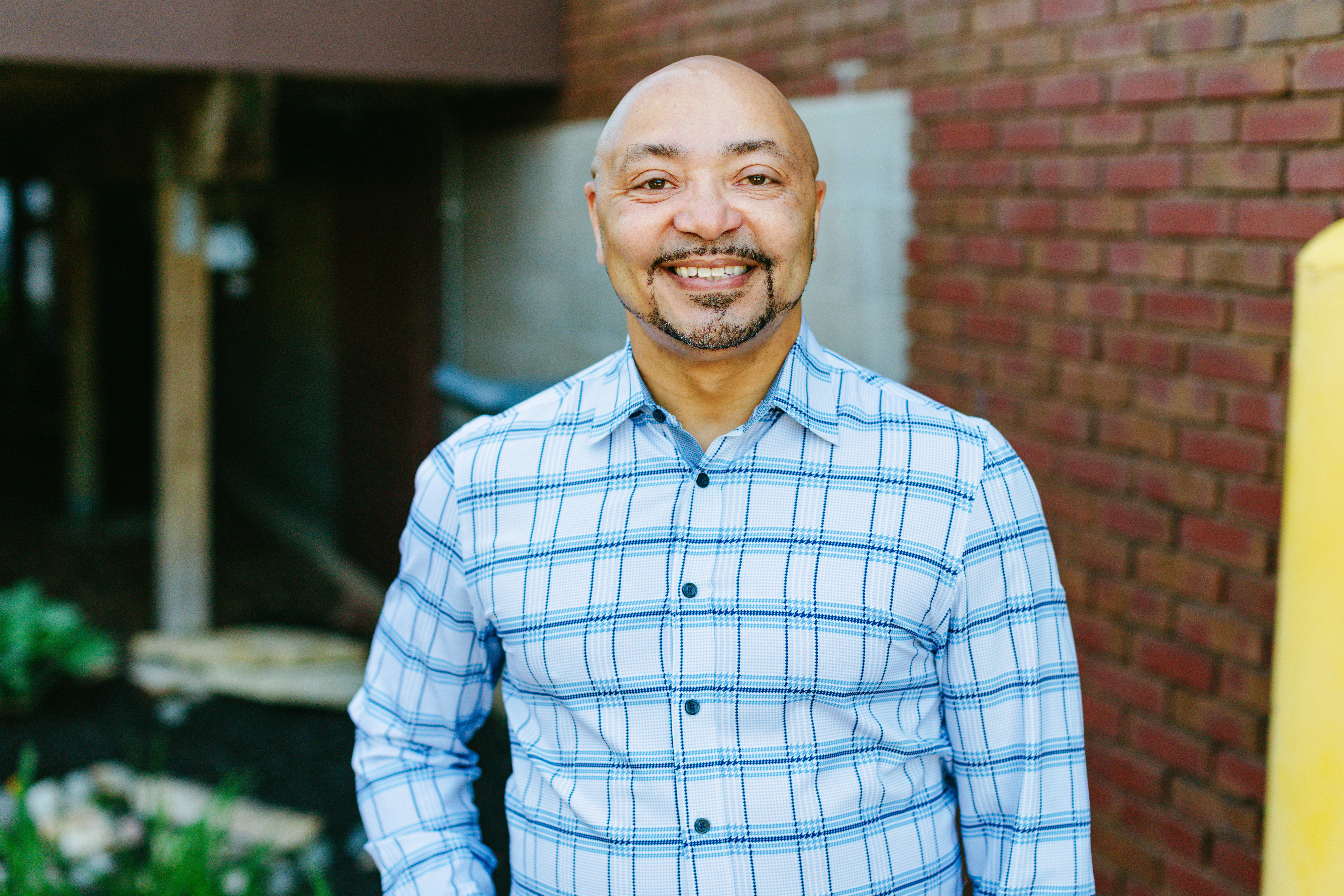
Artie Lindsay, pastor of spiritual formation at Tabernacle Church and board president for the Grand Rapids Nehemiah Project, the nonprofit that undergirds and supports the work of the Center, poses for a portrait outside the Center.
Erica Baker
His pastoral care expands far beyond the four walls of his church. “As a pastor, [I] see the city as my parish, and so Tabernacle is not the only parish that I have responsibility for,” he says.
He knows spiritual edification doesn’t happen in a vacuum. “The robust gospel is that Jesus is not just renewing souls, he’s renewing everything. He’s concerned about systems. He’s concerned about people. He’s concerned about their economics. He’s concerned about their families. He’s concerned about their whole life. And so it’s not just, 'I need to share Jesus with you so you can get saved and your eternity is secured.' It’s a fuller gospel.”
He wants to see churches move away from a mindset of charity to a mindset of creating sustainability. “There is a very powerful story around church, nonprofit, and business coming together,” he says. “The challenges are too complex for one organization to solve.”
It might be uncomfortable. “We’re trying to create some disruption,” he says. “We’re trying to challenge people to recognize that prosperity should be experienced by everyone, not just be determined by the zip code that you live in.”
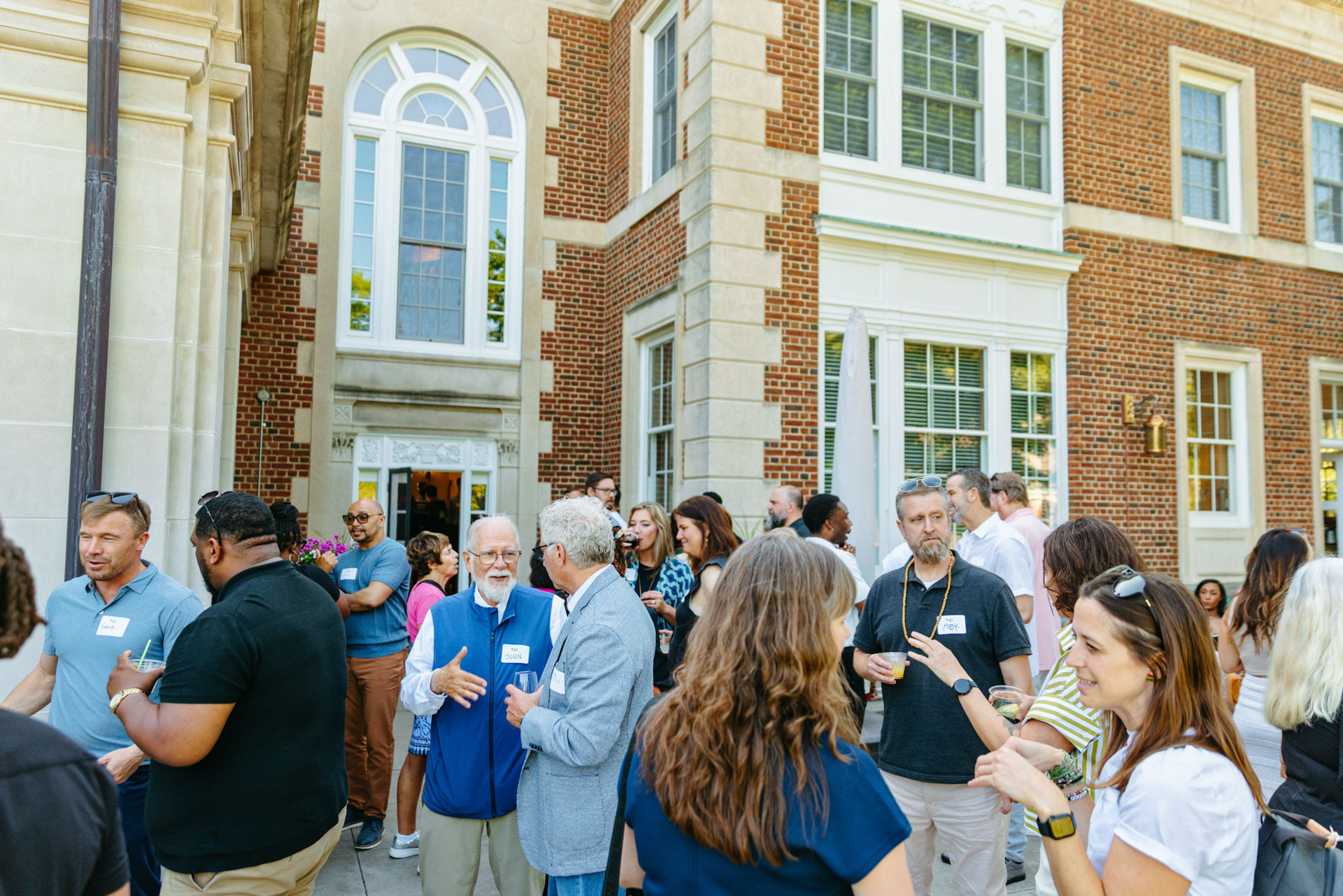
Grand Rapids residents mingle at a monthly gathering called Cocktails and Cross-Pollination, a relationship-building gathering intended to bring together people who wouldn’t normally cross paths.
Erica Baker
One of the initiatives of the Center is a monthly gathering called Cocktails and Cross-Pollination, a relationship-building gathering intended to bring together people who wouldn’t normally cross paths. The only rules are to use first names only and avoid talking about work, which can create unintended barriers.
I’m invited to attend one and see it firsthand. I arrive a little after it starts, and the patio is already filling. Some guests are in cocktail attire, some are in business casual, a few students from MSU whom I recognize from a tour of the Center earlier mingle in jeans and stick close to the appetizer table. It’s one of the most diverse groups of people I’ve ever seen gathered in Grand Rapids—something that doesn’t happen by accident.
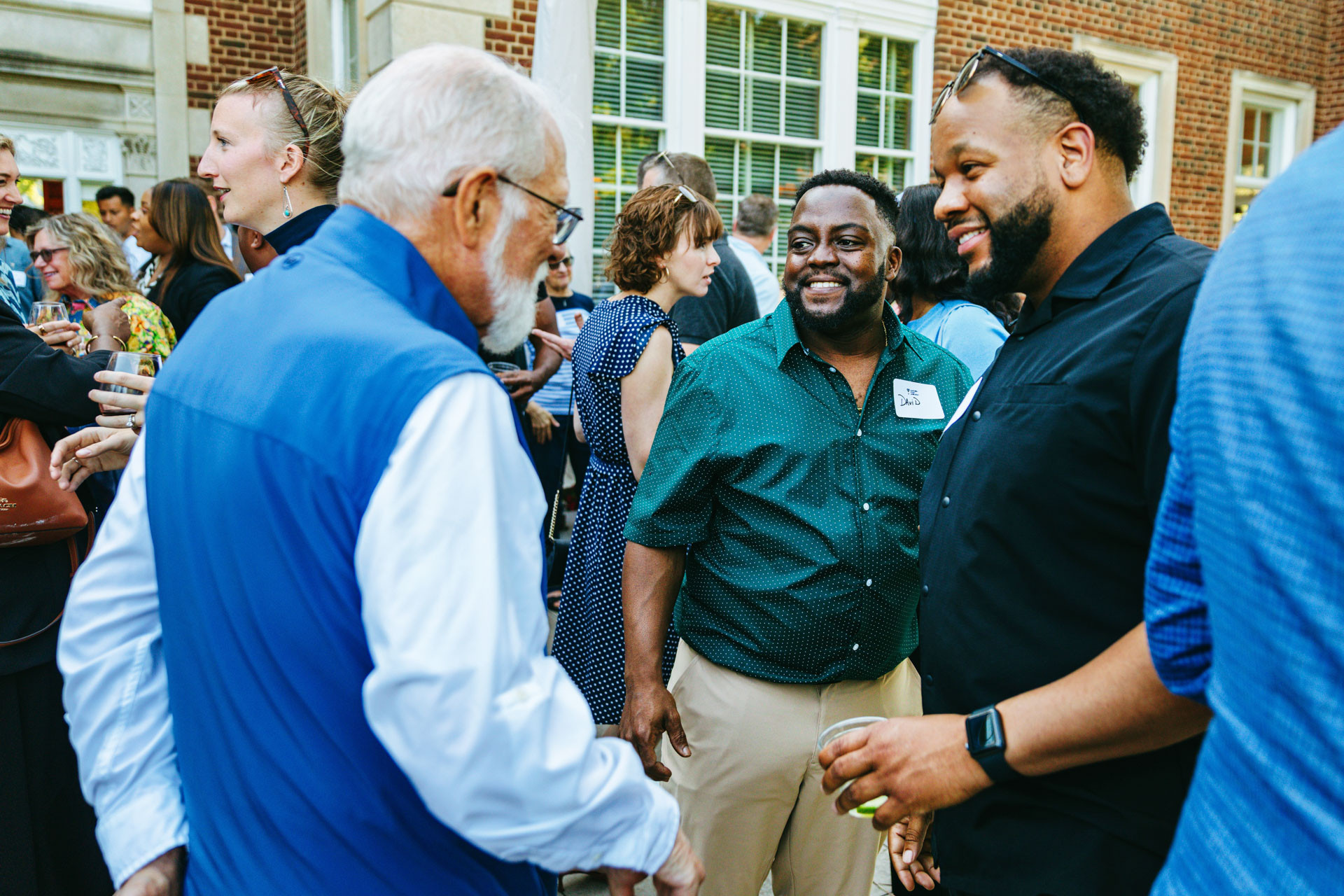
Grand Rapids residents mingle at a monthly gathering called Cocktails and Cross-Pollination, a relationship-building gathering intended to bring together people who wouldn’t normally cross paths.
Erica Baker
The events are curated, but not exclusive. You have to be invited, but guests can bring anyone they want. It’s about cultivating relationships that lead to opportunities; you’re just as likely to meet a high net worth individual as someone living on a fixed income. The room is full of people with the potential to make life-changing investments, but “that’s not how you showed up. You just showed up to make a new relationship,” Justin says. You “just come at each other as human.”
So far, the Center has hosted twenty-five of these events with over 1,800 attendees. Ever data-driven, Justin has created a post-survey. 86% said they had followed up with someone they met after the event—over half having made plans to meet in person.
“The aftermath of that event is really cool, because people that would never speak with each other are on a text message basis now,” Scott says. “I haven’t seen that anywhere, where you have the dichotomy of dispositions and social status, and financial status as well, being able to have interactions with each other that are not transactional.”
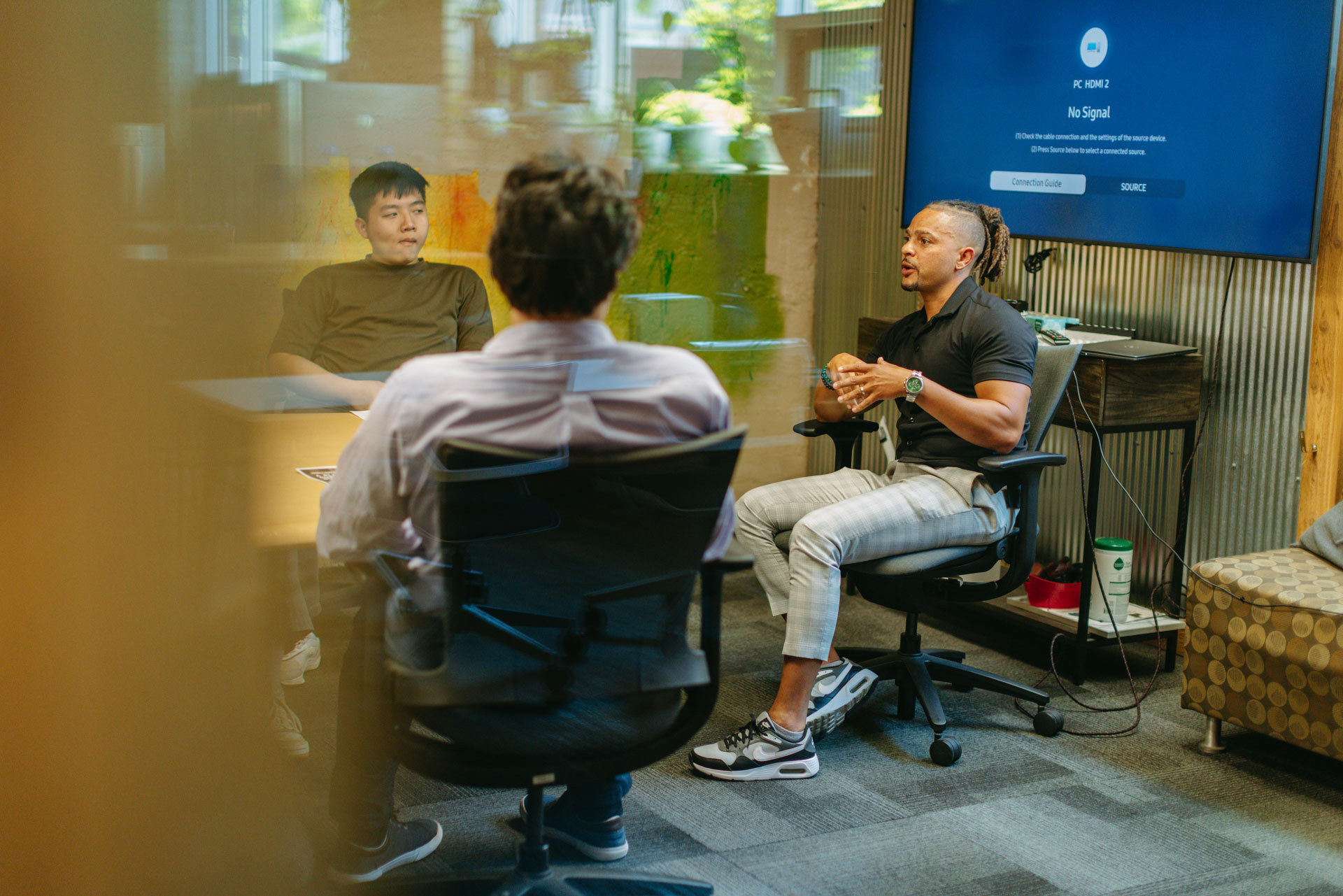
Justin Beene, founder of the Grand Rapids Center for Community Transformation, relays the vision of the Center to a group of Michigan State University students.
Erica Baker
The antidote to the Five Dysfunctions of a City starts with vulnerable relationships. Coming together across differences leads to expansive experiences and shared vision. “If the donors and our young people can begin to see the world together, not as the donor saying, ‘I have the bag of money, follow me,’ or the young people saying, ‘I only see you as a resource,’ but instead saying, 'we can see each other’s shared humanity,' that shared vision starts to get us to very strategic or intentional action that leads to transformative results,” Justin explains.
Transformation at the speed of relationships in action.
“Sometimes I substitute the word love for transformation,” Justin says. “Everyone knows what it feels like to be loved, and everyone knows what it feels like to love. So, how do I transform my city? That sounds really difficult, but how do you love your city? It’s like, everybody’s implicated in that.”
Love the city? That I can do.
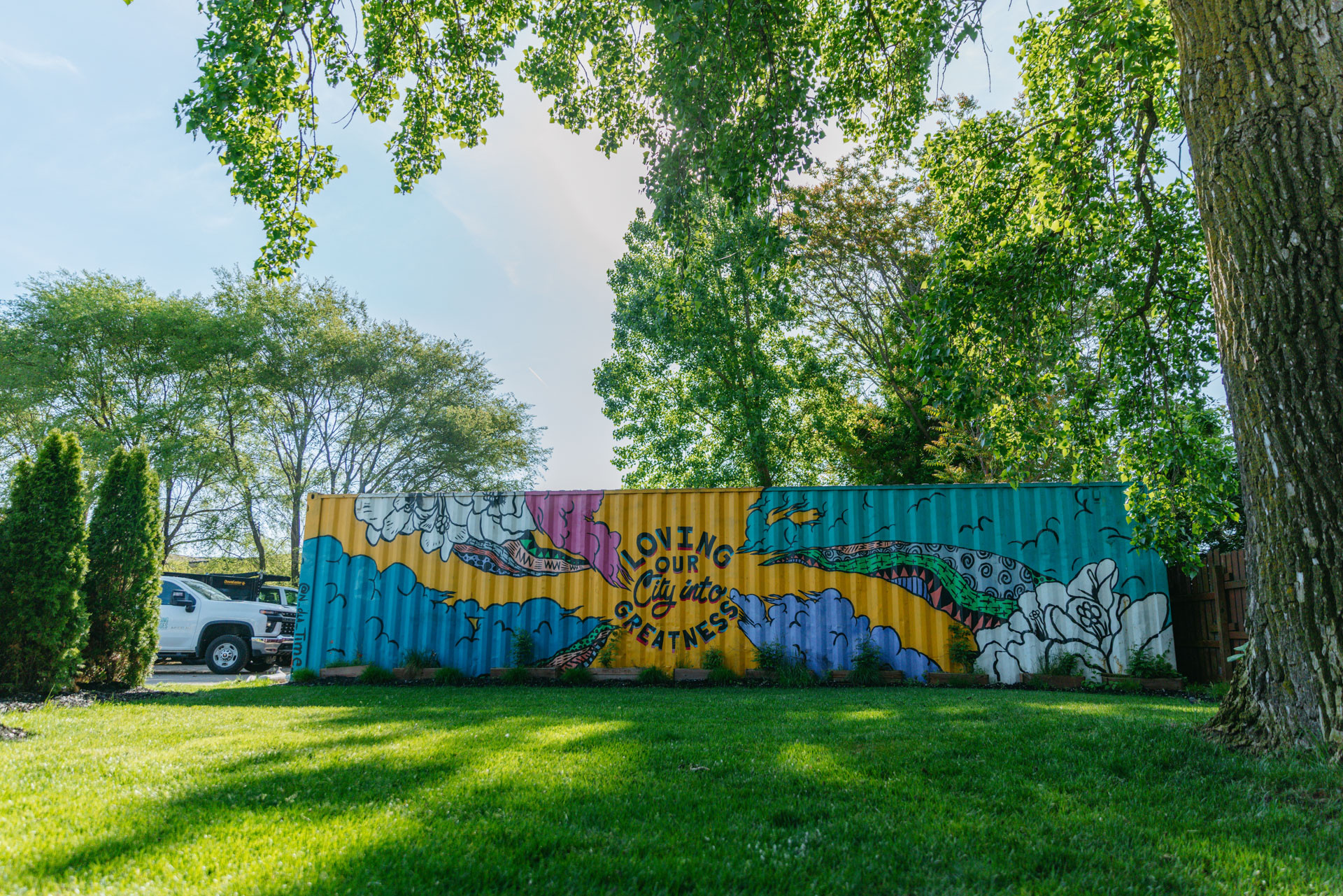
One of many murals and street art initiatives comissioned by the Grand Rapids Center for Community Transformation.
Erica Baker
I have never loved a place like I love West Michigan. Since moving away, I’ve become an evangelist of its white sandy beaches, Lake Michigan sunsets, berry farms, craft breweries, and charming small towns. There’s nowhere better to spend a summer day. I’d get ice cream at Furniture City Creamery, grab a beer at Founders, a coffee at Madcap, stroll the shops on Wealthy or Cherry Street, admire the historic mansions of Heritage Hill, bike the White Pine Trail.
But maybe I didn’t love the whole city, and if you love someone without knowing them or listening to them, is that really love?
The first step is expanded vision.
“My vision for Grand Rapids is that we obtain a new set of eyes,” Nate says. “Our collective consciousness, if you will, has only been able to see the marginalized—anybody who’s different—as a problem to be solved or money to throw [at] and fix” instead of “as an opportunity to celebrate difference in race and political beliefs, in thought, in philosophy.” Grand Rapids has always been generous from a charity standpoint, but he hasn’t seen that charity translate to sustainable change that affirms human dignity. “So if I think about the city almost as an organism, it’s like, how can the city as a place adopt a new set of eyes to see things differently? Because only once we can see things differently can we begin to act and behave differently.”
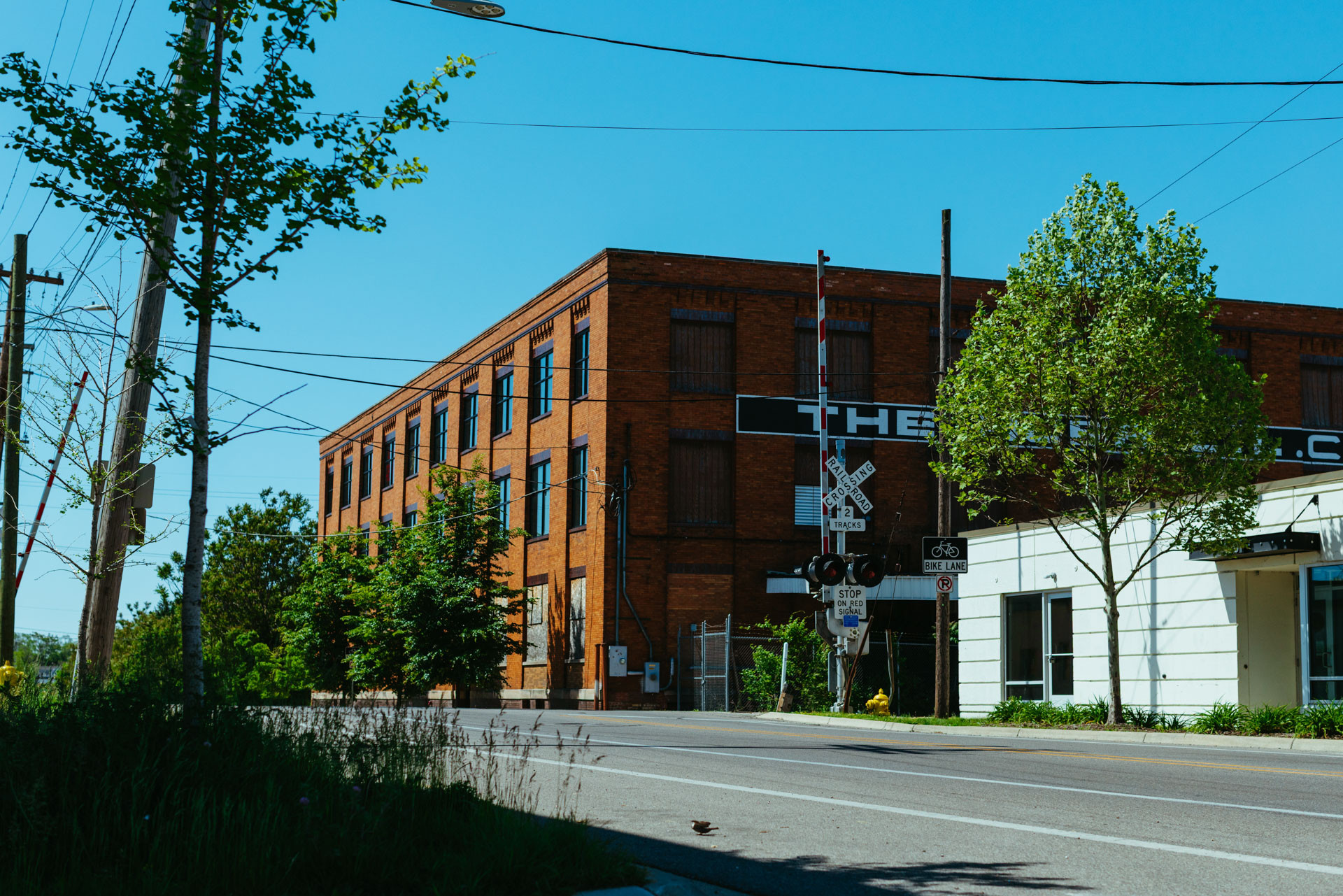
The Grand Rapids Center for Community Transformation recently acquired this building across the street—in keeping with the industrial roots of the neighborhood, a former pickle factory.
Erica Baker
Up next for the Center is a new building across the street that they've worked with community partners to recently acquire. In keeping with the industrial roots of the neighborhood, the building is a former pickle factory. It will echo what’s happening at the Center on a much grander scale, with space for more than 200 to 300 people and a focus on business development and entrepreneurship. But it will go one step further: 51% of the building will be owned by 400 families in the neighborhood. The Center and their community partners are leveraging philanthropy and tax credits to subsidize these families having equity stakes in the building. It’s a paradigm shift. “You’re not a community member we’re trying to help. You’re actually an investor and owner in the largest piece of real estate in this neighborhood,” Justin says. 70% of the construction will be done by local contractors, many from the neighborhood.
The building itself isn’t the goal. “It’s an outcome of the most important thing, which is trying to create a culture in which we can all become more fully human,” Justin says.
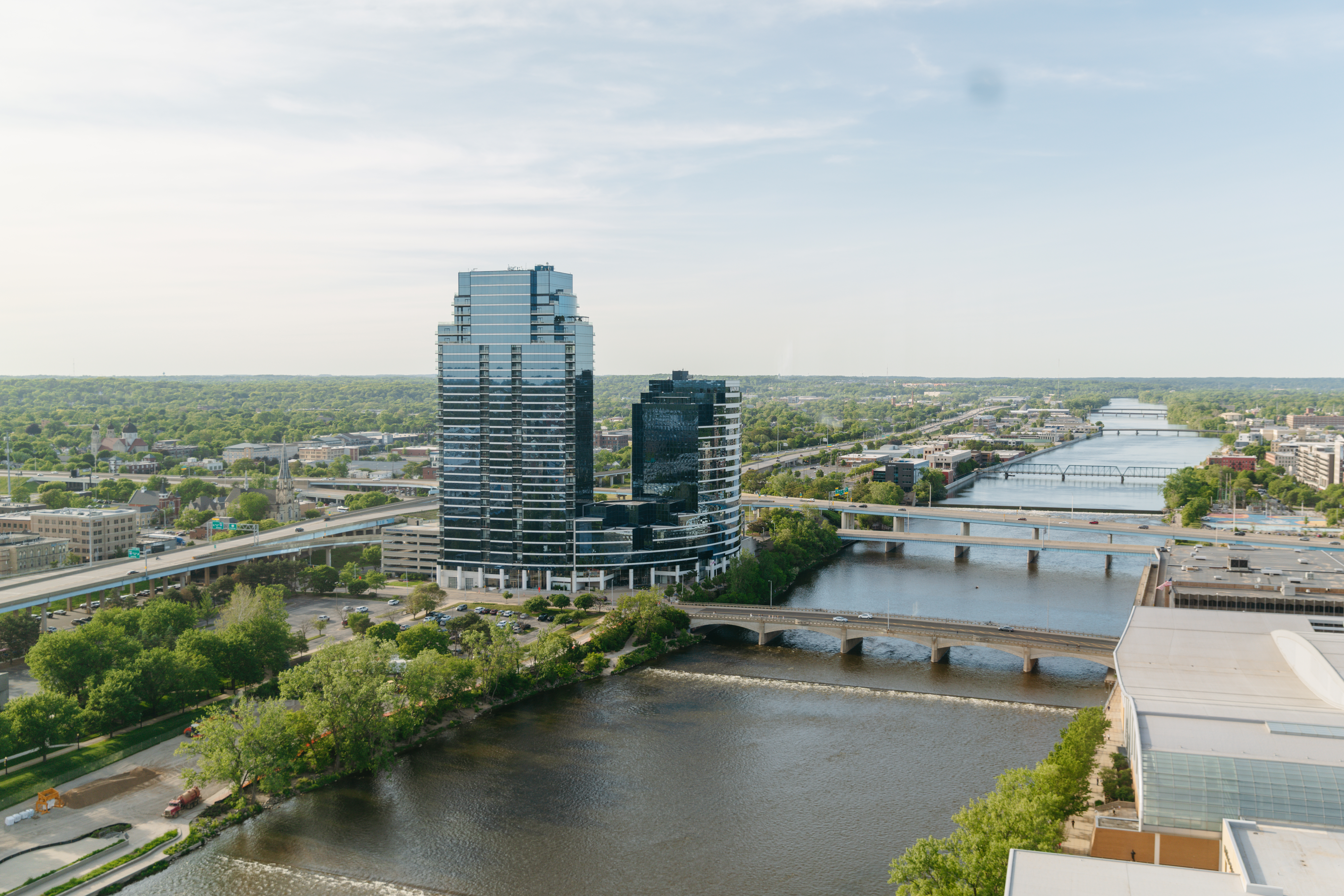
The view from the top of the Amway Grand Hotel, overlooking the Grand River at dusk.
Erica Baker
That’s a lofty vision—“a vision so big, everyone’s vision can fit inside of it,” he says. One they work towards one step at a time.
I think of the dovetail joints with their overlapping corners. Distinct pieces that are stronger together. The reality is both more simple and more complex.
Artie reflects on the past ten years of progress. “There’s something different that’s happening. Change is coming,” he says. “It’s been slow. It’s been hard. It’s been messy. It’s been beautiful.”