The mountains are why most of us say we live in Asheville. Not that the city has sent out a survey. But I’ve lived here for four years now and it’s the answer I hear the most. I used to live in Charlotte, but it had no soul, you know? Came here for the mountains. I’m pretty outdoorsy. I hike a lot and the brewery scene… I mean, yeah. It’s chill.
The answer is rarely for a job (my excuse), barely ever because my friends were here, and it’s never ever because I’m from here. No, people are drawn by the siren song of the land.
The Blue Ridge Mountains (which really are blue if you’ve never seen them) curl around Asheville the way a napping hound curls around her drowsy puppies. The Gondolin of Appalachia, you have to imagine that it would have been exceptionally hard to stumble upon this little topos before maps and highways, like a lost contact lens in a rumpled comforter of azure ridges. And so life here has a certain Rip-van-Winkality.
These mountains are still the dreaminess that gave rise to the myths of the wampus cat, the moon-eyed people, and Luke Combs. The dreaminess that has lured a steady stream of former New Yorkers, Billy Strings fans, ceramic artists, brewers, thru-hikers, banjo pickers, white water kayakers, naturopath practitioners, and me.
The oddest thing though happens when you arrive. You discover a curiously lonely place. Is it lonelier than Boston, Austin, or Johnson City? I don’t know.
But I know that—for all in them that is healing and right and good—the Blue Ridge Mountains are no substitute for human connection. You come here for the love of these gorgeous, sloping, humble, hazy peaks only to discover that they do not love you back. They do not hold you. They do not ask curious questions. They do not reflect with you. They just… well they are made for other purposes.
You come for the mountains and you contract a case of loneliness.
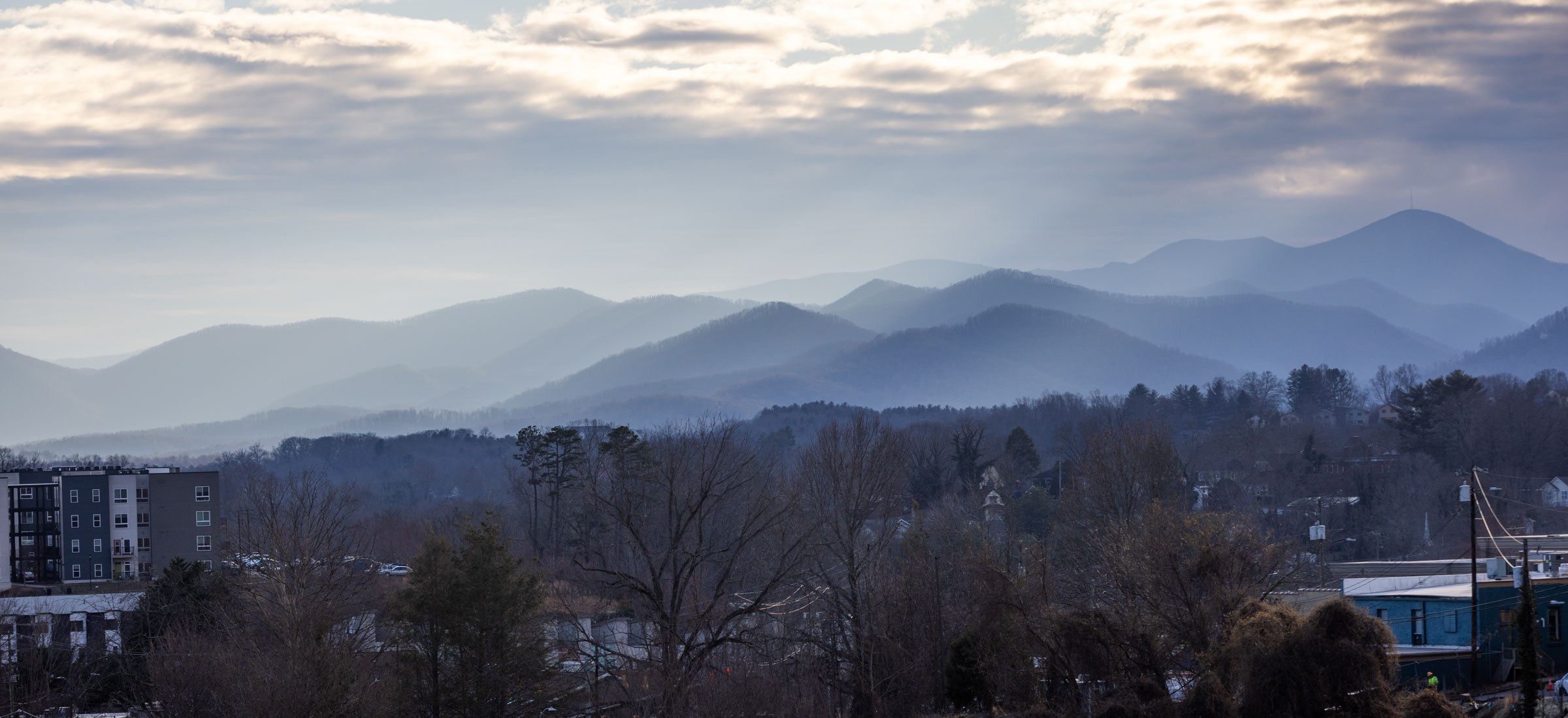
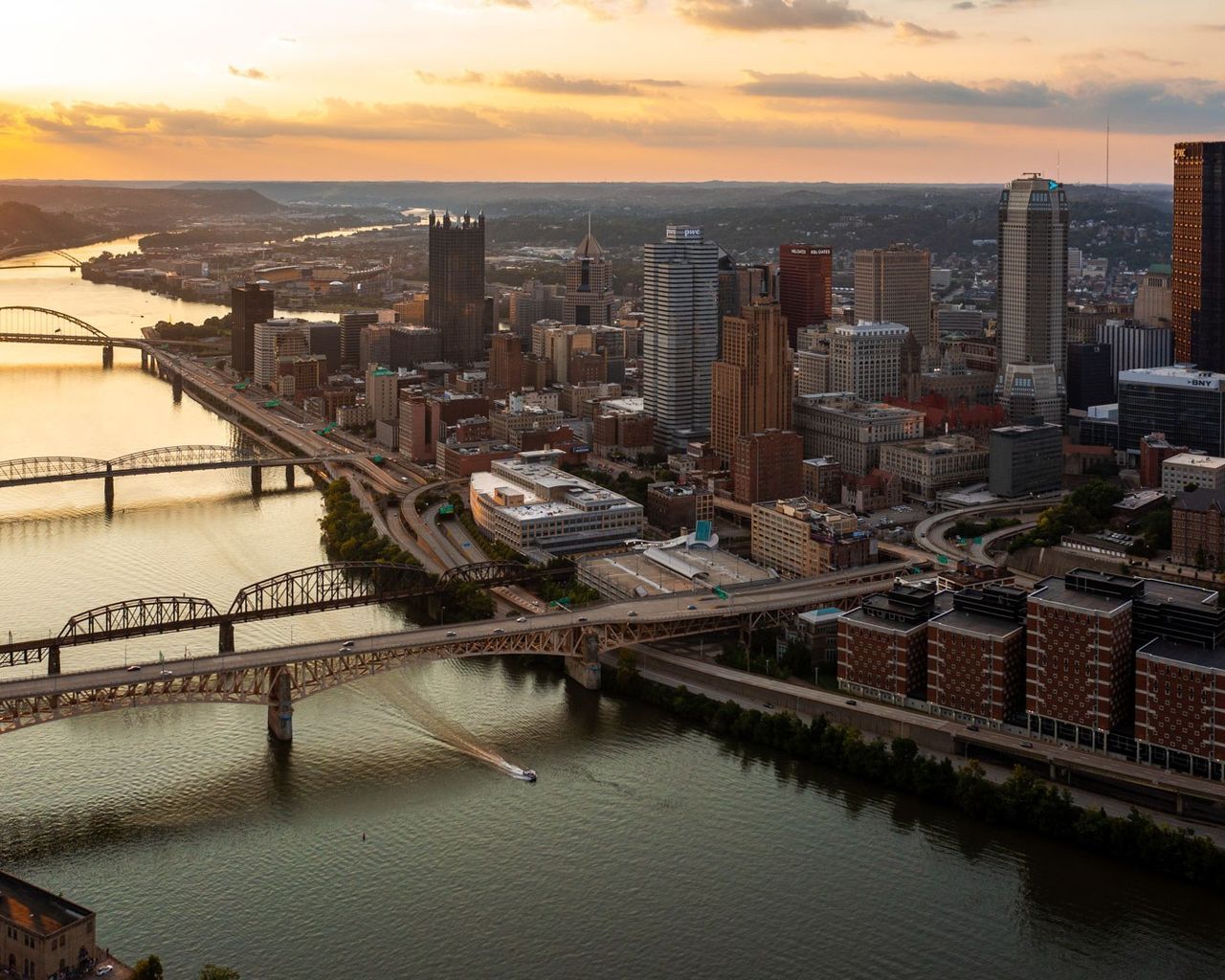
View of the the Blue Ridge Mountains from Asheville, North Carolina.
David Schmidgall
The Loneliness Epidemic
Let’s talk about illness.
Don’t worry, I’m a doctor.
(I am definitely not a doctor.)
It’s weird to think about just how flexible, just how historically variable our notion of “disease” is. The average ancient Greek or Roman would have thought of sickness as a divine punishment, a cultural standard that was critiqued by the school associated with the ancient physician Hippocratus. The New Testament attributes at least some diseases to the work, not of God, but of daimonia—little demons. In the medieval world, it was an imbalance of “humors” like blood, bile, or urine. Germ theory, attributed to John Snow’s work in the 1854 cholera outbreak, is a rather late development. Although it’s still the basic account of sickness we teach our children, the study of illness has gone through unimaginable expansions in the last 170 years. This is to say nothing of eastern models of pathology.
We are looking wider now. It seems to me that the drift of even our most pedestrian ideas of disease have gotten more holistic. We think now about environment, about interpersonal neuro-biology, about epigenetics. You don’t have to be a doctor to appreciate that larger perspective. I might even be so bold as to suggest that it’s our inability to reckon fully with our expanding vision of what counts as health and malady that undergirds a great deal of our political contention around the HHS. But don’t quite hold me to that.
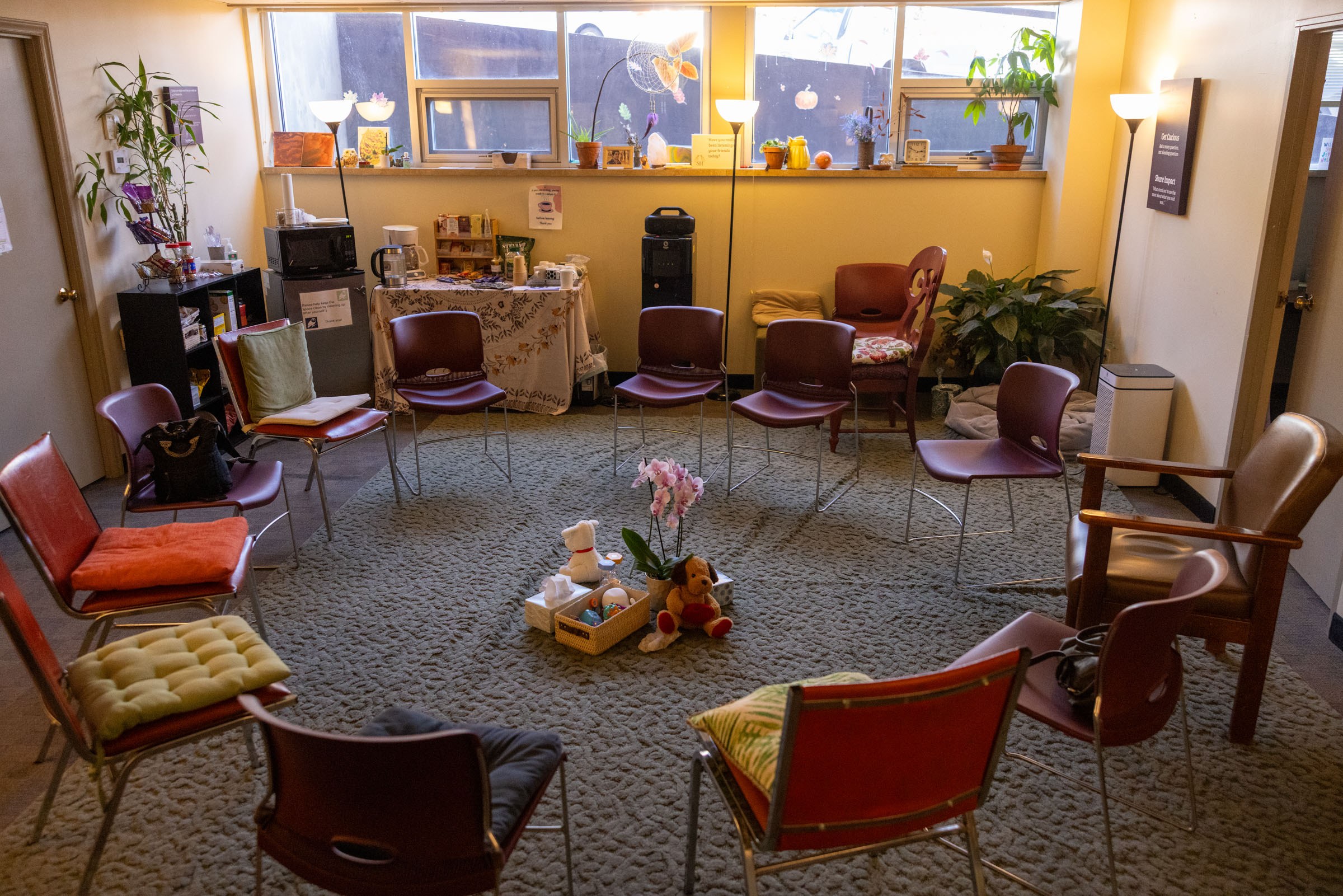
Chairs gathered in a circle at the SeekHealing headquarters in Asheville, NC.
David Schmidgall
All to say, we’re still finding out what it means to be sick, what it means to be well.
In 2023, the US Surgeon General published an 80-some page report titled Our Epidemic of Loneliness and Isolation: The U.S. Surgeon General’s Advisory on the Healing Effects of Social Connection and Community. In it, Dr. Vivek Murthy provides an unsettling list of the health implications of loneliness. Which is to say, our highest national health authority is worried about the ways that our mental, behavioural, and anatomical health are all put seriously at risk simply by the condition of isolation.
Loneliness is a disease. It’s not hard to see that we are the medicine. That is why SeekHealing exists.
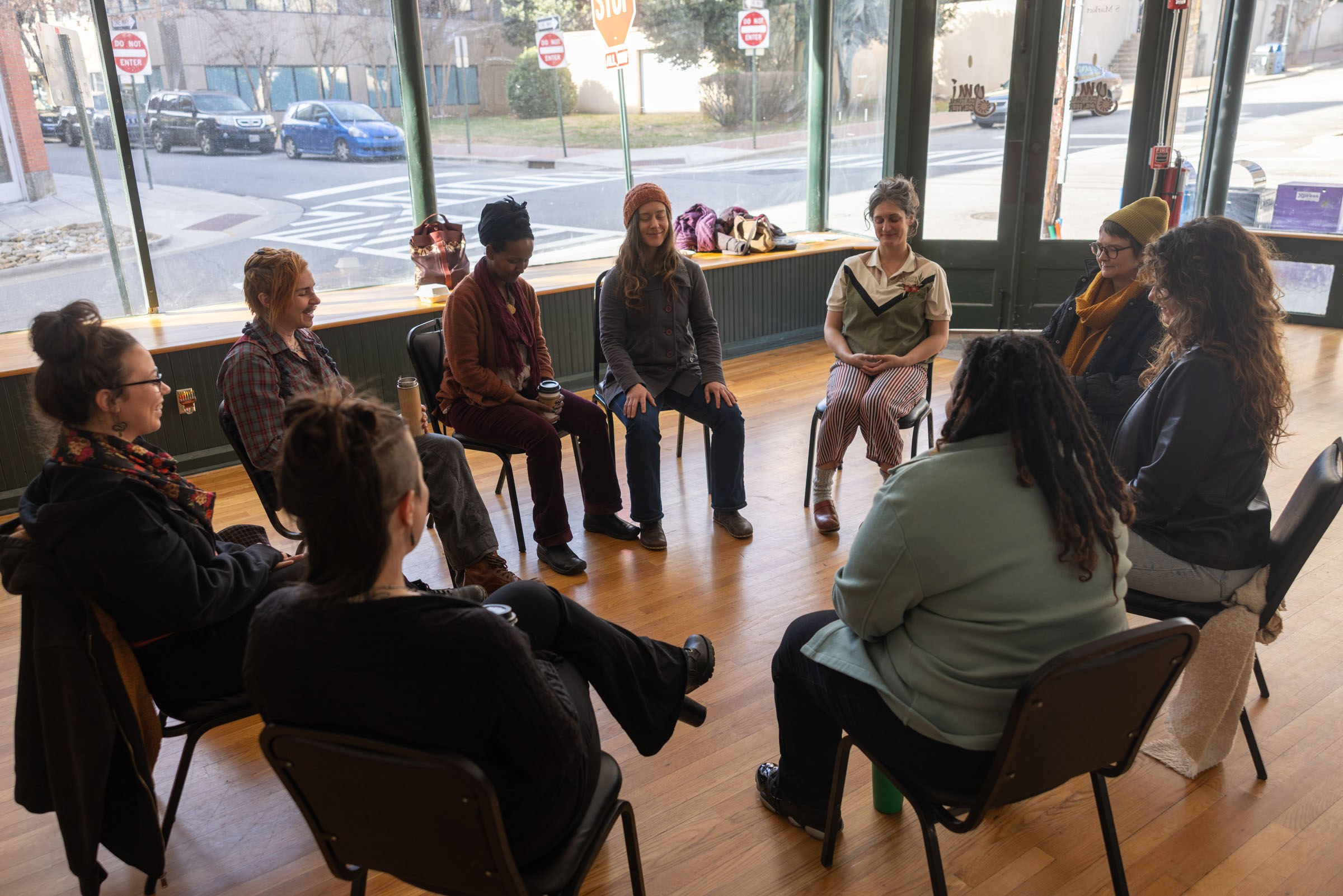
A group participates in Connection Practices at the YMI Cultural Center in downtown Asheville, NC.
David Schmidgall
Practicing Connection
For the last eight years, SeekHealing has been creating environments where anyone can find connection. Founded in 2018 by Jenesis Nicolaisen (they/them), SeekHealing is a social health non-profit based in Asheville, North Carolina. They offer a generous slate of curated spaces—called “containers"—where people can discover vital human connection. In those containers is held the authentic relationship that is the only cure to loneliness.
Your entry level container is a “First Conversation.” That is how Lauren Vermillion first came to know SeekHealing. “[First Conversation] is something we do where different facilitators and volunteers meet up one-on-one with seekers who are interested in hearing more about it.”
To me, it is obvious that Lauren’s spirit animal is a lion cub. Her presence is warm, a Yucatanian sun. Her eyes are green cenotes. Not everything has gone her way. “I was diagnosed really late in life with autism and ADHD. My whole life I've always had this social anxiety.” In her past is also a dissolved marriage. But the ease of her smile, the steadiness of her gaze, the roundness of her cheeks—they drip with kindness.
“So I got to have a meeting with our facilitator, Robbie, and it was quite a beautiful synchronicity… I remember being really impacted by the deep presence that Robbie had, and that was a reflection of what I would come to learn about,” Lauren told me. She was drawn to take a second step into SeekHealing and visit one of the Connection Practices, SeekHealing’s bread-and-butter offering.
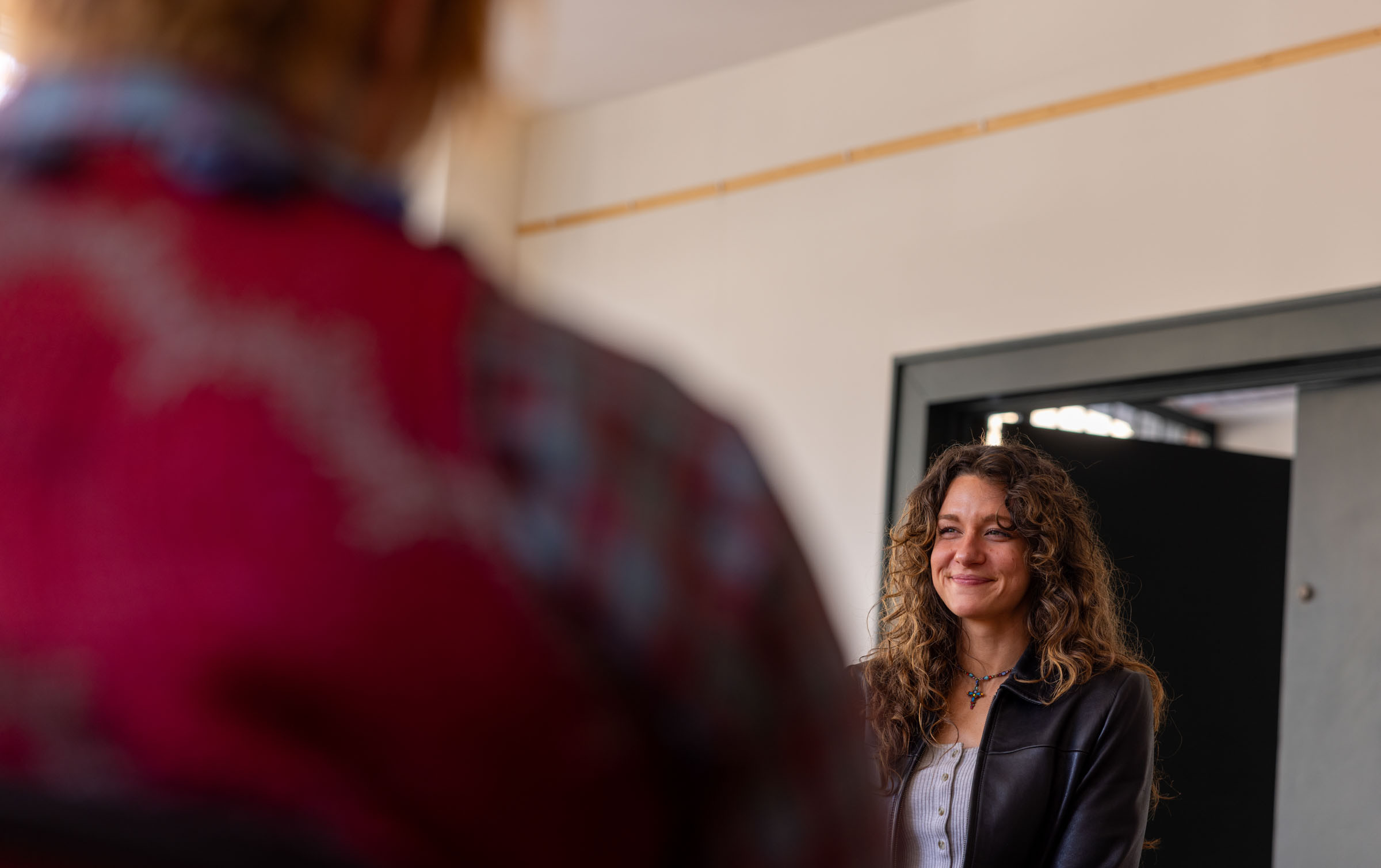
Lauren Vermillion participates in Connection Practices with a group at the YMI Cultural Center in downtown Asheville, NC.
David Schmidgall
Connection Practices are sessions of two-or-fewer hours where people get together and… wait for it… CONNECT.
An average Connection Practice goes something like this.
Everyone files in at their leisure. There’s something to eat, something to drink—small acts of hospitality to let any newcomer know they are welcome. There is always a facilitator, and they will spend the first ten or so minutes helping the group get oriented to their time together, including the two agreements. “Just two,” says therapist Jen Garrett. “We don't make it too complicated. Two agreements that we make that help set the stage.” The two agreements are simple. First is confidentiality—everything said here stays here. Second is ‘we don’t try to fix anyone.’
Before your recyclable cup of coffee goes cold, you already know that you are in a place where you don’t have to worry. You don’t have to be anxious that someone will barge into the inner sanctum of your one sacred life and start fiddling with the holy things. You can be here at ease.
Guiding those two agreements are three tools: 1) Curious questions—asking people questions instead of subtly lecturing them; 2) Reflection—here is what I saw in you when you said xyz; 3) Impact—here is what I felt when you shared xyz. The tools are designed to help folks do the simplest thing: connect with one another without invasion.
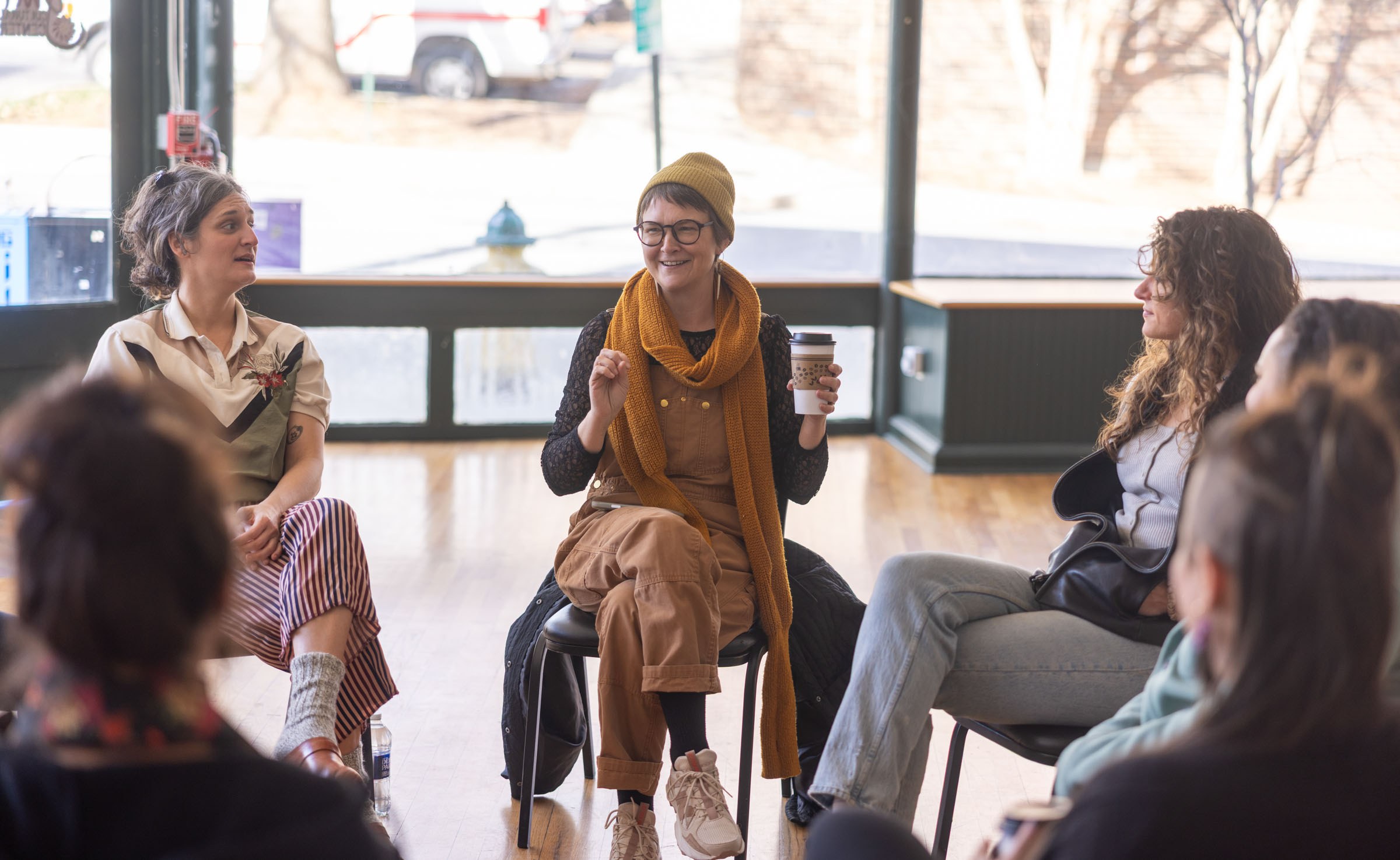
Bea Reid (center) participates in Connection Practices with a group at the YMI Cultural Center in downtown Asheville, NC.
David Schmidgall
The aforementioned Jen is a local therapist who is both a participant-of and a refer-er to SeekHealing’s offerings. “As a therapist, it kind of feels like a fun experiment to be like ‘what happens and how is people's mental health impacted when all we do is focus on relationship and connection’… there's no need to fix or change someone's experience or to help them be somewhere different than they are in that moment.” She means this in the most honest way. In a world where we are given so little space and offered mostly the kind of love that seeks to “fix” a person instead of letting them be, a Connection Practice really is an experiment. You just don’t see that very often.
With the agreements made and the tools laid out and the tone of acceptance set, people begin to share. Folks can share anything. Between each share, there is a breath. People breathe together. It marks the transition from one Seeker’s share to the next.
No two Connection Practices are the same. People bring what they bring. Sometimes they come needing to unload, and sometimes they arrive ready to carry the burden with someone for an hour or two. It all depends on who you are today and where you’re coming from in the world. It depends on what you need or what you can give from the great mutual pharmacy of humanity.
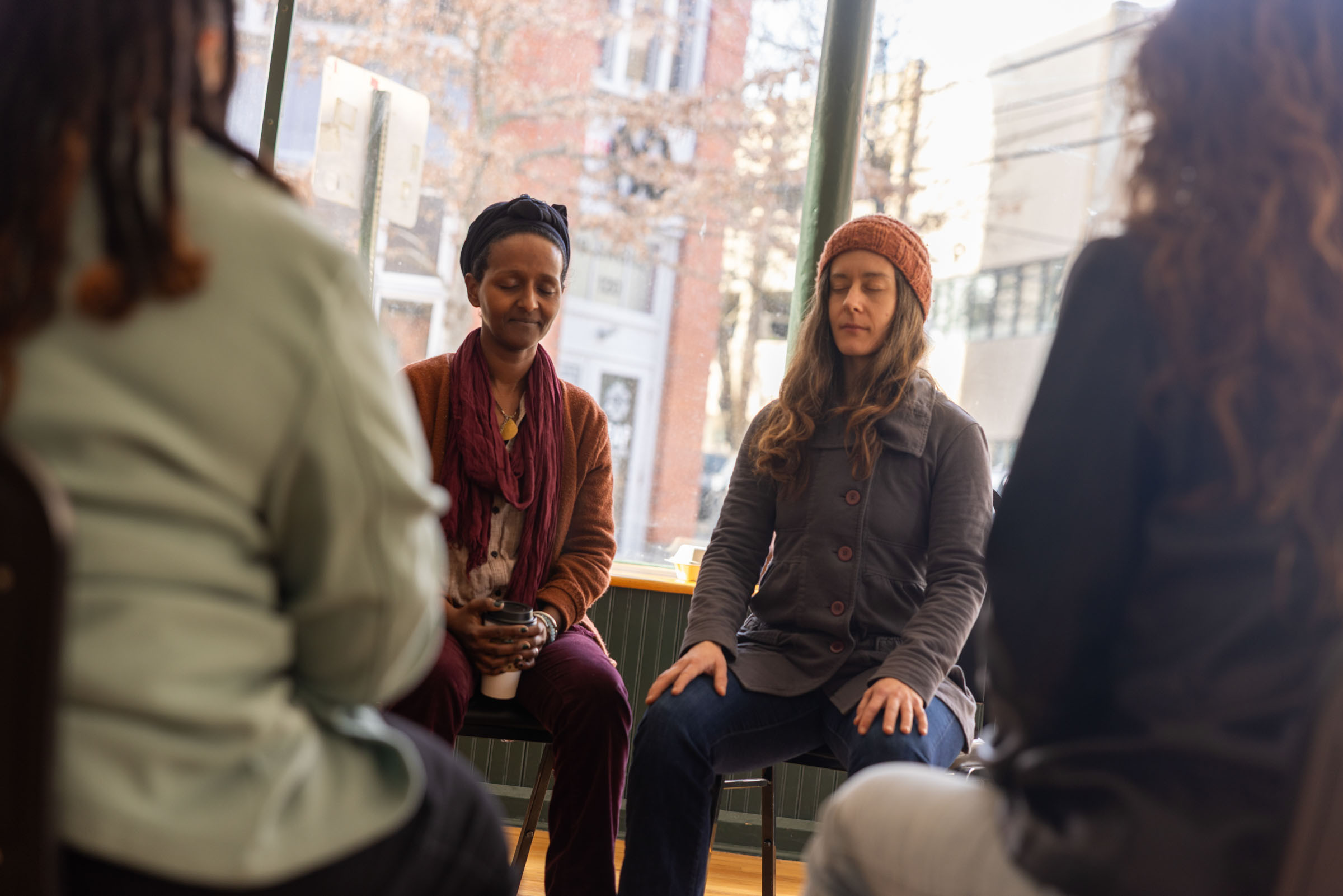
A group participates in Connection Practices at the YMI Cultural Center in downtown Asheville, NC.
David Schmidgall
The Experience of People is Real
Tommy Cook is a sometimes-facilitator of Connection Practices. “I think one of the best things about SeekHealing is it’s very much the energy of come as you are.” For a season there, Tommy was coming to meetings in what he describes as a Dark Night of the Soul. “For weeks straight, I was showing up just literally totally crying and being emotional and just really letting myself collapse completely in those circles and be however I was. And I think that’s the clearest memory of how safe I felt to just show up and be broken and give myself permission.”
You know, sitting with Tommy, I believe him. I believe that he is a man who has lived through a season of learning to be comfortable in brokenness, to be vulnerable, to seek healing. He has the kind of open steadiness that can be won, to my knowledge, no other way. It makes me wonder, as I listen to him talk, whether I have anywhere to grow, to deepen like that too.
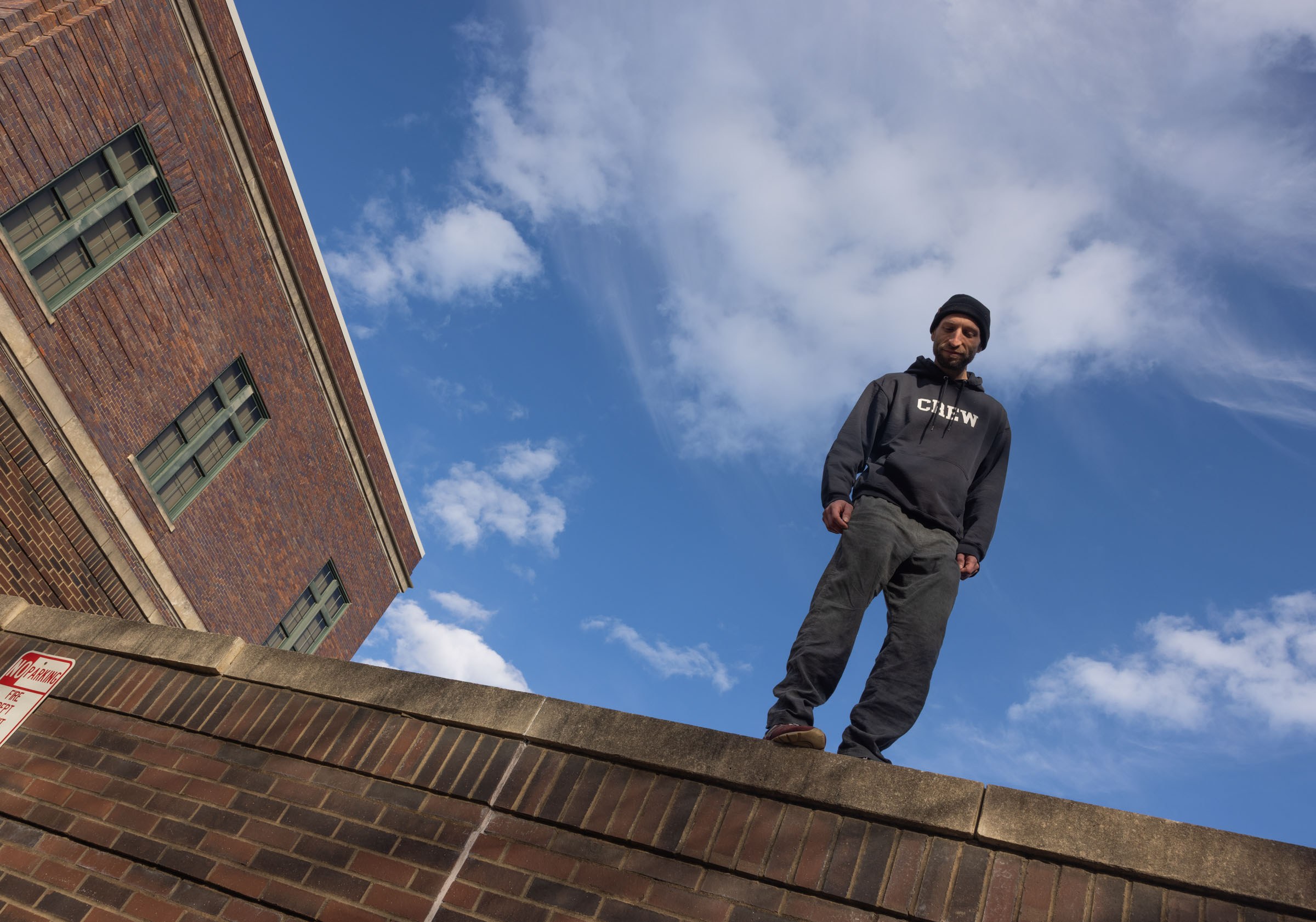
Tommy Cook poses for a portrait in downtown Asheville.
David Schmidgall
It’s never too late though. “For 70 years it’s been like this. These feelings inside.” Rebecca Powels runs her gentle fingers up and down the string of ceramic beads on her necklace. She is 73 years old and she has been coming to SeekHealing for about three years.
My sense of Rebecca is that, by some trick of fate or grace, she is one of those people who grew younger as she grew older. She has a kind of playfulness that feels to me to be the result of good aging. I’m not sure how that works exactly, except to say that sometimes you have to go through some hard years in order to recognize just how simple all the good stuff was. And Rebecca has been through hard years.
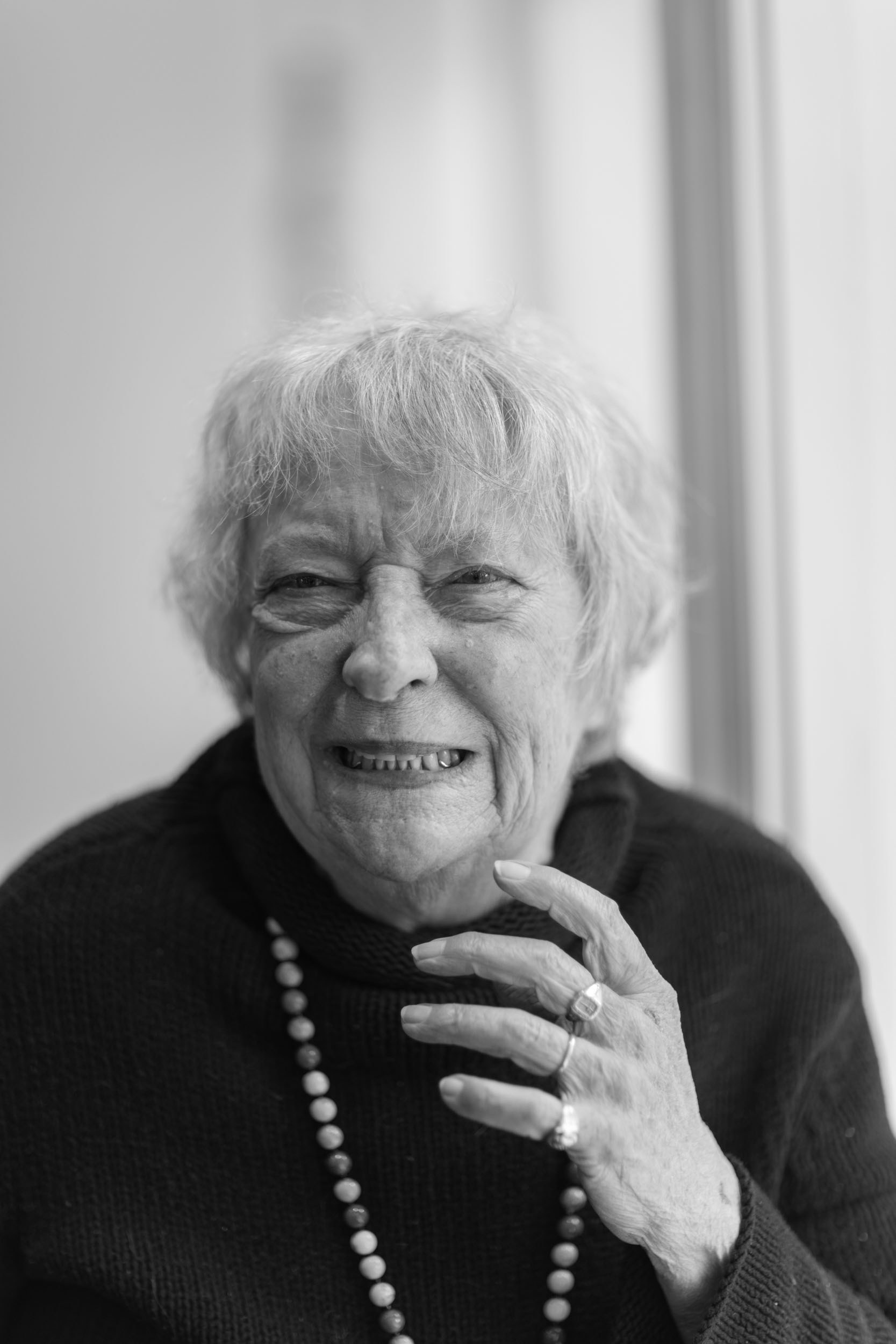
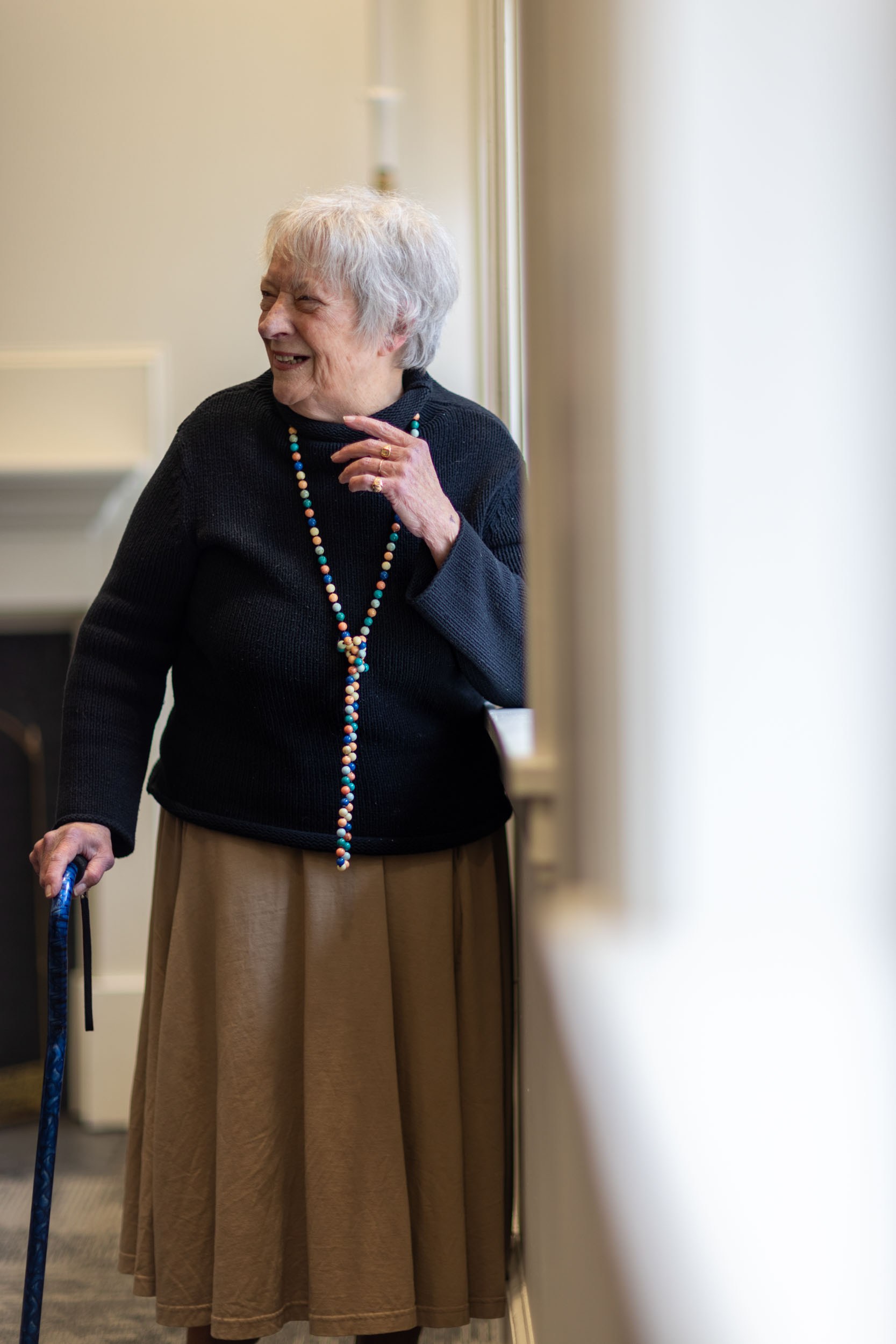
Rebecca Powels poses for portraits at the YMI Cultural Center in downtown Asheville, NC.
David Schmidgall
She attends the Elders Connection Practice and the Recovery Connection Practices, a few of the variety of Connection Practices created to meet the needs of different communities. “People over 65 have different issues and come from a different place with issues with grown children and grandchildren and financial worries,” Rebecca says. “I've found that we worry more about money and financial security than when you're young. And so for me, that group has been so helpful because we talk about relationships and issues with our grown children, because it is a challenge… [there is] very different dynamics.”
There’s a freshness to Rebecca that I imagine is rare among folks her age. But then again, what do I know? You have to be 65 to go to the Elders Connection Practice. When I asked her what SeekHealing has taught her she says, "That my experience of others is real. Yes. My experience of other human beings is real, whether it's a cashier at Ingles or the people in my group or a family member.”
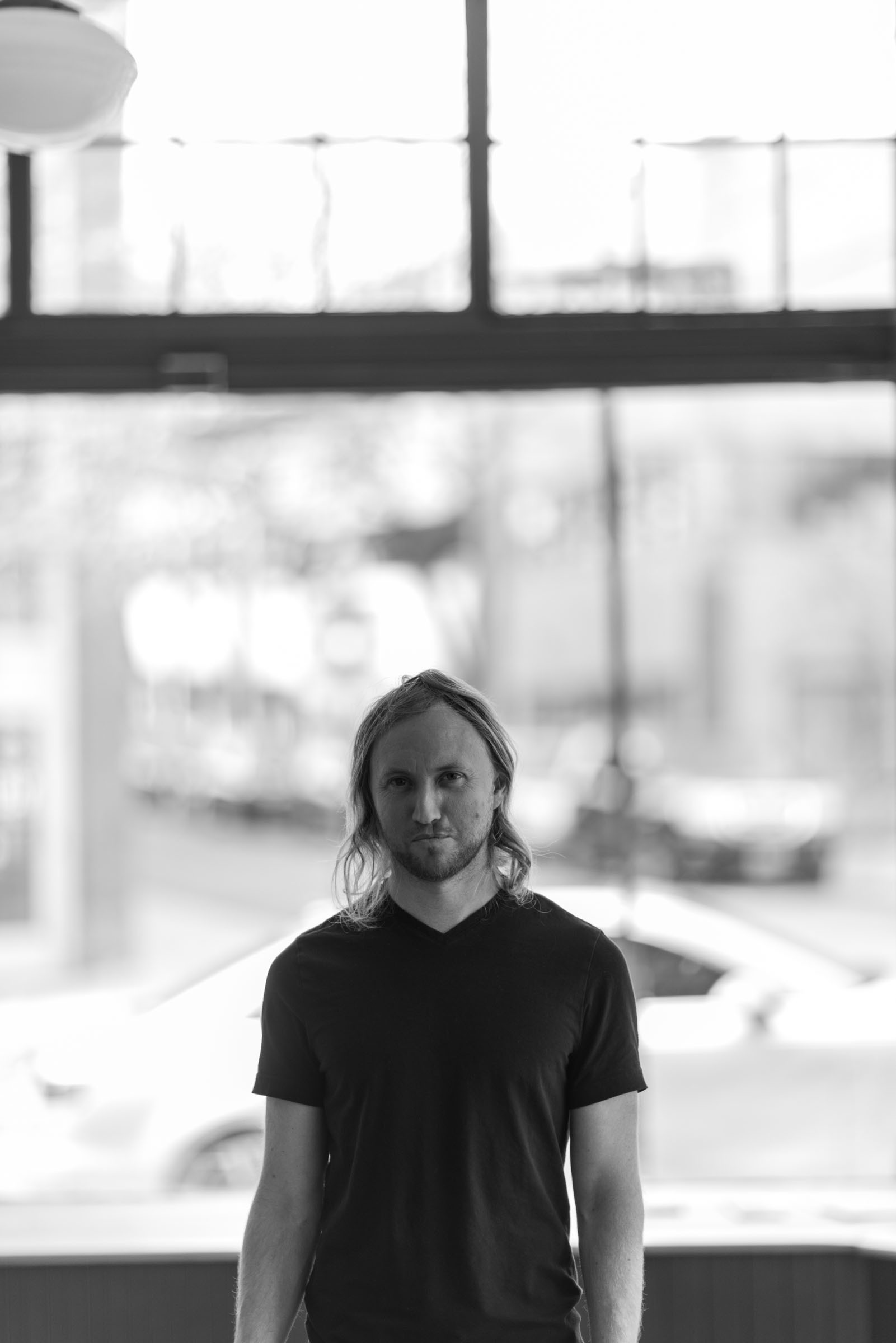
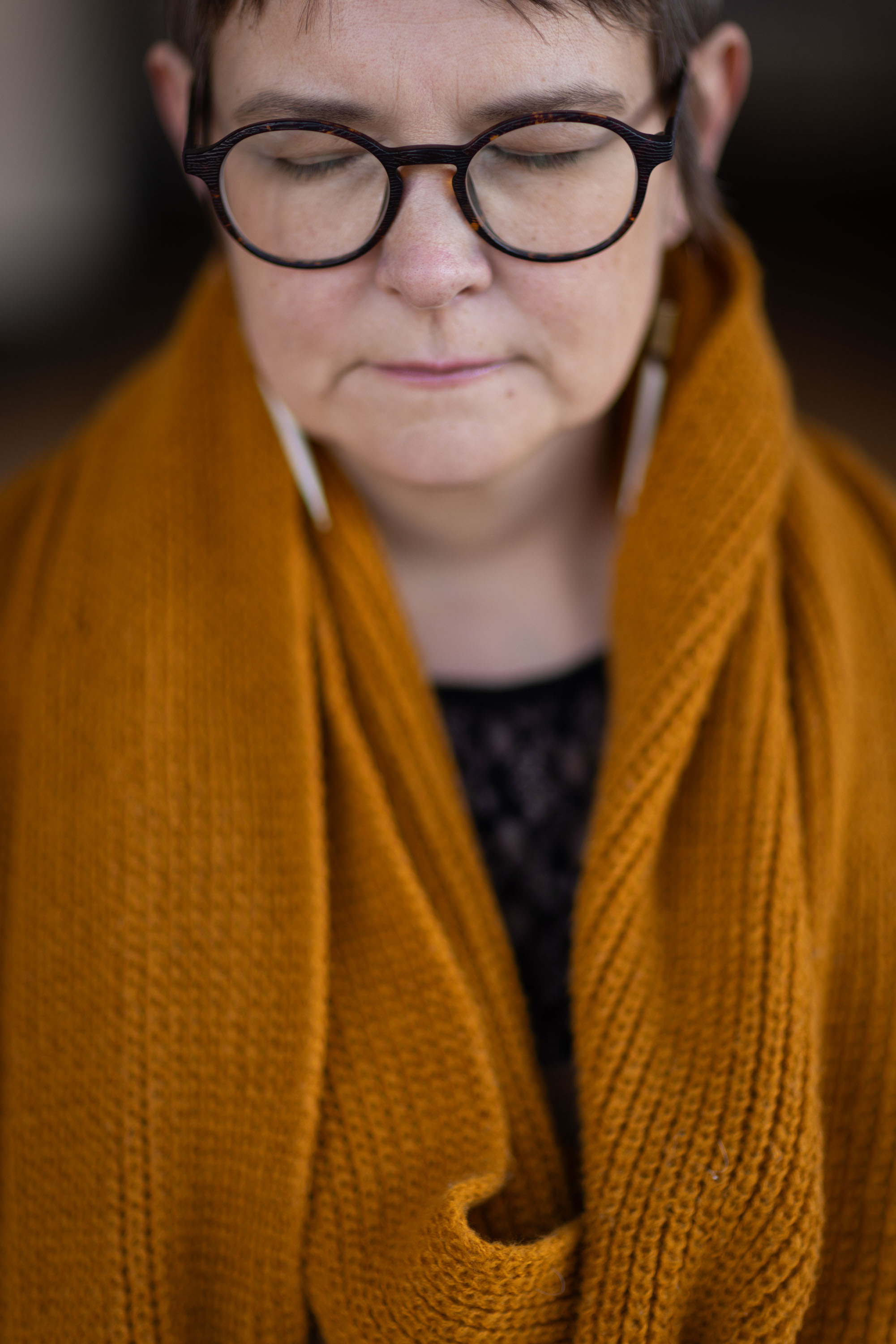
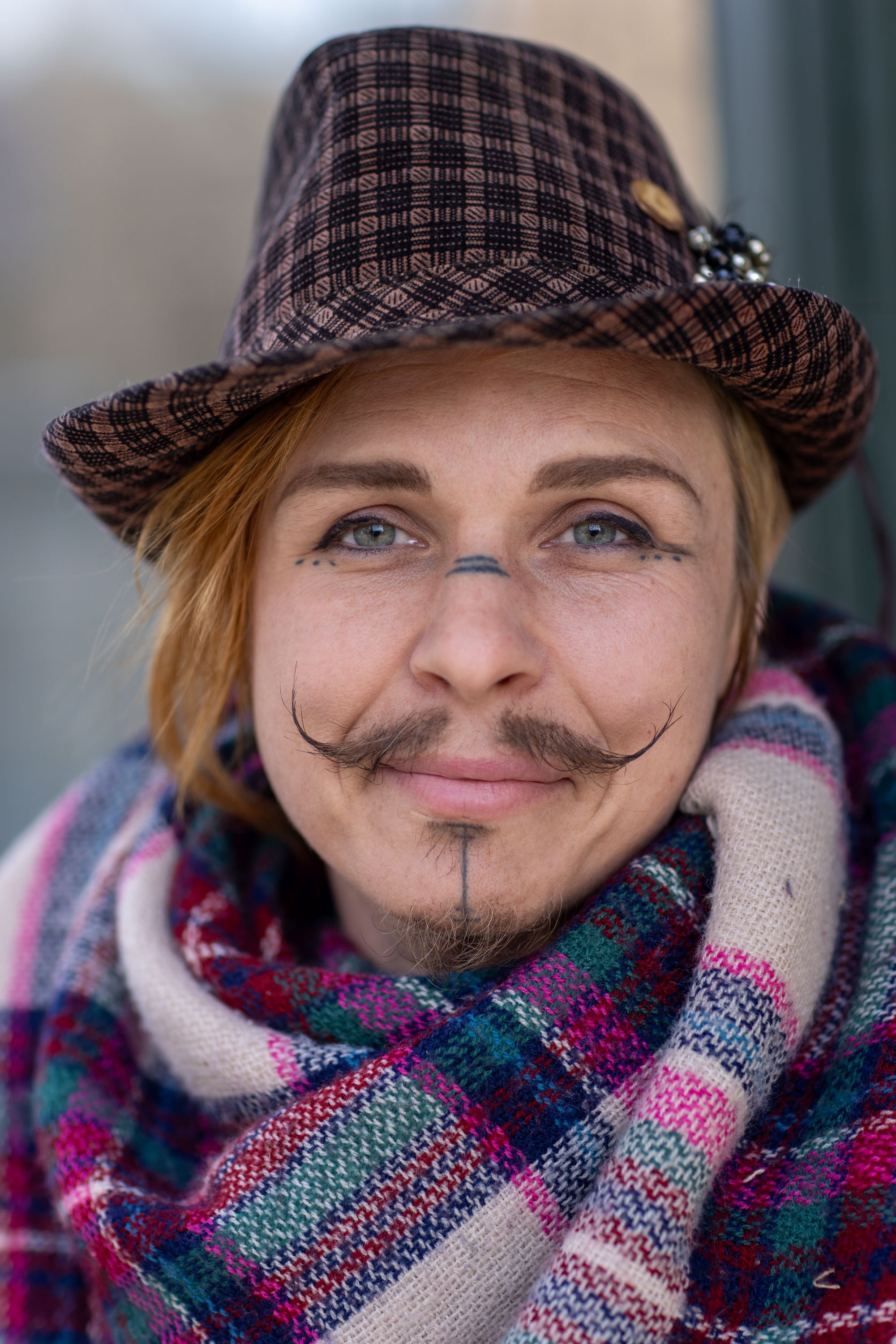
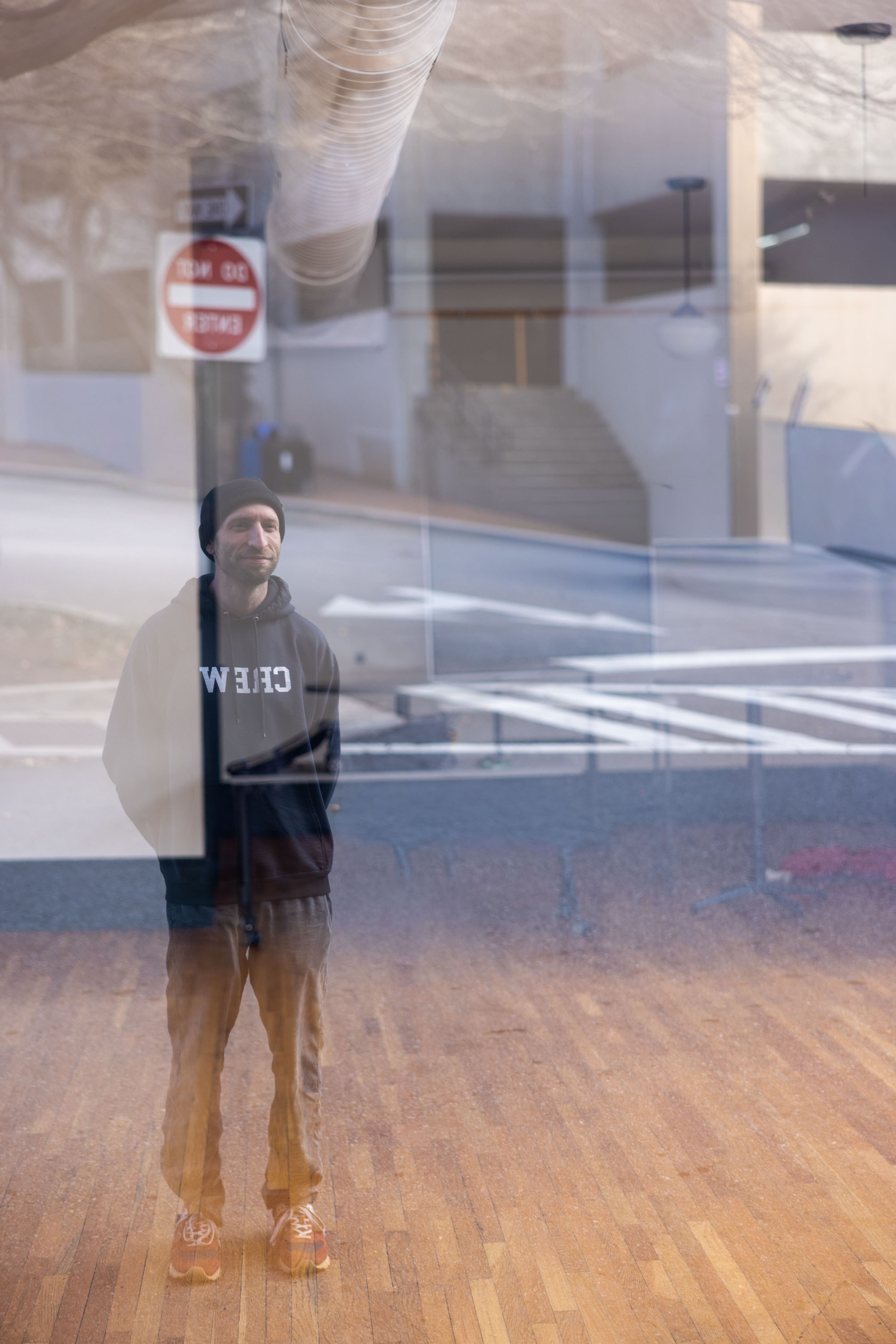
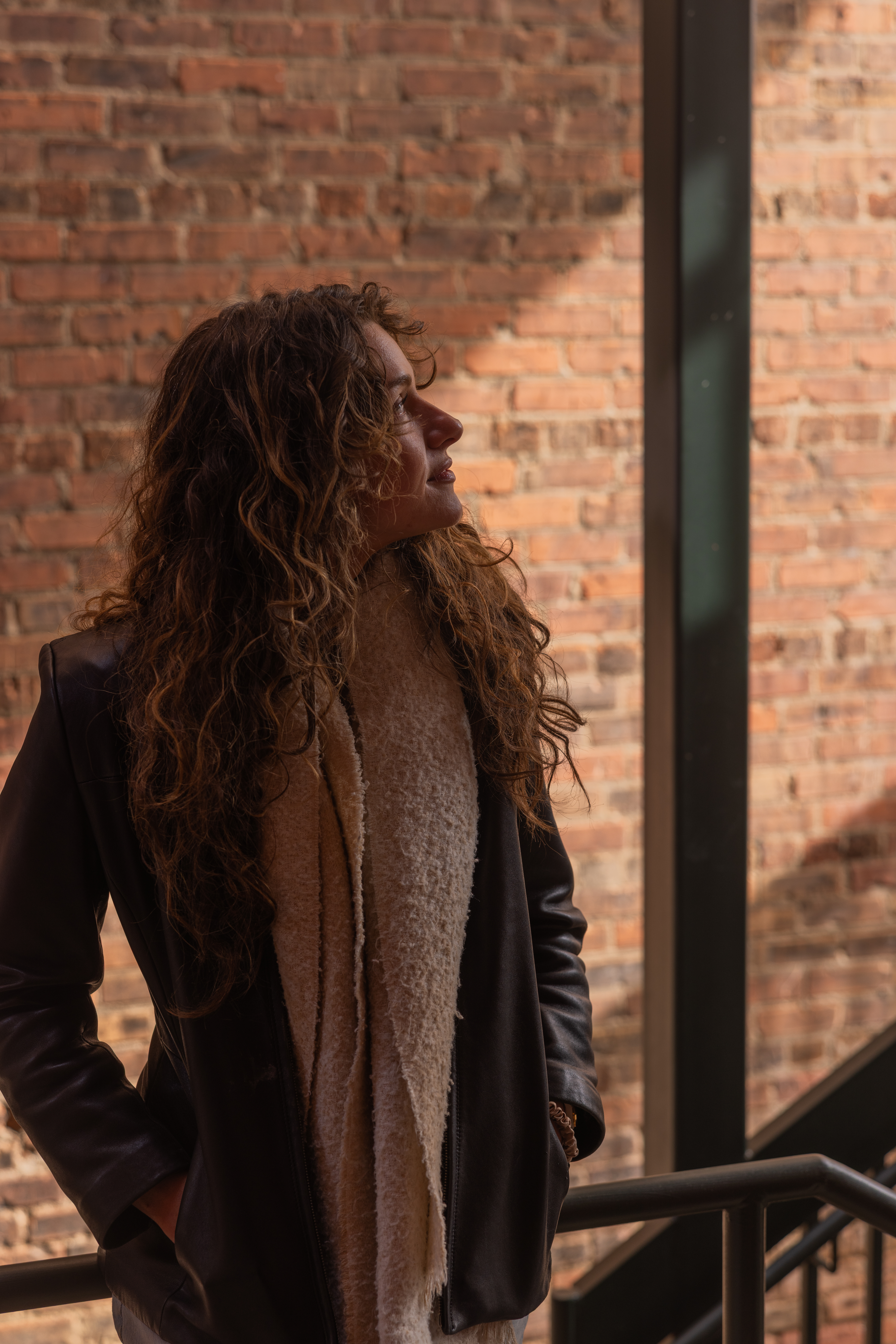
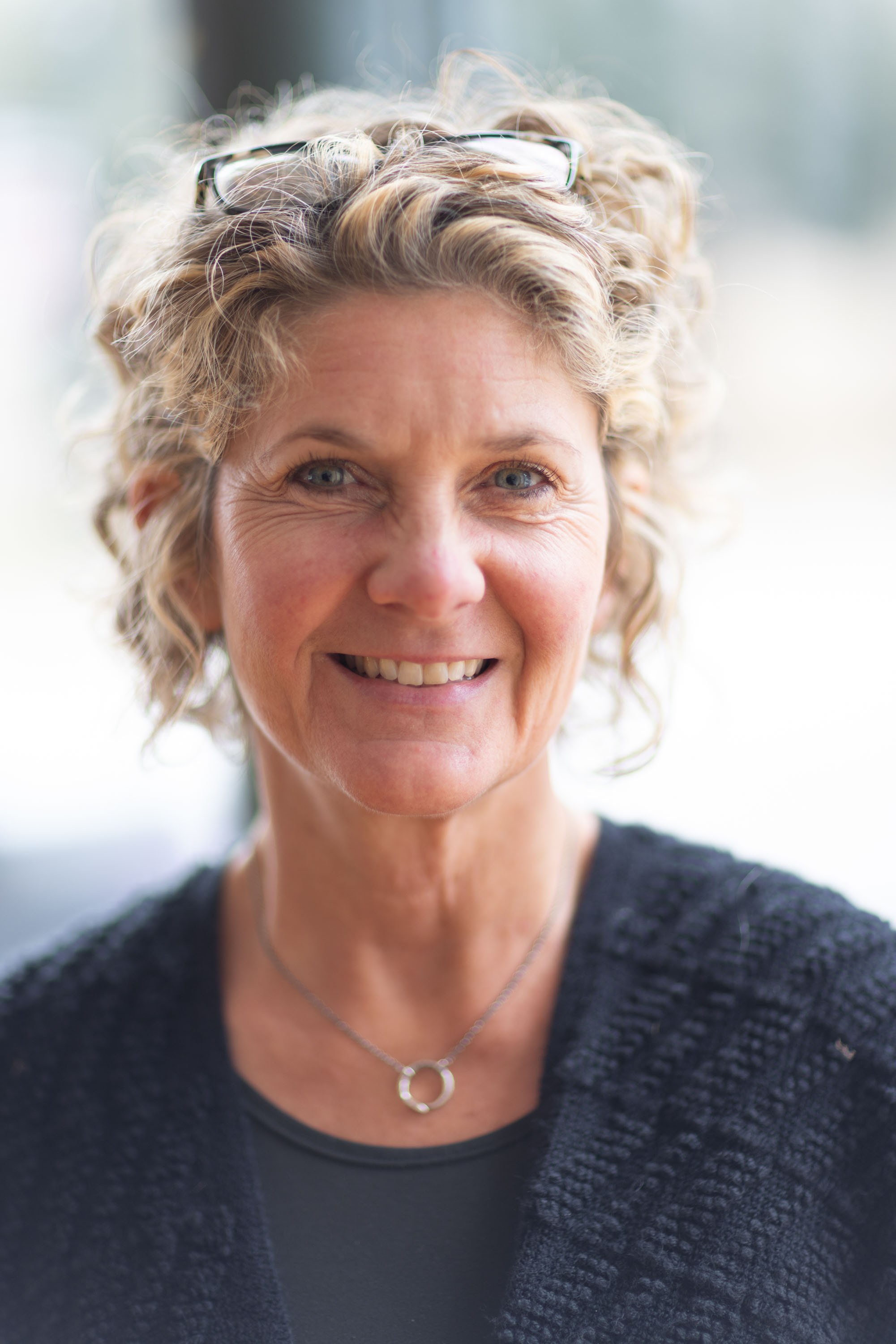
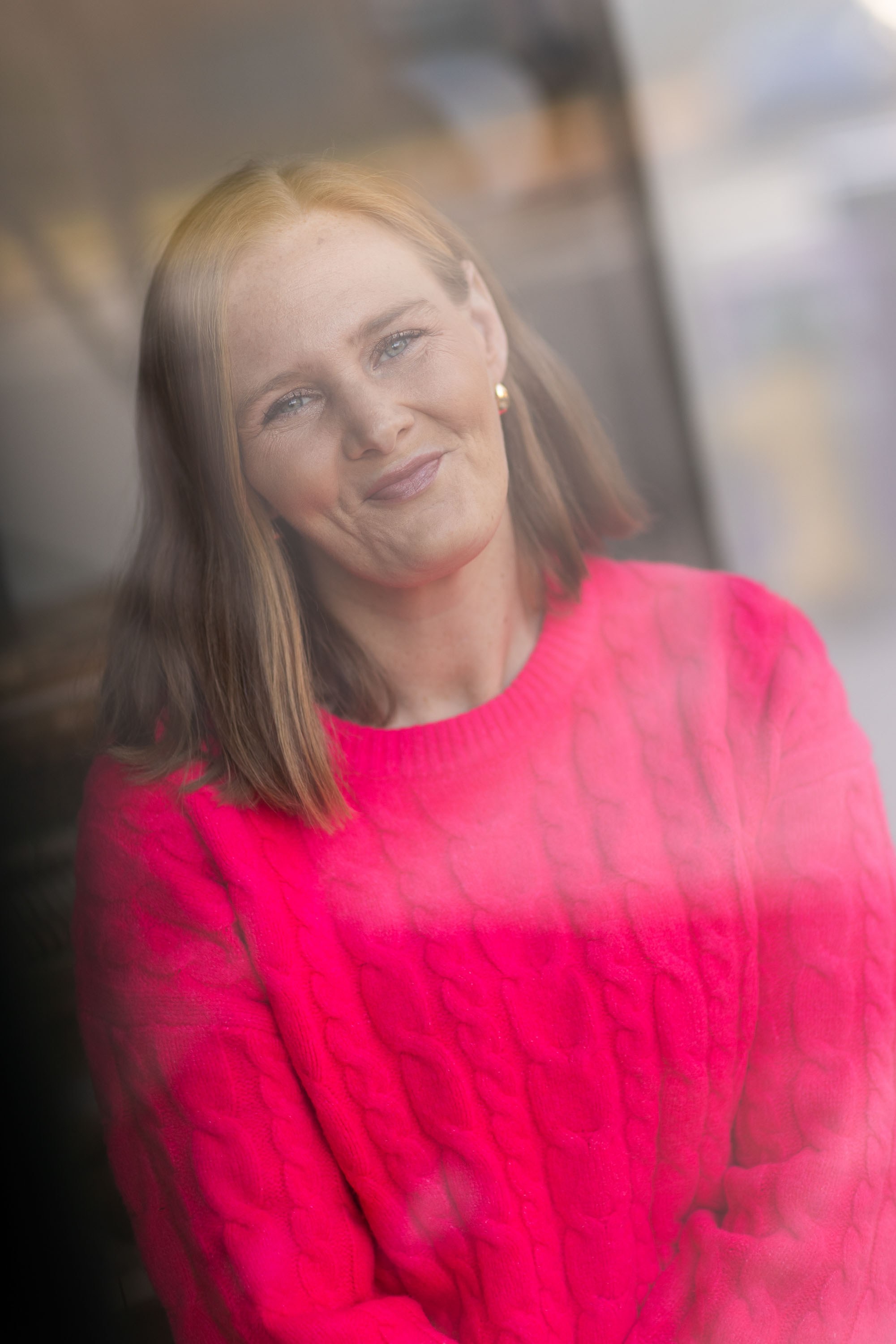
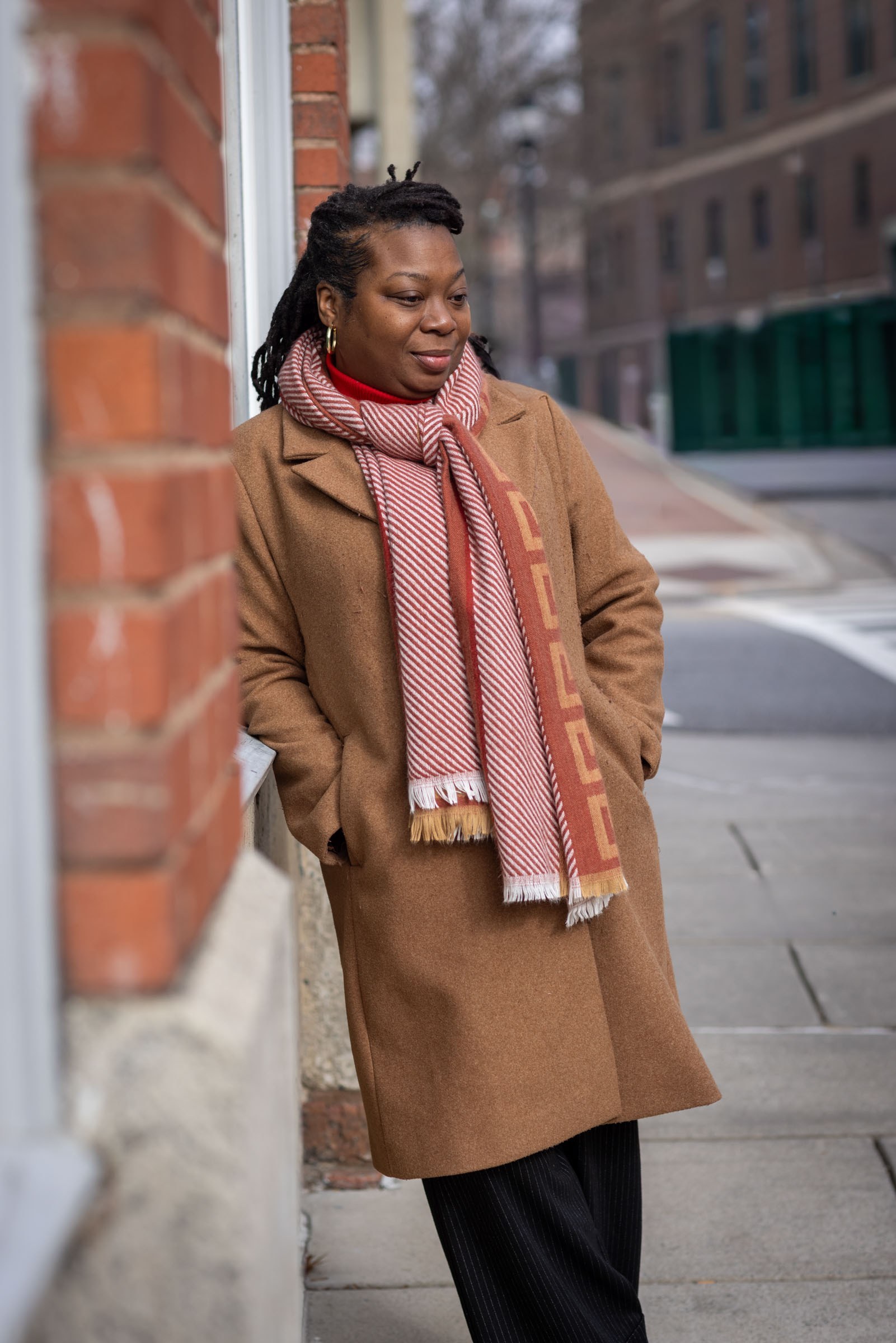
Portraits of the SeekHealing community.
David Schmidgall
If you go to a Connection Practice and you discover the shallowly buried gold of relationship with other real people, you might want to be a facilitator. So SeekHealing offers Listening Training. Anyone can join, but it is also where the organization trains its facilitators. It teaches you to… well… Do I even have to say it?
Learning to listen was transformative for Lauren. “Whenever I would go into a social setting, it's like these questions would run through my mind: What do people talk about? How do humans… human?!” You wouldn’t necessarily think that talking to Lauren. I’m admitting my own closemindedness here, but Lauren has a presence of such slow warmth—to imagine her anxious would be to imagine that the moon was experiencing anxiety. And yet, isn’t that part of the issue? You’ve got people (me in this case) who presume to understand the interior life of a person without curious questions.
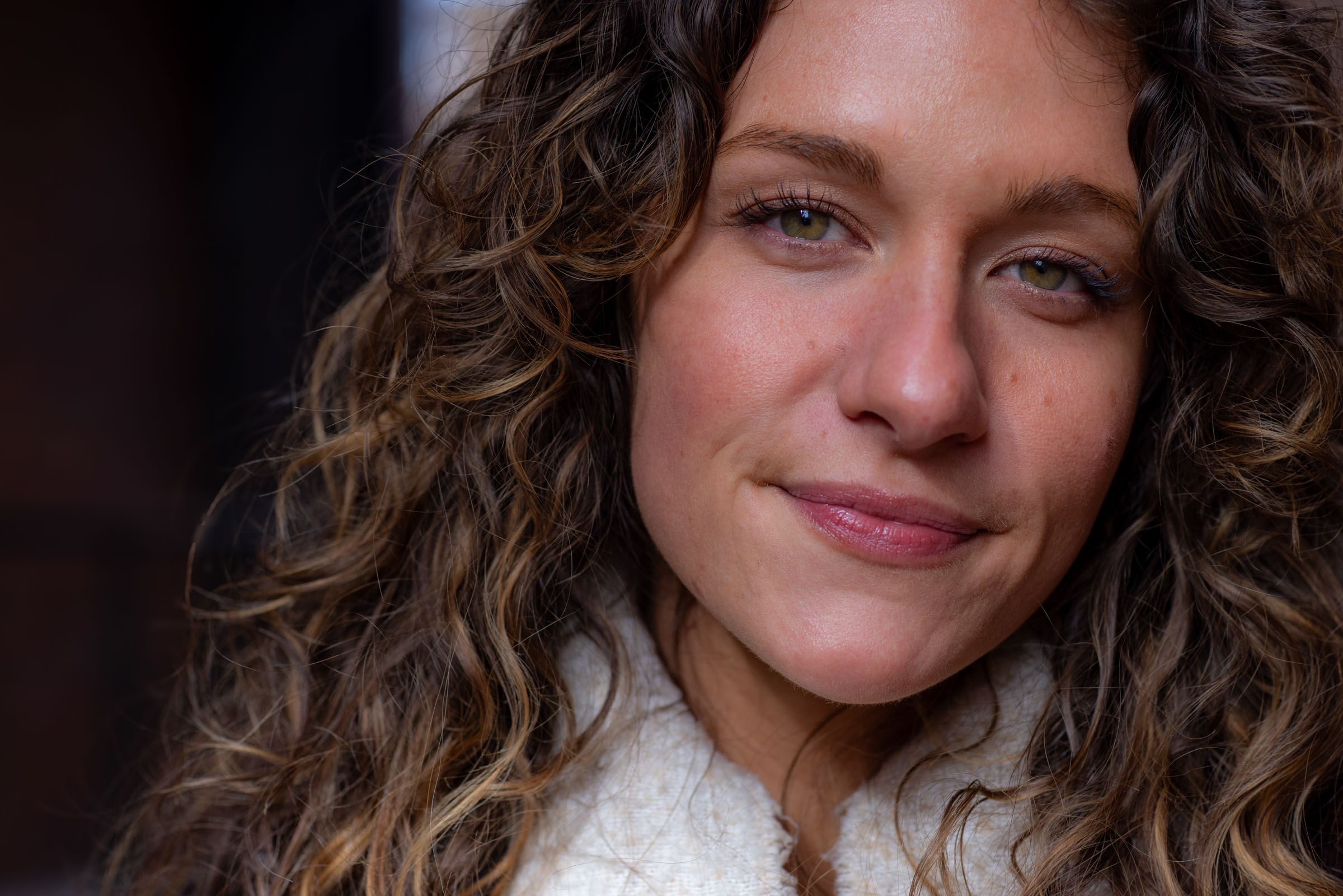
Lauren Vermillion poses for a portrait at the YMI Cultural Center in downtown Asheville, NC.
David Schmidgall
Regardless, Lauren seems truly to have reaped a harvest of benefits from that weekend. “I learned the tools of how people do that, of how to genuinely connect with anyone and by bringing yourself fully into it and how to get curious and how to ask really good questions and listen deeply.”
You can imagine the power of this sort of connection-training, connection-space on any day. But what if it was the day after an epochal pandemic?
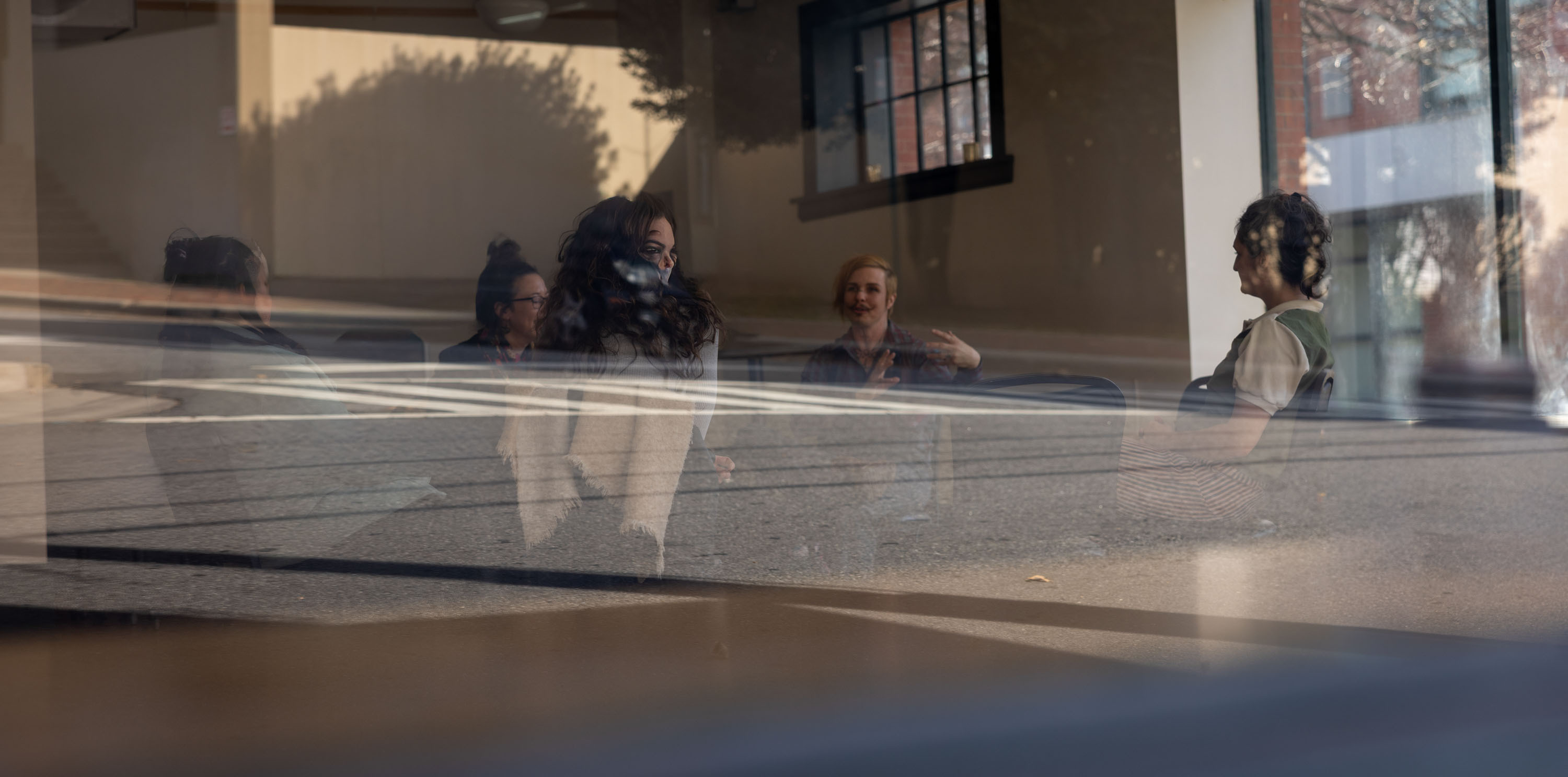
A group participates in Connection Practices at the YMI Cultural Center in downtown Asheville, NC.
David Schmidgall
Tiffany DeBellott is the executive director at the Center for Participatory Change. CPC just happens to share space with the good people of SeekHealing in the United Way building. For months, she had wondered, What is SeekHealing? What is it about? “A lot of entities and organizations were still remote, but SeekHealing was the only one that was in person. They were offering up circle-space that has a focus on indigenous practices of healing and work around the spirit, the self, and how do you apply different techniques to help balance out your life?” As the entire globe began to thaw from the isolation of the pandemic, Tiffany began to get involved.
“The unique and special thing about Seek that I appreciate is the fact that they are risk-takers. So they're not afraid to try something new… the sense that it's okay to fail. So there isn't this sense of perfectionism and urgency that has to be implemented—and is implemented in many organizations—but there's this sense of welcoming and belonging.”
Or—humor me—what if it was the day after an epochal storm when you had just moved coast-to-coast and didn’t know a soul?
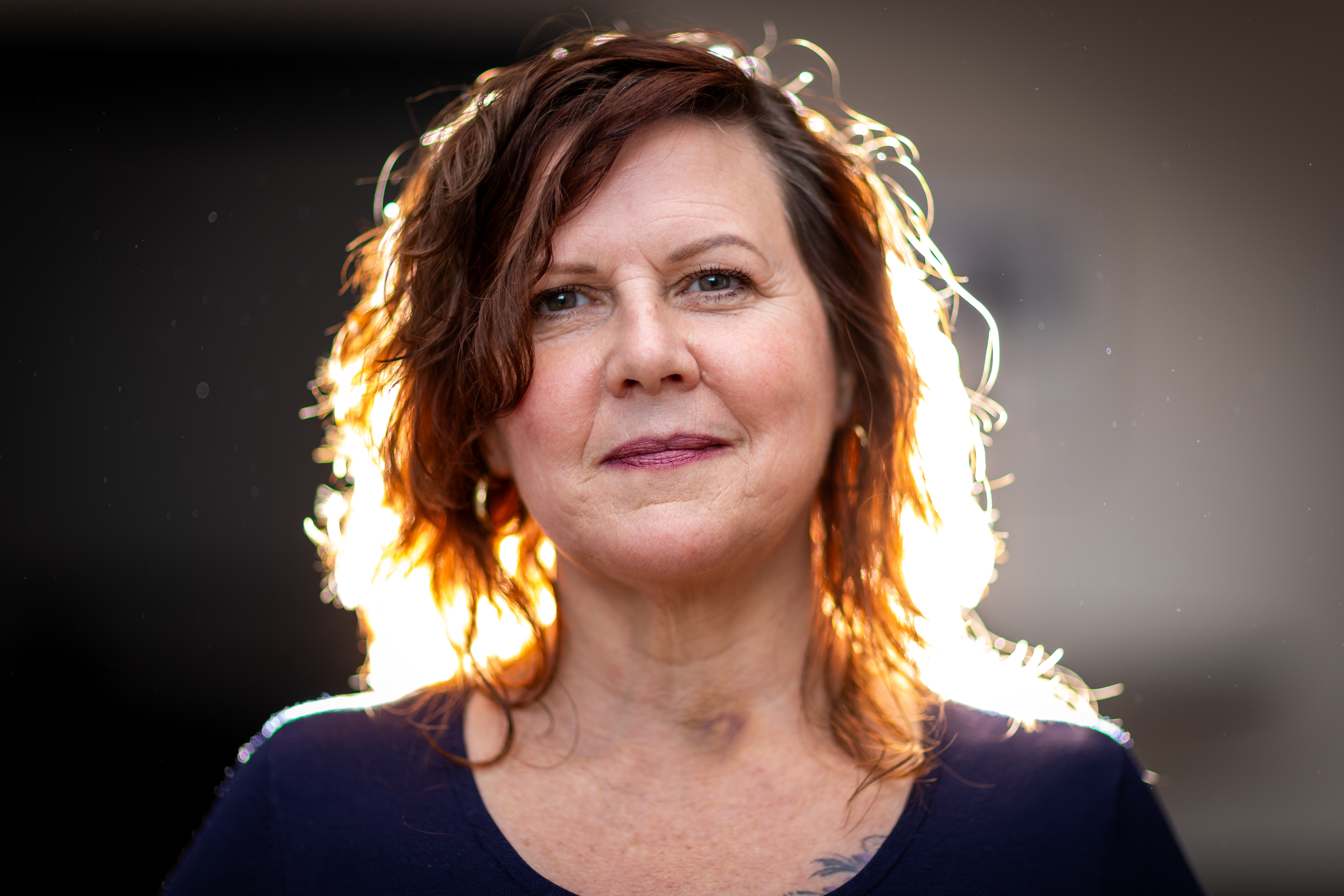
Lisa Lehr poses for a portrait in downtown Asheville.
David Schmidgall
Let me introduce you to Lisa Lehr. She is, I would guess, 5-foot-4 and she is dignified. She’s got a clarion piercing gaze. As she tells me her story, she laughs at herself occasionally—a laugh that’s bubbly and full-throated.
“I moved here from California two weeks before the hurricane. I knew no one. I basically went into therapy as soon as the hurricane had happened and my therapist was like, ‘You got to go SeekHealing. I can't believe you're in Asheville. They meet in person!’”
Her first Connection Practice was in the immediate aftermath of Helene, a time when the Connection Practices became a matter of emergency response. Forget the two hour limit; these lasted whole afternoons. Open-end, drop-in, be-here containers for a city that had been washed away.
“My first Connection Practice, I walked in and the leaders were really welcoming and I knew that I was safe. Just walking in, I was like, this is going to be a safe space even though I'm a mess. And I mean, yeah, I was a mess for multiple things, not just the move and the hurricane.” No power, no water, no friends. “I hadn't had a shower in two weeks.”
But in those desperate straits, “I felt like I was amongst friends. I didn't feel lonely anymore. I felt like I had a place that I belonged… that then allowed me later to get through what I needed to get through.”
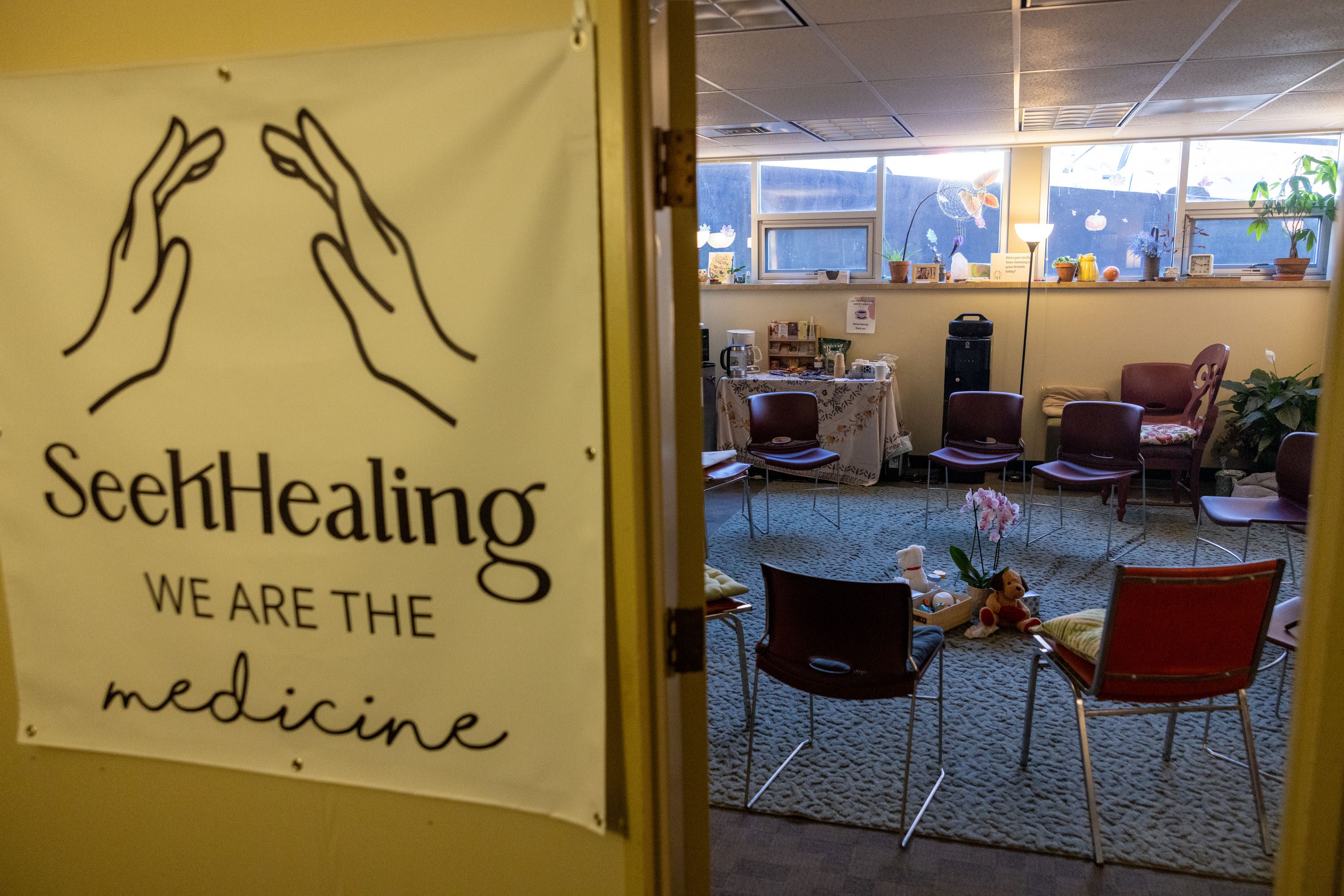
Chairs gathered in a circle at the SeekHealing headquarters in Asheville, NC.
David Schmidgall
A denizen of Asheville myself, I can confirm. We were all in survival mode. No power, no service, no water, and no idea how far you could get down your own driveway before encountering an unpassable tree. But SeekHealing was, for Lisa, a solid place in that watery waste. “They even had some food there. I thought that if I was really in a pinch, I could take some.” Yours truly found out about them a year too late it seems.
Lisa has friendships that have begun in SeekHealing and now expand out into her daily life in Asheville. “I think the iconic thing for me is that, out of all that, this community ended up being created.” She notices that in those friendships, “we use the tools not even consciously.” She says, “When we're sitting around talking or having a meal or whatever, we listen to each other, and we will even joke around because the language becomes a part of the friendship.”
It’s the same for Lauren. That First Conversation eventually turned into a job, and now she serves as SeekHealing’s Director of Community Care. The job has allowed her “to deepen into this profoundly meaningful work that is creating those safe spaces and that truly healing medicine of connection to so many more people.”
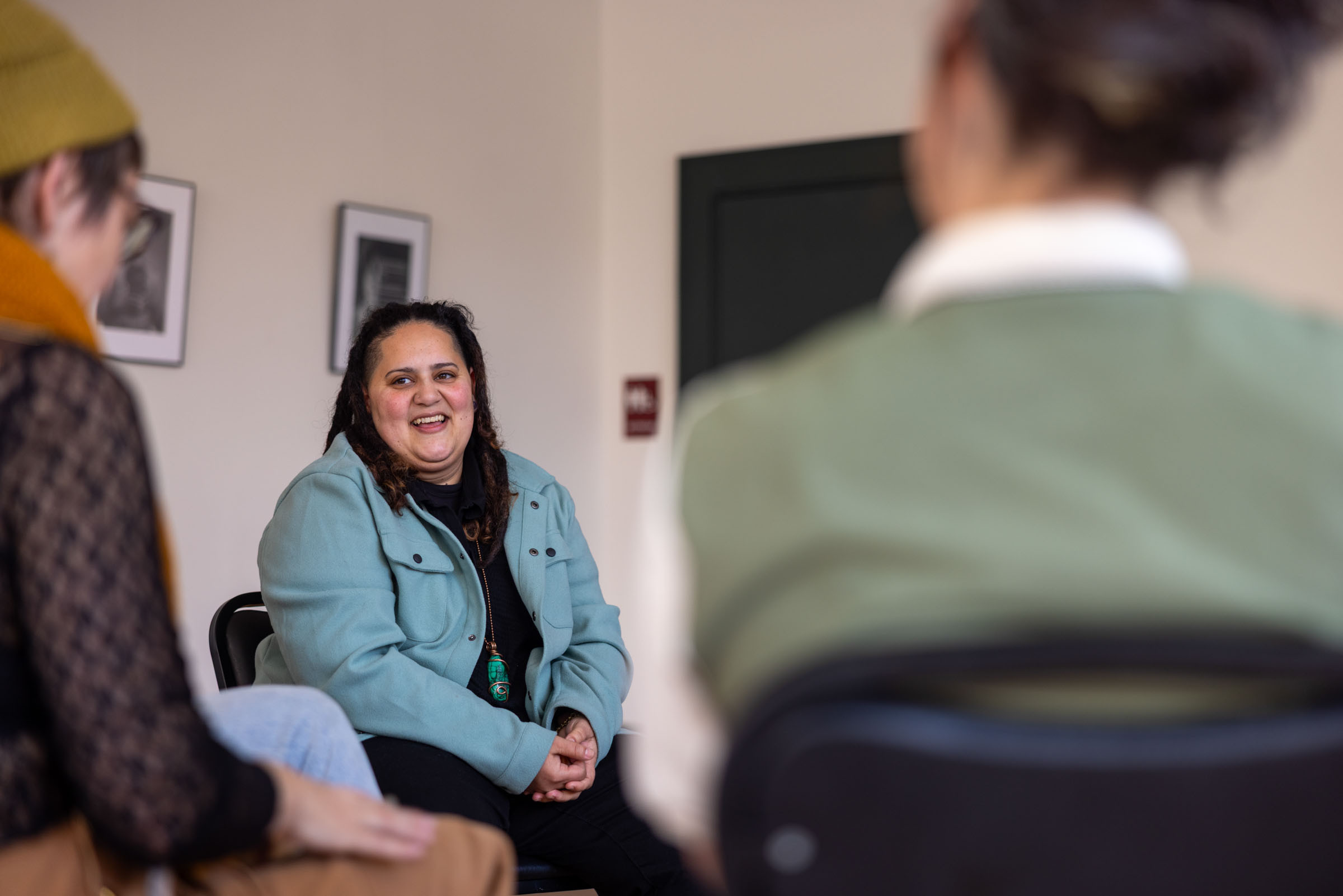
Melisa Gonzalez participates in Connection Practices with a group at the YMI Cultural Center in downtown Asheville, NC.
David Schmidgall
It is, so to say, the opposite for Melisa Gonzalez. “First time I heard about SeekHealing was a work opportunity to be hired to do their bookkeeping and accounting.” She took the reverse commute from Florida to North Carolina and from part-time employee to pillar of the community.
“Two years ago I was asked to co-lead the organization… And I said, ‘Yes. Just trust in the journey. If this feels right, lean in.’" So she moved from Florida to Asheville just two weeks before the hurricane. “I started out very part-time, small contractor role. And now I sit fully invested, hard in mission alignment as the Senior Director of Operations. Just seeing the impact in the community... There's like a sparkle in people's eyes when they wake up to their worth.”
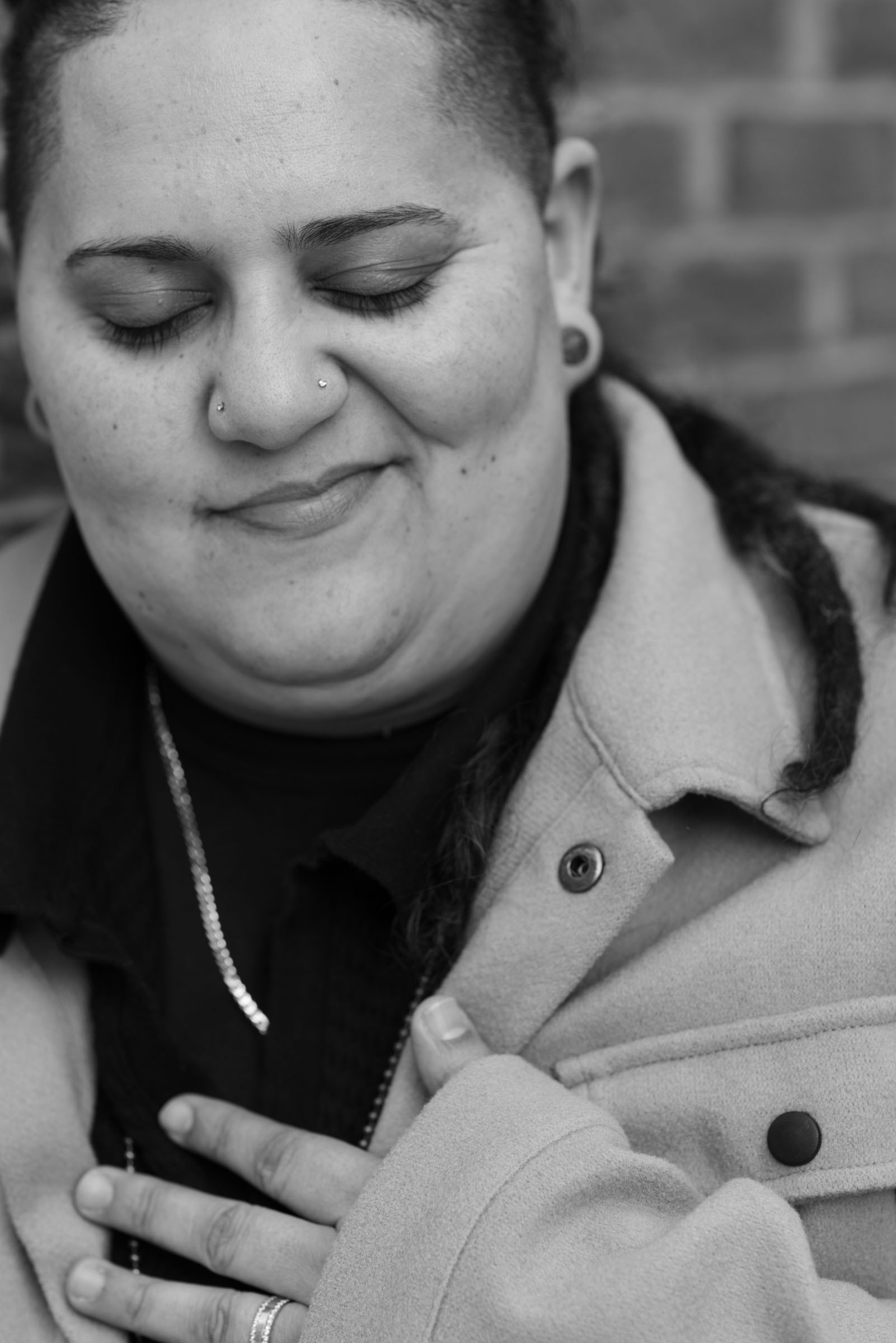
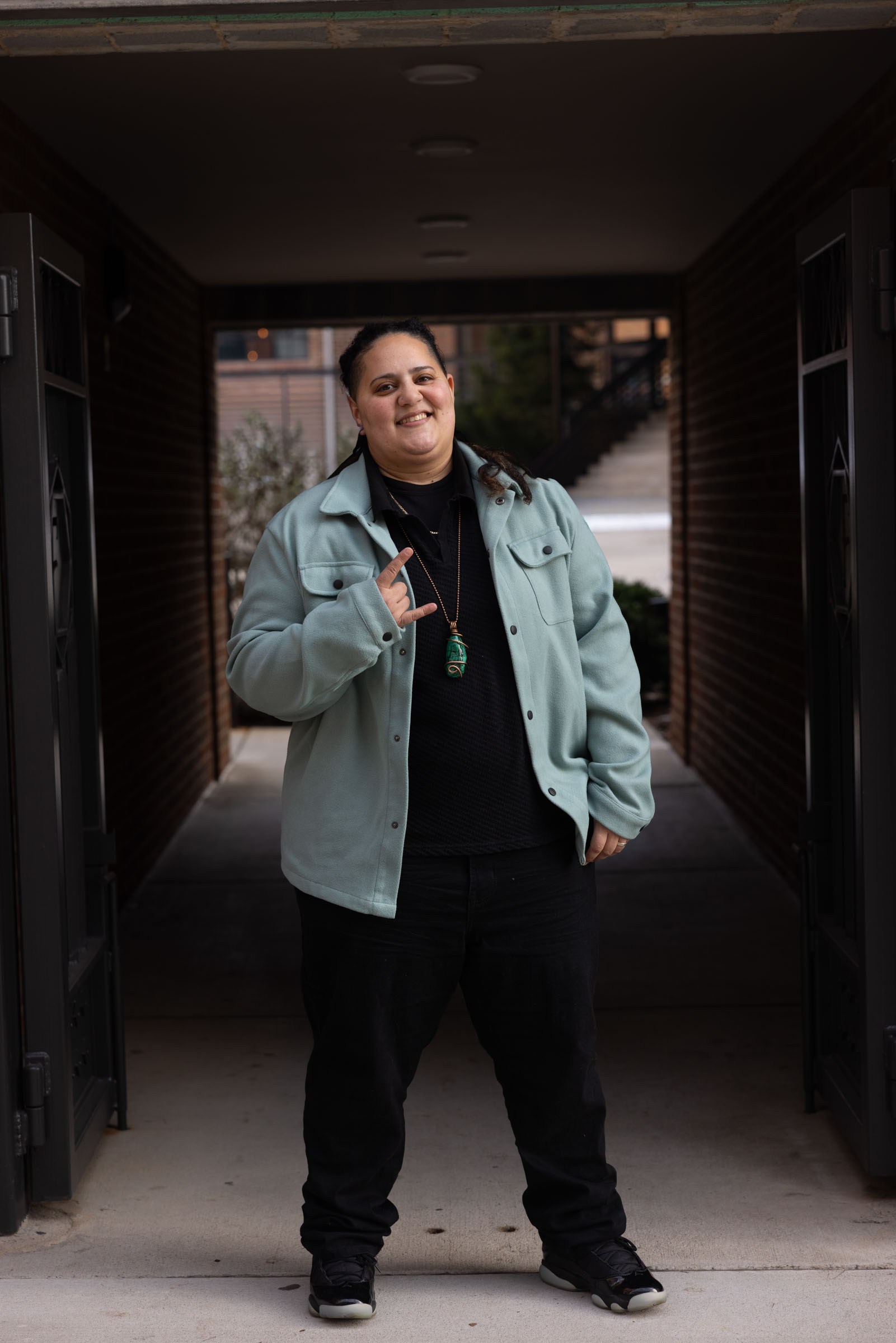
Melisa Gonzalez poses for a portraits in downtown Asheville, NC.
David Schmidgall
“I wish we didn’t have to exist”
SeekHealing has its origin, fittingly, in the story of a connection. Jenesis Nicolaisen had a friend who we will call Irene. Irene was “bonded” with heroine, and Jenesis wanted to help. But by Jenesis’ own admission, “we ended up in a very kind of codependent tangle.” Their relationship was propped up by a scaffolding of hierarchized binaries: well/sick, rescuer/victim, ‘has a problem’/normal. While no one could deny that Jenesis afforded Irene some concrete financial aid over the course of their friendship, it also “held up a mirror for me.”
In response, Jenesis underwent their own therapeutic process. They began to catch a vision of social health that could undo the damage of these unquestioned structures. They saw it through in their own life and, over the course of months, the thing that is SeekHealing came together.
It was the height of the overdose epidemic and every treatment program seemed to reinscribe that binary: addict/normal person. “I really looked, in a focused way, at how can we overcome this [hierarchy]? And the way that we did was just experimentally and experientially in a group of humans, figuring out how to diffuse those power dynamics. ” The language of SeekHealing grew out of that urge to find a way for people to be together without ranking them against one another. Seeker instead of client, bind instead of addiction, facilitator instead of expert—the way their community gives names is a sign of this disciplined posture of wide acceptance.
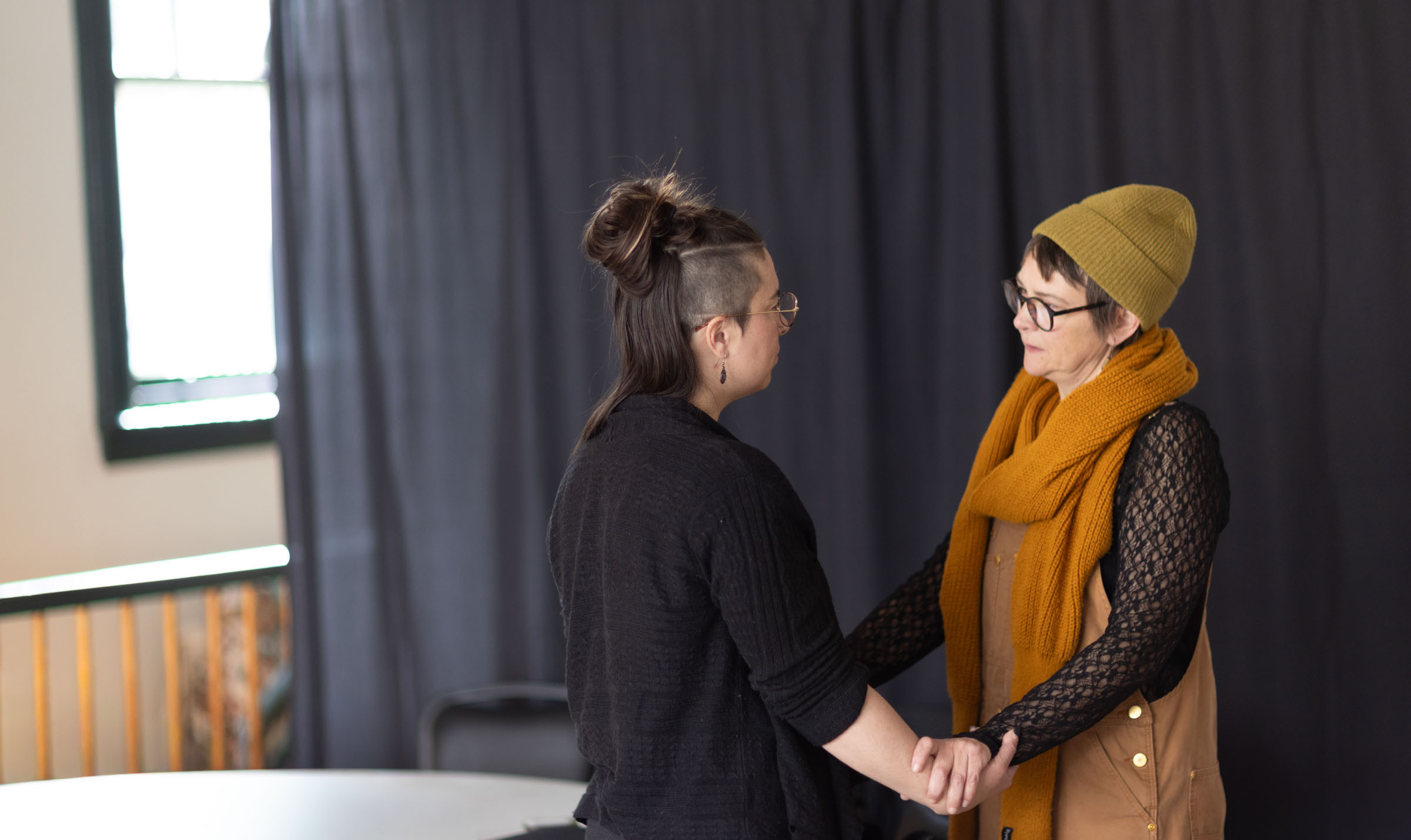
Jenesis Nicolaisen and Bea Reid share a moment of connection.
David Schmidgall
Not to be a downer but, how far have we fallen if we need spaces like this? Are we so self-absorbed, so divorced from one another, so consistently deceived that we need a first conversation to convince us to practice connection and learn how to listen? Are we so blind that we need a flashing billboard to say You need people!!! Come find them here!!!
I’m a smalltalk-ruining history nerd, so you can imagine how excited I was when I asked Jenesis how they thought we came to this place of wanton cultural loneliness, and they said, “In my opinion how we got here really goes back to about 10,000 years ago.” Now we’re talking.
“I think this is under controversy now… but my understanding is that homosapiens have been around for 60-80,000 years. About 10,000 years ago this thing happened where we were like, ‘Oh, agriculture, that's a good idea; we can grow our own plants rather than foraging them… But my understanding of what unfolded in that moment in human history was the concept of property ownership and the concept of needing hierarchy in order to survive.”
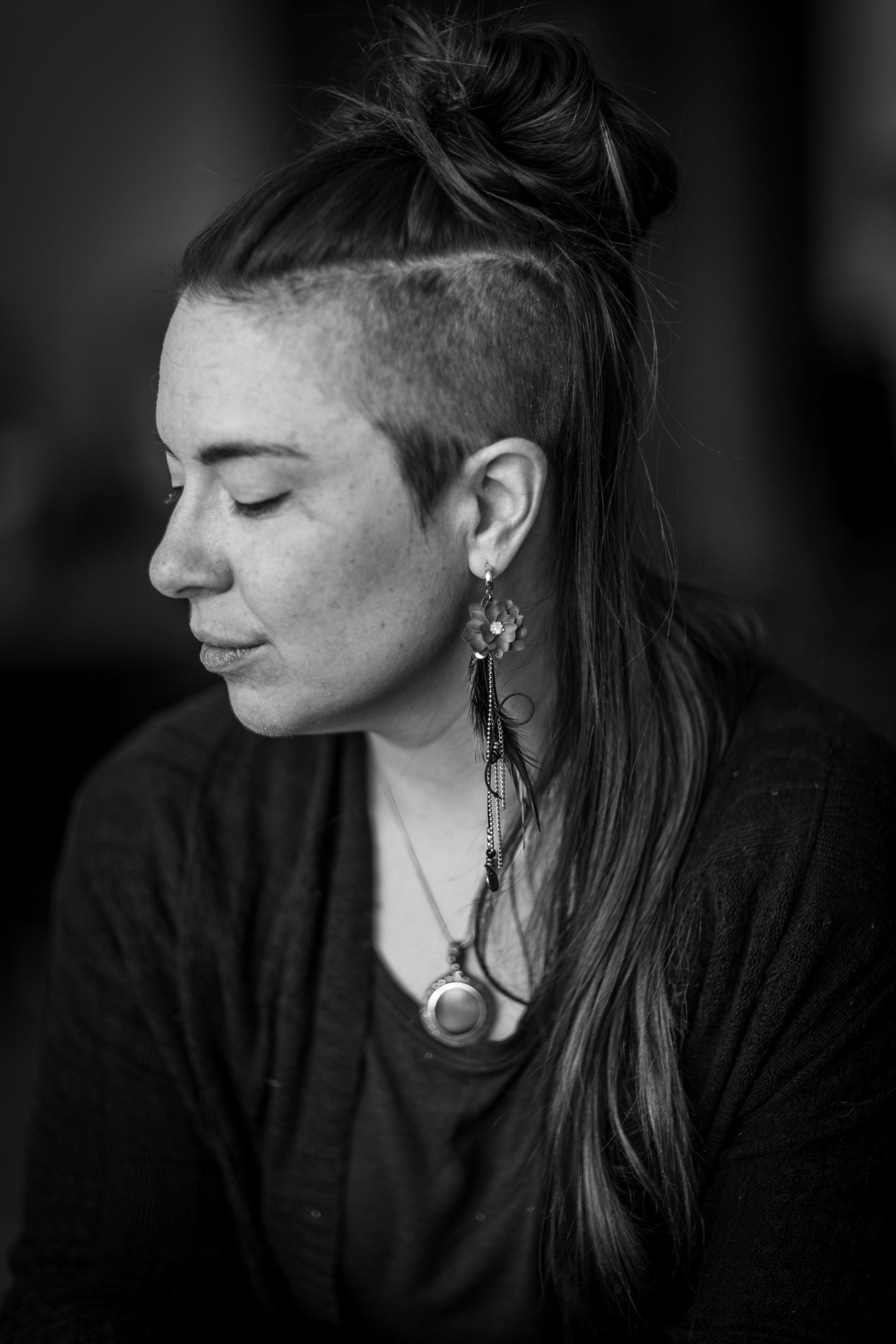
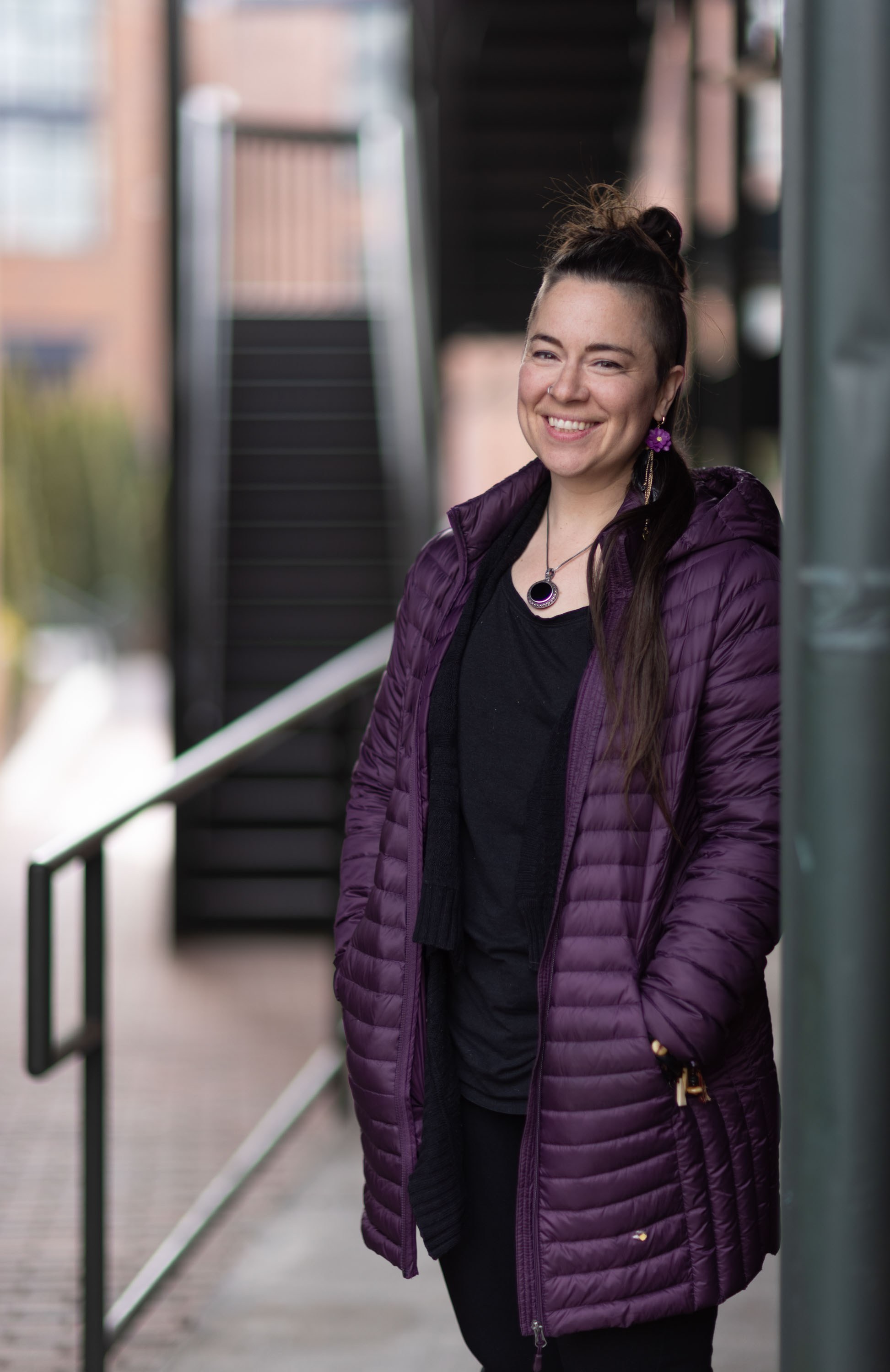
Jenesis Nicolaisen poses for portraits in downtown Asheville, NC.
David Schmidgall
First, let me say how refreshing it was to talk to someone who knew their stuff but also inhabited some intellectual humility. Jenesis wasn’t pretending to be an evolutionary anthropologist. It was also clear that they had done their homework.
Second, think with Jenesis about all the other features of our historical life this agricultural turn brought into being. From the concept of property ownership to the presumed supremacy of larger bodies, it is hard to think, arguably, of a facet of the human world, both ancient and modern, that is not formed by the demands of that agricultural revolution. Don’t even get us started on industrialism.
Within that millenia-long story of development there are, of course, smaller narratives that take only centuries or decades to tell. Remember Bowling Alone? But I can appreciate how much SeekHealing understands the depth of the script that they are trying to rewrite.
“It sort of breaks my heart that SeekHealing has to exist at all,” Jenesis explains. “I think in this culture we've gotten to a point where we have to be this intentional about getting people to connect with each other.”
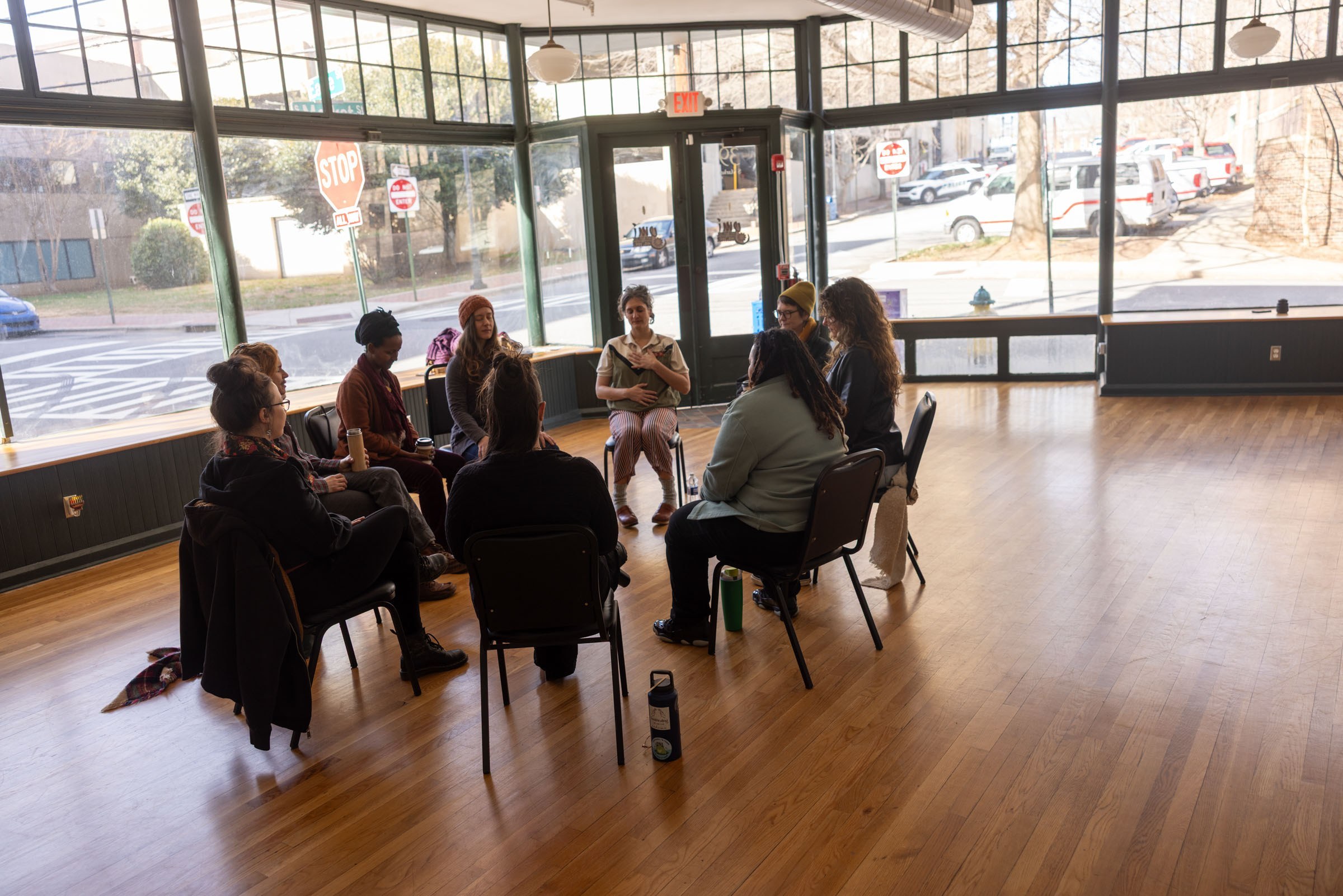
A group participates in Connection Practices at the YMI Cultural Center in downtown Asheville, NC.
David Schmidgall
No Etiology, Only Medicine
Rebecca has some trouble walking, and so she has to move deliberately using a cane. She’s got to decide where she’s going to take her body because it’s not as easy to do anymore. It is almost as though she is always assessing whether somewhere is worth going.
She always goes to Connection Practice.
I asked Rebecca what SeekHealing is adding to her eighth decade of life. It was a good insightful-journalistic kind of question, if I do say so myself. But it was also, to be honest, just the end of my imagination. What could an open group of chatting humans add to the life of a woman who had clearly been out there having a real life for more than 70 years?
“I've developed a sense of how I'm just delighted to know [people] and to see them and connect with them through my eye contact and just try to keep an open heart. And so that's what it's brought to me in my 80s is that it is fulfilling that longing to be in relationship with people on a level that matters to me.” It’s made a difference in the most intimate places of her life. “I have closer relationships with my sons, all three of them. I can see the change. And so that's a real dear to my heart thing about the elders group is that you learn things about yourself that you can apply in real life.” Can life really be like that at 73?
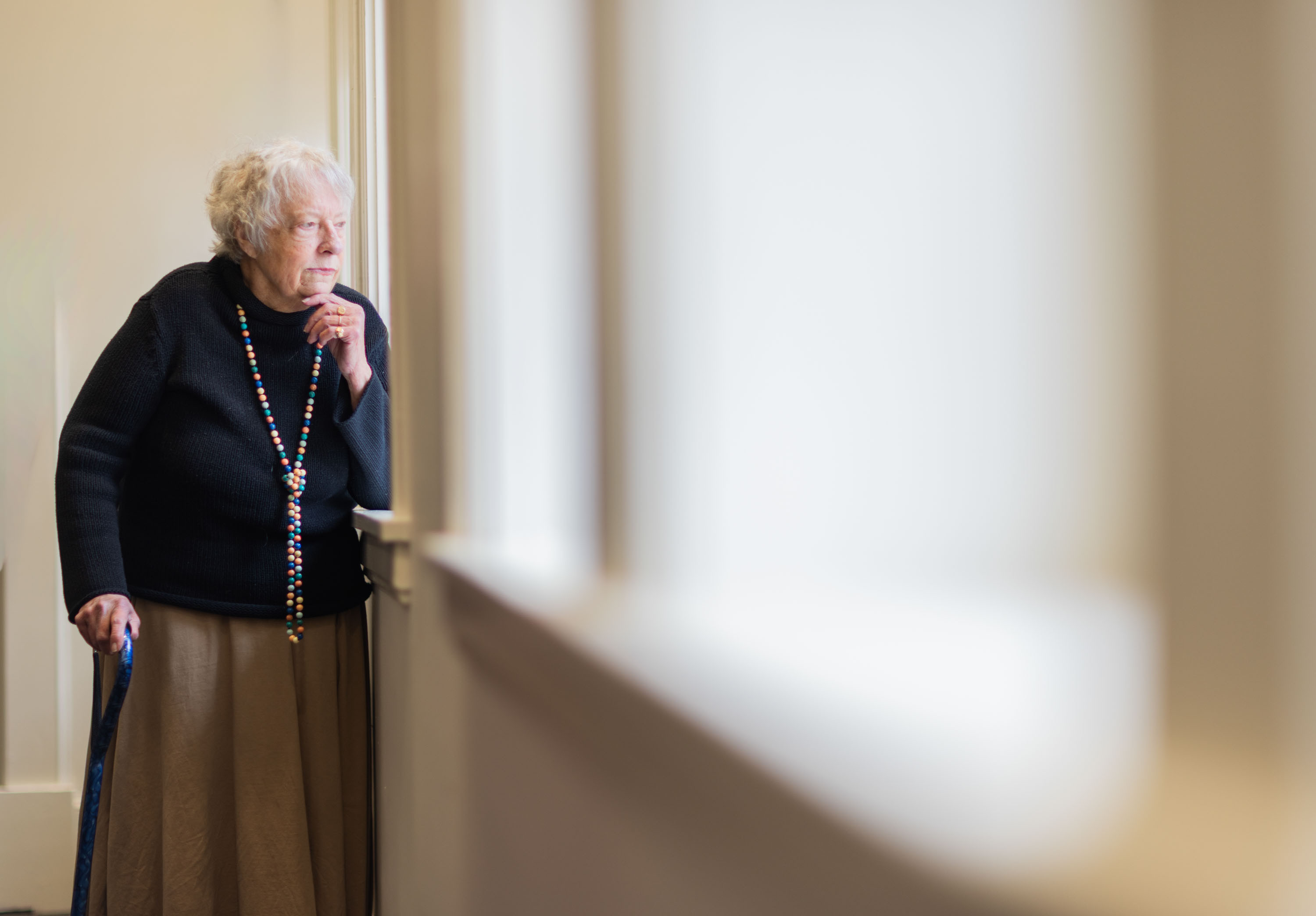
Rebecca Powels poses for a portrait at the YMI Cultural Center in downtown Asheville, NC.
David Schmidgall
Over the last few years, SeekHealing has grown. Thousands of people have been a part of a Connection Practice at least once. They now offer a large set of virtual spaces. They have opened a second base of operations outside of downtown Asheville in the next county over. Their reach and impact is clearly trending upwards and to the right.
But their work and witness is so simple. They help people connect to people. Theirs is the medicine of relationship.
I mean, don’t you love the way SeekHealing names things? First Conversation is where you have a first conversation about the work of SeekHealing. Connection Practice is where you go to practice connection. Listening Training is where you get trained to listen. The simplicity and forwardness of it delights and saddens me all at the same time. It delights me because I am sick of so much noise, weaponized distraction, slight-of-hand; it feels nice to be told the truth plainly. But it saddens me because, well…
Why is this so hard?
Why is it so hard to say the simplest thing in the world: it is good for people not to be alone?
And why is it even harder to get folks together?
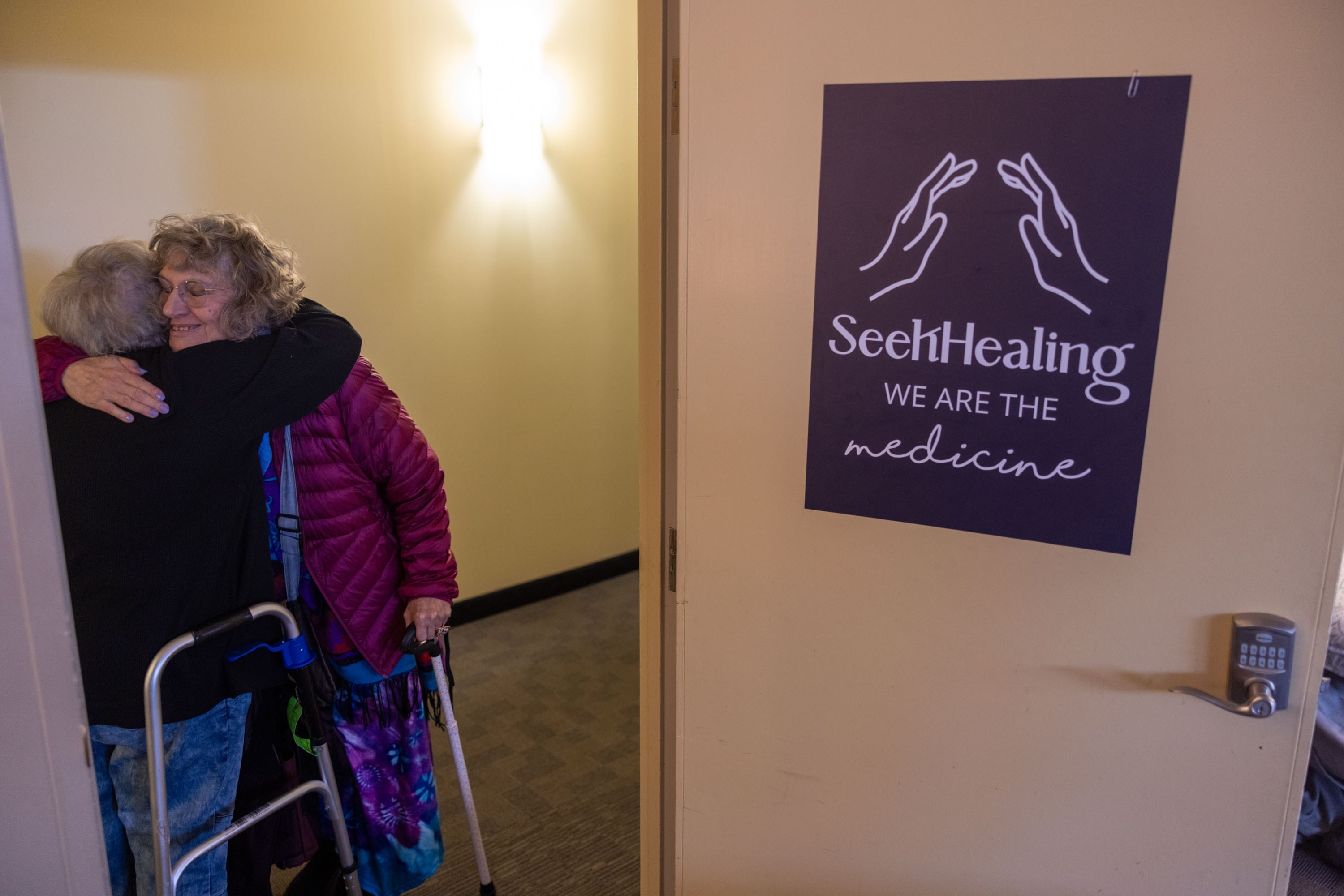
SeekHealing participants greet each other before a Connection Practice.
David Schmidgall
Sure. There are processed sugars and microplastics and GMOs. There was throat cancer from smoking and now there is popcorn lung from vaping and maybe Zyn pouches will turn our teeth to uranium. There are people who need to get out and take a walk. There are also people who need to put down their pickleball racket to avoid a torn ACL. There is every kind of health threat from every direction. And there is also the brute force of our mortality.
But maybe the sickest thing about us is that we are, so many of us, alone. Whether you live in Asheville, Nashville, or San Diego—there may be no disease quite so communicable as isolation. Maybe it is our loneliness that is killing us the quickest.
SeekHealing is an urgent care center for the soul. In these blue rock wilderness, they are the voice of one crying We need each other. In the warpath of Hurricane Helene, they are a distribution center with an endless supply of connection. In this lonely city, they are a pharmacy of relationship.