Since the dawn of social media, streaming content, and proliferation of smartphones, the world has careened toward digital content and experiences—BitterSweet included. Now, we are noticing a significant shift in sentiment and recognizing our own desire growing for in-person and tactile experiences that foster distinctly human connection, less digitally negotiated or artificially engineered.
As our daily feeds are increasingly flooded with deepfakes and falsehoods, and our texts are punctuated by alarmingly hard-to-distinguish scams, the question ‘is this real?’ is now one of the fastest trending keyphrases in Google search.
With that backdrop, we will continue our mission through the digital magazine you're reading now, but we are adding Cairn, a new series brought to you in print and in person. Through Cairn we ask some questions of ourselves and the deeper things—making space for the stirring. It is my hope and expectation that your mind, heart, body, spirit will be properly provoked and invigorated, and your sense of connection to others will be strengthened. That’s all. That’s our agenda—to mark a moment and a way.
Every person is on a journey, none of our journeys are the same, and none of us know where exactly our journeys lead or end. Cairns are the piles of stones we encounter on journeys in the wilderness. Their message: “We were here.” Every time I encounter a cairn in the wild I wonder about the people who went before, the people who added their rock to the pile, who left something for me to find—something that made me feel slightly less lost and slightly less alone.
I hope this series is something like that for you. Now, on to our theme for Cairn Vol. 2: A More Excellent Way.
A More Excellent Way is…
“And I will show you a still more excellent way,” Paul writes to the early church in Corinth. This fragment verse—“a still more excellent way”—sits wedged between one of the most broadly debated chapters of Saint Paul’s writings and one of the most celebrated. From a discourse on spiritual gifts and what it means to be members of one body, this pivotal line launches us into the Love Chapter.
Seen as often in the decor section of Home Goods as it is heard read at weddings—religious and not—the Love Chapter goes like this: “Love is patient, love is kind. It does not envy, it does not boast, it is not proud. It does not dishonor others, it is not self-seeking, it is not easily angered, it keeps no record of wrongs. Love does not delight in evil but rejoices with the truth. It always protects, always trusts, always hopes, always perseveres. Love never fails.”
It is our ideal—the more excellent way. No matter how spiritually powerful or knowing or pious we are, without love we are likened to clanging cymbals, noisy gongs, and nothing at all. “The biblical ethic to love our neighbor as ourself is what’s in jeopardy among us,” warns Walter Brueggemann, an Old Testament scholar and teacher in BitterSweet's Provocations series.
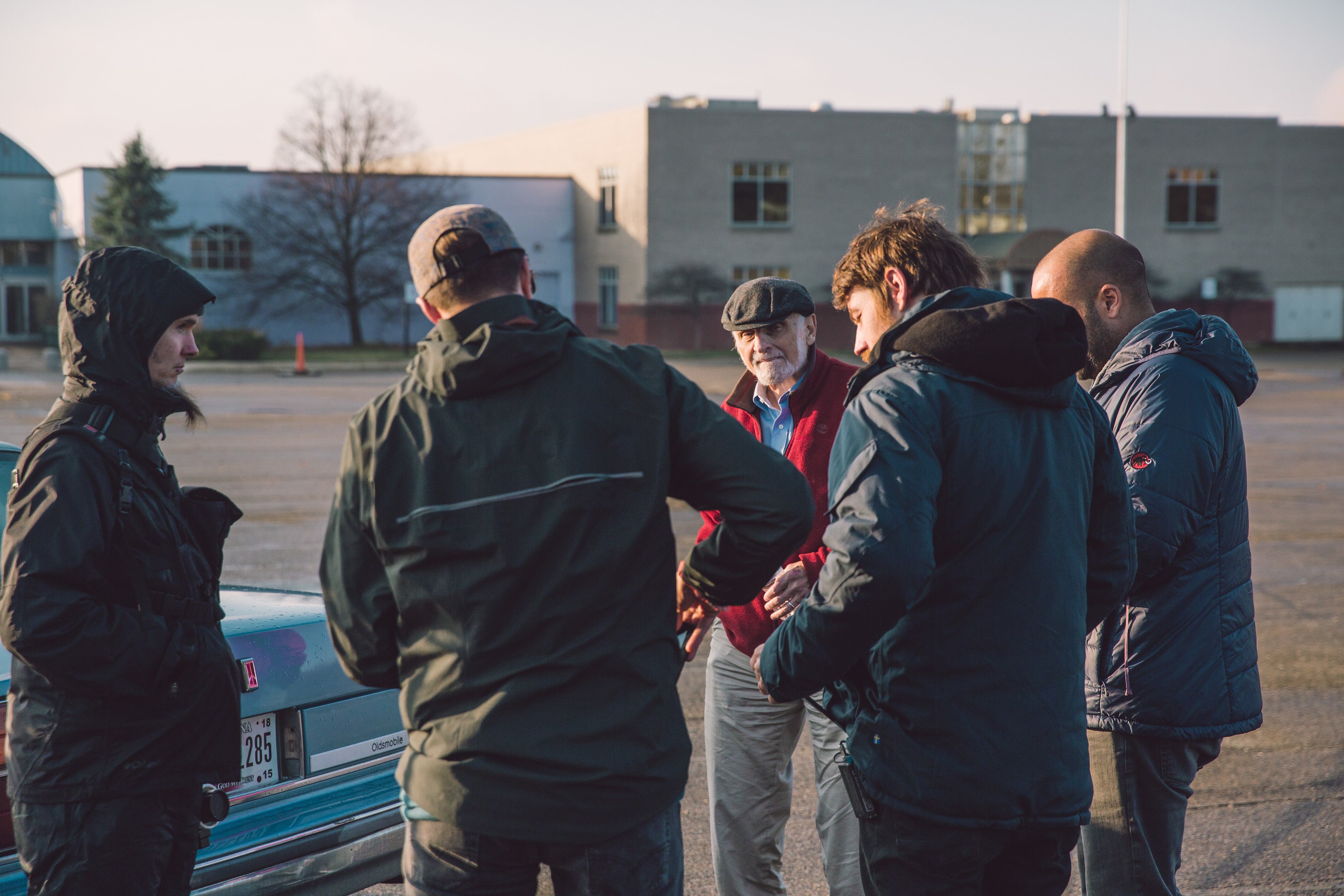
Walter Brueggemann, an Old Testament scholar and teacher in BitterSweet's Provocations series, stands with the production crew before filming an interview.
Dave Baker
On the contrary, Jesus—whose life changed all life after—says, “Come to me, all who are weary, and I will give you rest. Learn from me, for I am gentle and lowly in heart, and you will find rest for your souls. My yoke is easy and my burden is light.” This he says just before restoring a man’s withered hand and declaring himself Lord of the Sabbath, “healing them all” as he went.
Jesus was proximate to the people—seemingly more concerned with pain than with sin. BitterSweet follows, viewing life and craft as a partnership with God to build a more just and gentle world. What we make, shape, see, and say either accelerates degradation or generatively nurtures restoration and healing. The ‘more excellent way’ Paul points to is an orientation toward beauty, gratitude, self-giving, a sacred sense of soul and space, a stewardship of time, a sacrifice of convenience, and an active resistance against powers that come to steal, kill, devour, and divide body, mind, heart, soul. Knowing that, we are intentional about the narratives we harmonize with and the narratives we counter.
The way we follow is measured and known by love. For all, for all of time. As practical and bodily as it is abstract and esoteric. The more excellent way.
Kate Schmidgall, Principal and Founder, BitterSweet
…Awakening
“I think millennials—about these elemental questions—are not very different from the rest of us,” says Old Testament scholar and world-renowned theologian Walter Brueggemann. Like even old people like me, they are seduced into a false narrative that makes huge promises to them, and I hope that, like old people like me, they can grow in their awareness that there is a more excellent way. And there are many ways to articulate the more excellent way but it has to be recognized that the more excellent way contradicts the dominant way and is terribly inconvenient.”
In this episode of our Provocations series, Walter invites us to consider the Old Testament as a book about economics, the false hope of the prosperity gospel, and the character of the God who suffers with. We thought a vacant parking lot outside an abandoned mall in Cincinnati a fitting scene for a casual chat about totalism and the decline of empire. And the weather played along. It was frigid, grey, windy, and raining as Walter rolled up in his decades-old Toyota Camry wearing a fraying, weathered fleece. The crew made him comfortable in the cab of an ‘88 Buick Oldsmobile we’d bought off Craigslist, pausing to run the heat now and then when voices started to jitter.

Walter Brueggemann, Old Testament scholar, and Eliot Rausch, film director, conducting an interview for BitterSweet's Provocations series.
Dave Baker
- [Elliot] Does God ache, Walter? I mean, is God up there like, weeping with us?
- [Walter] Oh I think so.
- [Elliot] Yeah?
- [Walter] I think so, yeah. In Jeremiah and Hosea, you have some of God's laments. So, in fact, I tried to make a case—I didn't [do it] very well—that the prophets portray God not as much angry as sad.
- [Elliot] So is God using our suffering? I mean, is he using or creating it? Causing it?
- [Walter] Well I don't know, but I think people would say not causing it, but making use of it.
- [Elliot] Making use of it.
- [Walter] Yeah.
- [Elliot] And that's Calvin?
- [Walter] Well I don't know if that's Calvin particularly. I mean, that's good Christian theology.
Watch Awakening featuring Walter Brueggemann
“It seems to me that the deepest ideological mistake is to ask the question: What is the social unit of meaning? We have been taught that the social unit of meaning is the individual person. So it's me in competition with all the other individual persons,” Walter says. “Whereas the covenantal tradition of the Bible says that the social unit of meaning is the community. And that's a huge contrast so that my life and my well-being and my freedom all depend on the fabric of the neighbors. So, in a biblical ethic, the neighbor is definitional. But in a market economy, there are no neighbors. There are only competitors and rivals and threats. So the goal is complete privatization because I don't want my affluence used for the sake of someone else's well-being.”
“The biblical ethic that you shall love your neighbor as you love yourself is non-negotiable. And, I think that's what's in jeopardy among us.”
Walter Brueggemann, Old Testament Scholar
…Beatitudinal
An excerpt of Avery Marks’ conversation with Andrew DeCort, author of Blessed Are the Others, Flourishing on the Edge of Faith, Reviving the Golden Rule, and New Beginnings.
In your book, Blessed Are the Others, you chart what you call the "Beatitudinal Way" through the blessings of Jesus' Sermon on the Mount. How would you summarize the Beatitudinal Way?
The Beatitudinal Way is Jesus’ counterintuitive path for becoming humanely happy. I mean a happiness that includes (rather than exploits) others, that faces our deepest fears and vulnerabilities rather than avoiding them. It’s his map for what we all claim to want: blessing, flourishing, a good life. Jesus began his public movement by teaching this.
I call it the Beatitudinal Way to signal that the Beatitudes are not a list of random well-wishes. They’re an integrated way of becoming human with a beginning and end (or new beginning). The eight waystations that chart this path—poverty, grief, nonviolence, justice, compassion, cleanheartedness, peacemaking, and being persecuted—interconnect and lead us into profound transformation. According to Jesus, this way embodies the life of “the kingdom of heaven” here on earth—our unconditional belovedness and belonging in God.

Deep Love, acrylic on canvas
Lily DeCort
What does the Beatitudinal Way ask of us? In what ways is this different from the values and ways of being that our culture emphasizes?
The Beatitudinal Way asks for our courage and creative imagination. Courage means facing our fears and choosing not to be controlled by them. Creative imagination is a willingness to try something new. Both are grounded in the miracle of trusting that we’re loved.
In so many ways, the Beatitudinal Way is counterintuitive and against the grain of contemporary cultural values. It’s a divergent pathway to our default setting. Consider how inverting Jesus’ waystations sounds like our common sense:
Blessed are the well-off, because they already own their place.
Blessed are the happy, because they don’t need comfort.
Blessed are the people with the biggest military, because they can control the earth…
Imagine someone saying, “I’m going to show you the way to get what you really want. It starts by getting in touch with the deep pain, loss, emptiness that lives inside of you. And then I want you to process that with others, to let them see just how much this grieves you. And then you’ll learn to integrate your poverty and grief by becoming powerfully gentle. You’ll stop playing the game of inflicting your pain and sorrow on others to get what you want. You’ll become a safe presence—someone who can feel the pain of an enemy and want good for them.” Many of us would think they’re insane. But this is the sanity of Jesus.
American cultural values idolize greatness, wealth, power, winning. The American “prosperity gospel” promises these things as “God’s blessing.” We see poverty as shameful. We feel embarrassed by our tears. We dismiss nonviolence as weakness or foolishness. We identify children of God more by piety than peacemaking. We’re sure that if we do it right, people will like us—not that we might become unwanted.
So the Beatitudinal Way requires courage and creative imagination. It feels increasingly “unAmerican” and countercultural. But in another sense, it doesn’t require anything; it just is. Jesus promises that if you’re empty, aching, letting go of violence, God sees you. You’ll be fine, forever.
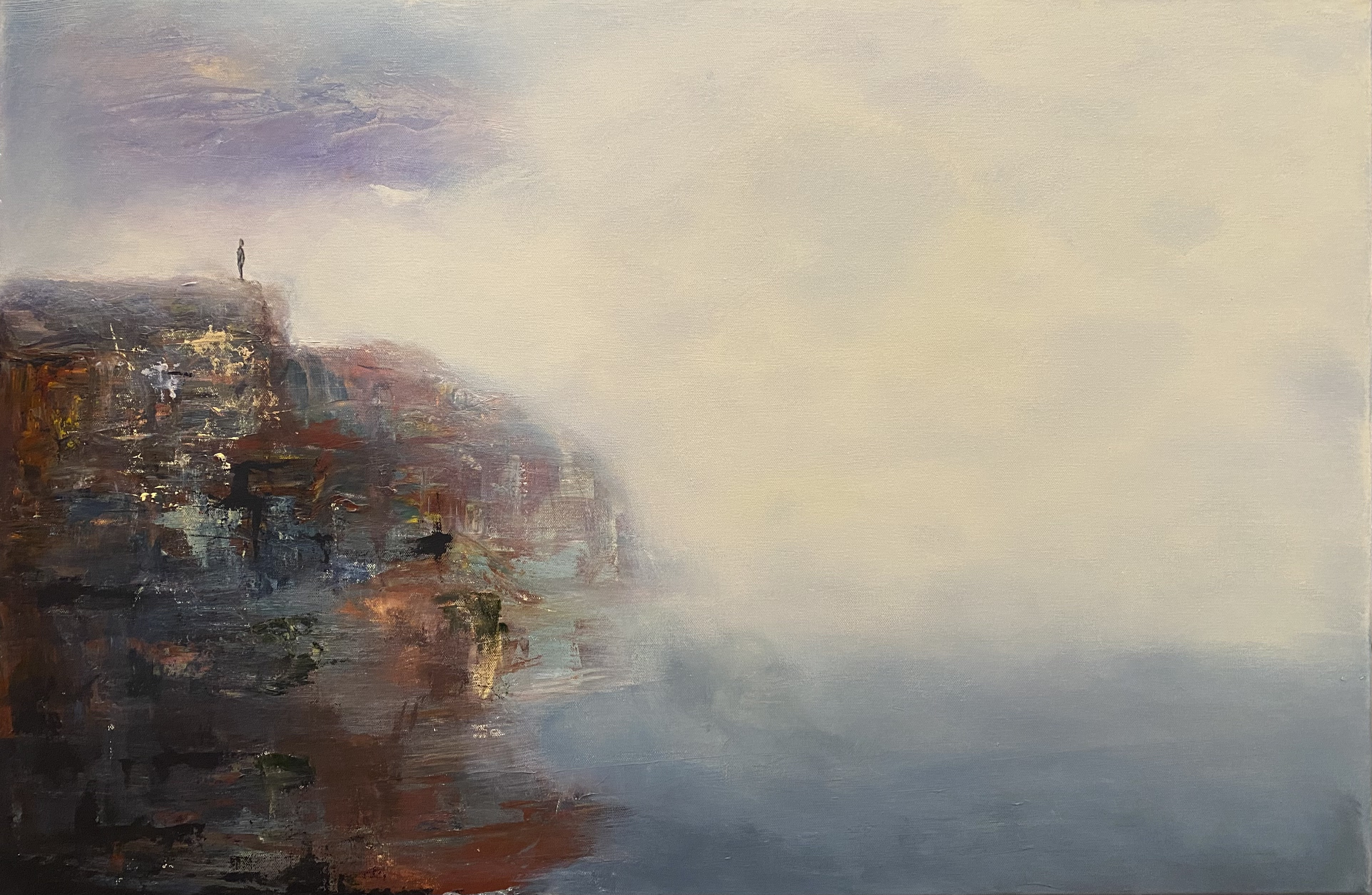
On the Edge, acrylic on canvas
Lily DeCort
What do you think the current iteration of western Christianity fundamentally misunderstands about Jesus' Sermon on the Mount? How might a better understanding change our current reality?
Much contemporary Christianity, western and otherwise, decenters or simply ignores Jesus’ Sermon on the Mount. The New Testament presents it as the manifesto of Jesus’ public movement, which Jesus then tells his students to teach to all humanity. But we rarely see it that way.
When we do pay attention to it, we often reduce Jesus’ public teaching to a private piety. So we might individually affirm Jesus’ promise, “Blessed are the peacemakers, because they will be called children of God” or his command, “Love your enemies.” But we have no expectation for this moral vision to influence our public life.
The outcome is an increasingly vast chasm between our ethics and our religion and politics—what the sociologist Robert Bellah called “a crisis of incoherence.” Thus, we see pastors protesting the abduction of our immigrant neighbors in the name of Jesus, while being beaten by police officers who likely claim to be Christians and may go to church on Sunday. Russell Moore reported in Christianity Today that many Christians complain that Jesus’ sermon sounds “weak” or “woke.”
We need to remember: Jesus was speaking to oppressed people living under empire, not the people benefitting from it. They longed for something different. For them, hearing a divine declaration of blessing on the poor, the mourning, the nonviolent, the hungry for justice—this sounded like emphatically good news. (Though it also interrupted trying to overthrow the empire with its own tactics.) To many of us, it easily sounds like a burden, a threat, or foolishness. “Wait, the poor are precious to God? We’re supposed to love our ‘enemies’—not other them to supercharge loyalty?”
If we aspire to walk Jesus’ Beatitudinal Way while seeing ourselves as the guardians of a “Christian nation” or another expression of collective power, it won’t add up. But if we see ourselves as participants of Jesus’ movement, which expands far beyond and lasts long after our earthly empires have imploded, it begins to sound like humane happiness, love’s more excellent way for all of us.

Nocturne, acrylic on canvas
Lily DeCort
...Invitational
This Way has been sought by many since the beginning of time—many who found themselves wandering in the deserts of unknowing, crafting idols, wanting kings, collecting too much manna; resisting temptations of glory, power, and self-madeness while learning and relearning the requirements of dependence, trust, mercy, and love. “If only it were as plain as a cloud by day and a pillar of fire by night,” we think.
We seek. We sit with Jesus across from the temple watching as the widow gives her two mites—all she had to live on. Jesus notices, continually drawing our attention to the hungry, thirsty, sick, imprisoned, oppressed, poor, diseased, disadvantaged, lonely, and vulnerable. He invites us to follow him across thresholds of disdain and to tables of questionable repute. We follow into cells of solitary confinement where cell neighbors use fishing line to pass improvised communion wafers to one another. We follow into bleak, blank apartments as humble volunteers begin to load in beds, rugs, couches, teapots, and school supplies—making ready a home for a young family forced to flee violence, persecution, and war. “This is the first mattress my daughter has ever slept on—she’s six,” the father says.
As neighbors and prophets through the ages have shown, faithfulness requires great courage, discernment, self-giving, and creative resistance to lessening, dehumanizing forces. Millions of people have grown tired of gospel reductionism and pure religion defined as church attendance. We have too few riveting portraits of “life to the full” and conviction-led, justice-serious, costly self-risking.
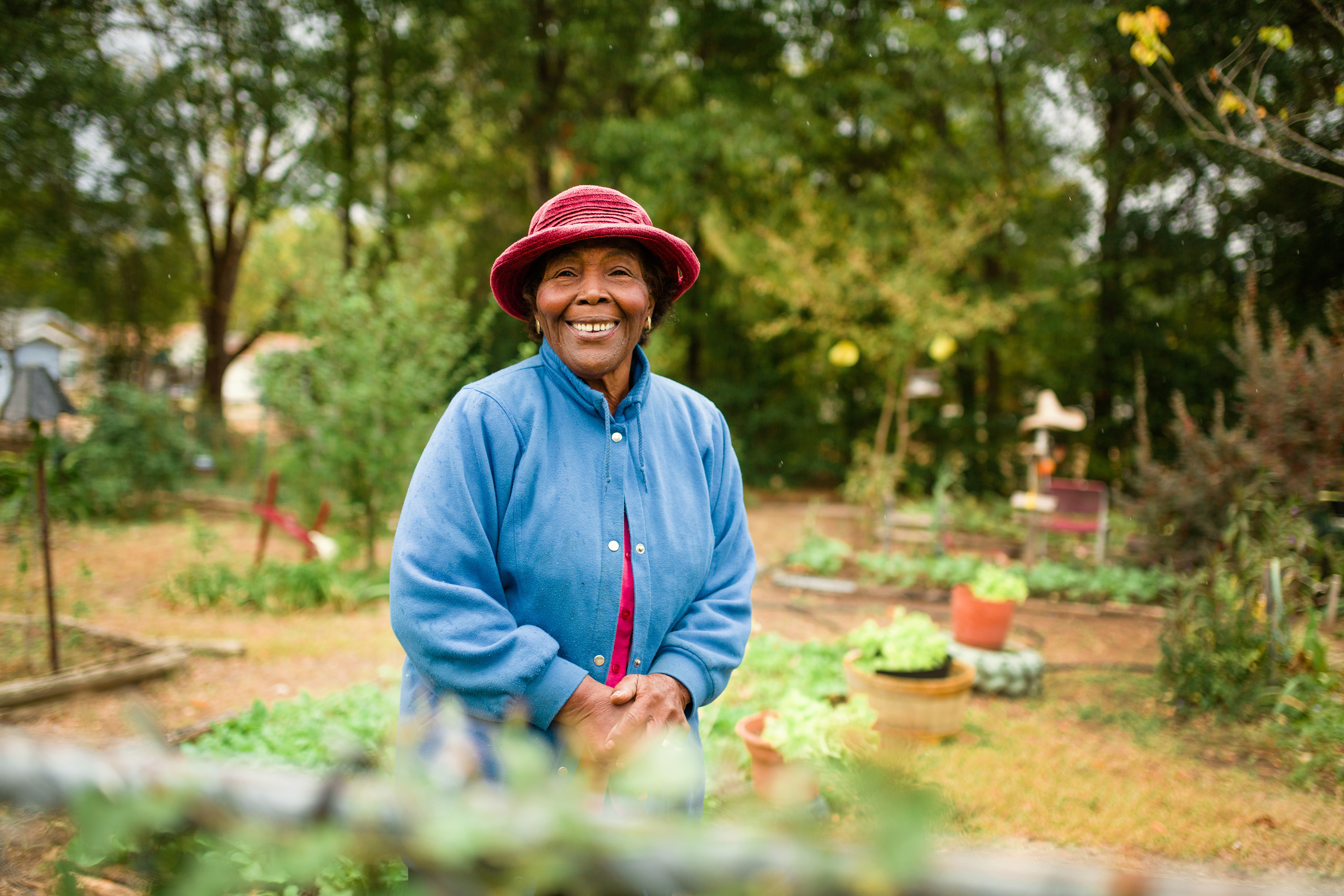

(Left) Photograph of Ms. Rosie for "Weaving Us Together, All Of Us" / (Right) Photograph of Becca Stevens for "A Healing Place of Gritty Love and Lavender"
Erica Baker
We see Ms. Rosie pulling her wagon packed with gloves, soil, seeds, and shovels, counting her steps each morning to the vacant corner lot near her home of 50 years in The Bottoms neighborhood of Shreveport, Louisiana. Abandoned, the lot had become a nest for nefarious activities including drug use and gang violence. Ms. Rosie dug in. Spade by spade, bulb by bulb, and day by day she transformed that corner lot into a beautiful, vibrant community garden of flourishing. “Rosie’s Garden of Love,” the sign now reads.
We see Becca Stevens, ordained at age 26 and pouring candles in her kitchen late into the night with other women rattled and bruised. As one whose own experience with sexual abuse as a child began in the church, Becca determined to care for women who have survived trauma and consequently trafficking, prostitution, drug addiction, and homelessness. Love heals and forgiveness frees.
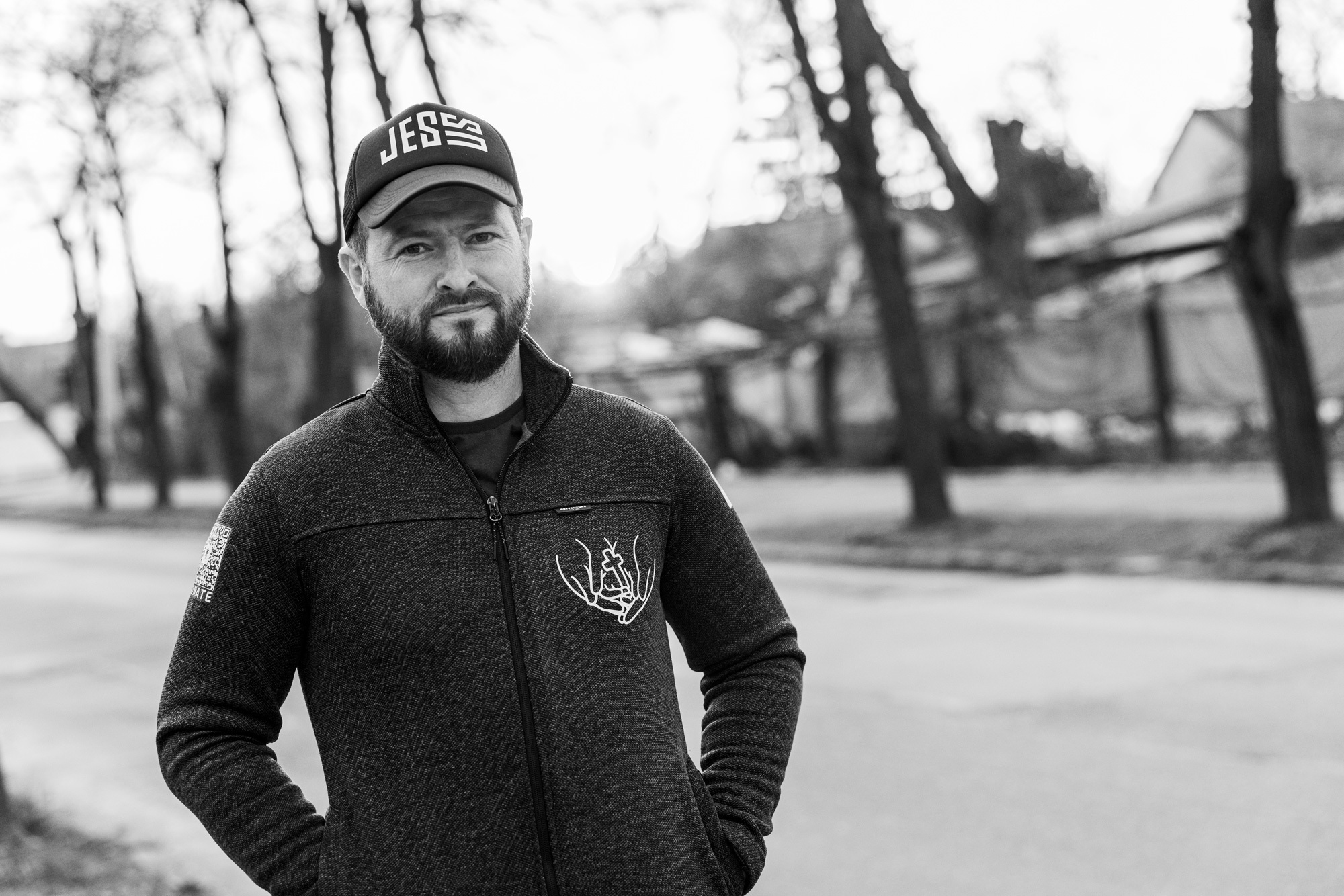
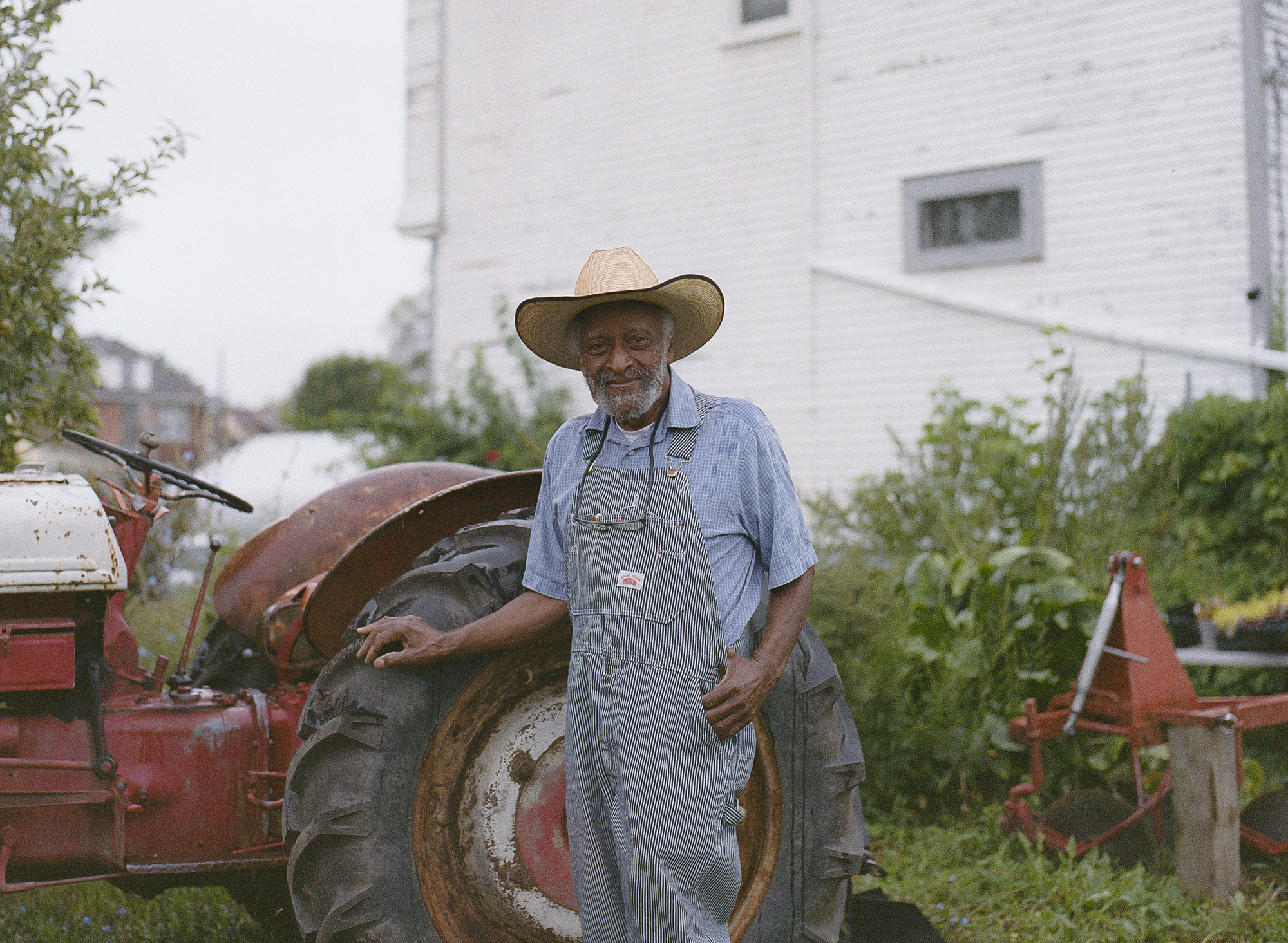
(Left) Photograph of Rudy Balazhinec for "Ya Tam (I am there)" by David Schmidgall / (Right) Photograph of Willie Patmon for "Finding Clover and Lace" by Obiekwe Okolo
We see Rudy, thrust into wartime, mobilizing helping hands to pack humanitarian aid for frontline towns, which drivers routinely risk their lives to deliver. The warehouse is endlessly stocked and emptied, a continuous flow of goods to strengthen the people when every aspect of life is under threat.
We see Mr. Willie walking amidst his peach trees and Travis Peters showing off his sunchokes and collard greens—sprouts of equity and food security blossoming in Detroit’s formerly vacant lots. We watch as cracks in the concrete give way to daily sustenance and anchoreding hope.
We see the young faces radiate hope for more positive tomorrows as they snack, play, and learn to read within the only school tailored to families experiencing homelessness. Clothed, fed, and safe these children face the future with courage and confidence, not shame and instability. “I finally started to really live life,” says a grateful mama.
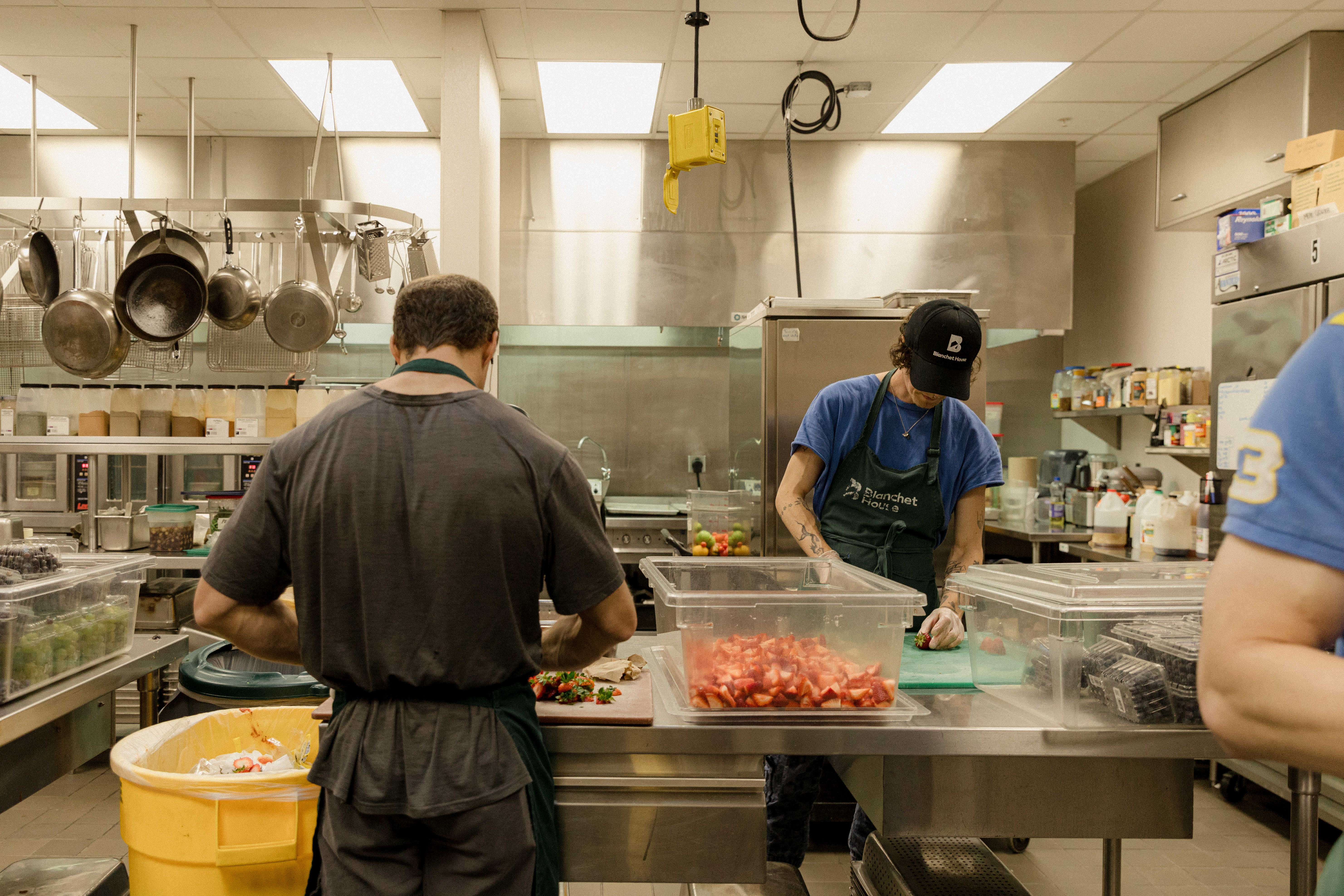
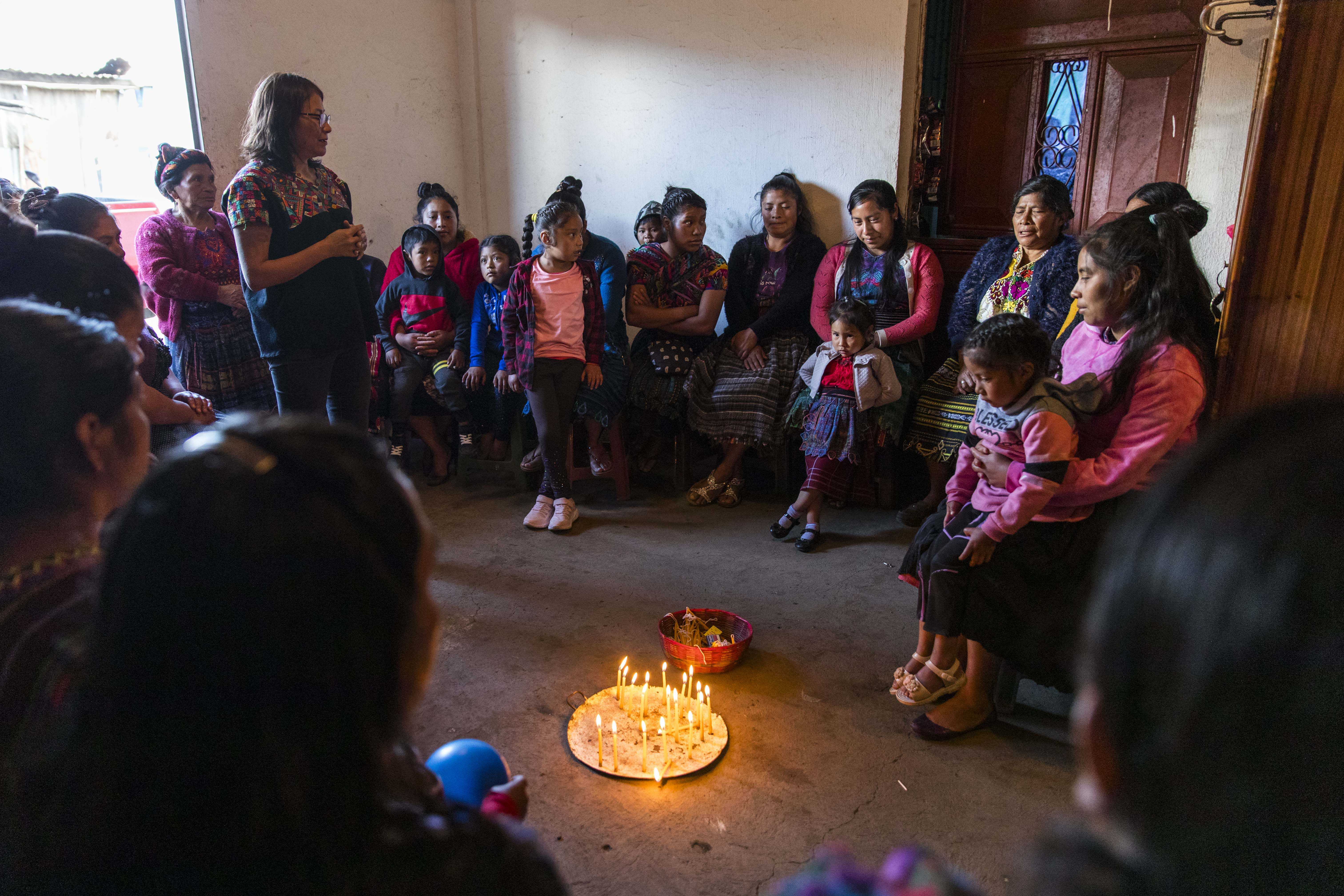

(Top) Photograph of Blanchet House volunteers for "We Are What We Do" by Minsong Kim / (Left) Photo of women gathering for AMA Guatemala programming for "The Force of Women Gathered" by Steve Jeter / (Right) Photograph of children at Positive Tomorrows for "An Education in Joy" by Steve Jeter
We see, in the heart of Portland, Oregon, a place called Blanchet, founded on the simple, concrete acts of feeding the hungry and housing the weary. And in the highlands of Guatemala, we see Antonieta stuttering through her vision with 20 women gathered in her home, many managing multiple children and the babies crying for attention. The mothers came f0r the stoves—the iron slab affixed to a brick firebox and a chimney channeling the smoke outside—but committed to the community, the healing love and support Antonieta’s courage made possible.
We find joy, hope, courage, and others-centeredness everywhere we look for it. That’s the truth. Love is the way.
A compilation showcasing 15 years of BitterSweet filmmaking
Stephen Jeter